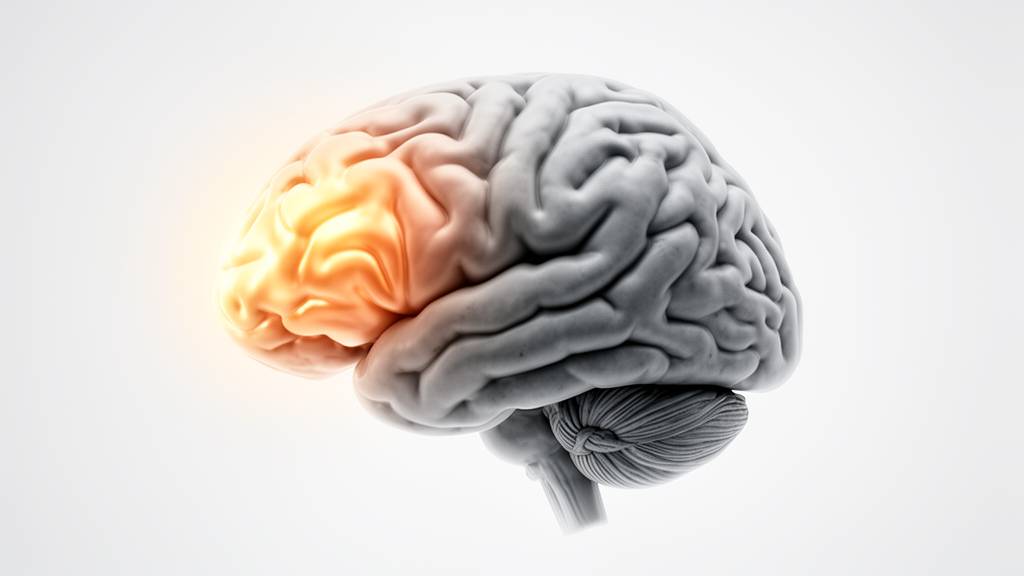
Neuroimaging researchers have investigated whether constraining working memory alters how the human brain processes real-world plausibility during sentence comprehension. Comprehending thematic roles, specifically resolving who did what to whom within a sentence, relies on limited cognitive resources. When these cognitive resources face constraints, the brain’s ability to use plausibility information derived from world knowledge can potentially be altered. While past sentence-processing research has described how plausibility information constrains sentence interpretation, how the underlying architecture of working memory supports this cognitive process has remained unclear.
To address this question, researchers examined whether the phonological loop, an established component of working memory, contributes directly to thematic-role processing based on world knowledge. The investigative team evaluated whether constraining the functional capacity of the phonological loop modulates both behavioral performance and neural responses when individuals process sentences whose syntactically assigned thematic roles are either plausible or implausible according to everyday world knowledge.
The study employed functional magnetic resonance imaging alongside an articulatory suppression protocol to selectively manipulate working-memory demand during sentence processing. To constrain the phonological loop, the researchers manipulated the task, comparing a single-task condition to a dual-task condition involving concurrent articulation. This experimental design enabled the researchers to measure both whole-brain and targeted region-of-interest activation patterns across contrasting task and plausibility conditions.
Following imaging and behavioral data collection, the researchers evaluated the interaction between task conditions and sentence plausibility. Analysis revealed no statistically significant interaction between the task manipulation and thematic-role plausibility. Furthermore, statistical equivalence analyses did not provide positive evidence confirming the complete absence of a plausibility effect during concurrent articulation, leaving the broader implications of working-memory load open to further empirical testing.
Despite the absence of a task-by-plausibility interaction, imaging data demonstrated a robust main effect of thematic-role plausibility across brain networks. Sentences containing implausible thematic roles elicited significantly greater neural activation than plausible sentences at the whole-brain level, specifically within the left inferior frontal gyrus and the medial superior frontal gyrus.
Detailed region-of-interest analyses further characterized the localized neuroanatomical profile of this plausibility effect. Elevated neural responses to implausible sentences were localized within both the pars triangularis and the pars orbitalis subdivisions of the left inferior frontal gyrus. These region-specific findings confirmed that distinct structural subregions of the inferior frontal cortex engage actively when syntactic assignments clash with established real-world expectations.
Overall, the experimental findings provide no conclusive evidence that constraining the phonological loop substantially modulates the recruitment of world knowledge during the comprehension of thematic roles. However, the study leaves open the possibility of smaller task-dependent effects that were not captured by the current equivalence thresholds. Simultaneously, the robust neural responses observed during implausibility indicate that the left inferior frontal gyrus and medial superior frontal gyrus consistently contribute to processing plausibility information derived from world knowledge.
Subject of Research: Neurocognitive mechanisms of thematic-role plausibility and working-memory constraints in sentence comprehension
Article Title: The role of world knowledge in sentence comprehension under working-memory constraints: an fMRI study
Article References: Emura, R., Jeong, H., Kawachi, Y., Komuro, R., & Koizumi, M. (2026). The role of world knowledge in sentence comprehension under working-memory constraints: an fMRI study. Frontiers in Human Neuroscience, 20, Article 1916580. https://doi.org/10.3389/fnhum.2026.1916580
Image Credits: AI Generated
DOI: 10.3389/fnhum.2026.1916580
Keywords: functional magnetic resonance imaging, fMRI, sentence comprehension, working memory, phonological loop, thematic roles, world knowledge, plausibility, left inferior frontal gyrus, LIFG, medial superior frontal gyrus, mSFG, pars triangularis, pars orbitalis, articulatory suppression, dual-task paradigm, cognitive resources, neuroimaging, cognitive neuroscience
News Source: Colin Clarke. (November 19, 2026). fMRI Study Finds Frontal Brain Activation During Sentence Plausibility Processing. Scienmag.