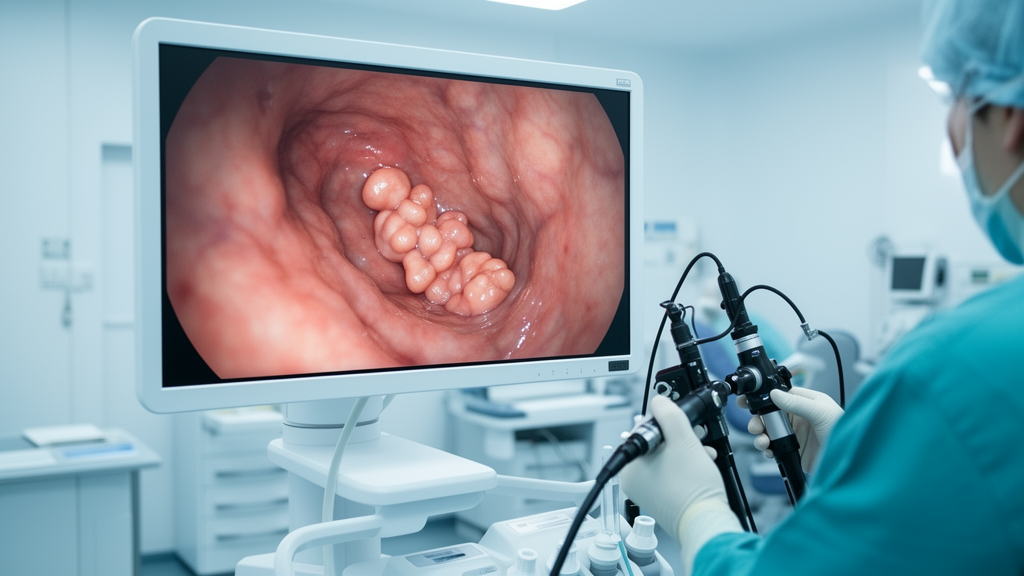
Early colonoscopy performed within 24 hours of hospital admission for colonic diverticular bleeding was independently associated with a higher rate of re-bleeding within one month, according to findings from a multicenter retrospective study published in the International Journal of Colorectal Disease. The study by Takahiro Gonai and colleagues directly addresses whether urgent endoscopic intervention provides meaningful clinical benefits over delayed colonoscopy for hospitalized patients with acute diverticular bleeding.
The investigation was designed as a secondary analysis of a multicenter retrospective study conducted across ten medical institutions. To clarify the relationship between procedural timing and post-procedure outcomes, the research team analyzed clinical records from patients hospitalized for colonic diverticular bleeding between January 2015 and August 2019. The authors sought to evaluate whether the timing of colonoscopy influenced patient outcomes or procedural efficacy.
In their protocol, the investigators defined early colonoscopy as any procedure performed within 24 hours of hospital admission, whereas delayed colonoscopy was defined as an examination performed after that 24-hour window. Across the participating centers, the research team systematically compared baseline clinical characteristics, colonoscopic findings, and subsequent clinical outcomes between the early colonoscopy group and the delayed colonoscopy group.
The overall study population included 356 hospitalized patients diagnosed with colonic diverticular bleeding. Among these 356 patients, 242 individuals underwent early colonoscopy within the first 24 hours of admission, while 114 individuals underwent delayed colonoscopy thereafter. Across the entire cohort, stigmata of recent hemorrhage were identified in 111 patients, yielding an overall identification rate of 31.2 percent during endoscopic examinations.
Following diagnostic evaluation across the cohort, endoscopic hemostasis was applied to 87 patients with identified bleeding sites, and re-bleeding within one month occurred in 9.0 percent of all patients. When comparing the two groups, the detection rate of stigmata of recent hemorrhage was significantly higher in the early colonoscopy group than in the delayed colonoscopy group, with a statistically significant difference (P = 0.008).
Endoscopic hemostasis was also applied more frequently to patients in the early colonoscopy group than to those in the delayed colonoscopy group (P = 0.034). However, despite the higher identification of bleeding stigmata and more frequent hemostatic interventions, re-bleeding occurred significantly more frequently in the early colonoscopy group than in the delayed colonoscopy group during follow-up, reaching statistical significance (P = 0.002).
To evaluate independent risk factors associated with recurrent hemorrhage, the authors conducted a multivariable analysis controlling for potential confounding clinical characteristics. This multivariable analysis demonstrated that antithrombotic therapy was independently associated with recurrent bleeding within one month, yielding an adjusted hazard ratio of 2.80, with a 95 percent confidence interval of 1.22 to 7.01, and a statistically significant P-value of 0.014.
Furthermore, multivariable analysis revealed that early colonoscopy within 24 hours of admission was itself independently associated with re-bleeding within a month, with a hazard ratio of 4.85 (95 percent confidence interval, 1.72 to 20.31; P = 0.002). Based on these findings, the authors concluded that early colonoscopy is independently associated with 30-day re-bleeding in colonic diverticular bleeding, emphasizing the necessity of appropriate patient selection.
Subject of Research: Timing of colonoscopy and clinical outcomes in colonic diverticular bleeding
Article Title: Association between timing for colonoscopy and clinical outcomes in patients with colonic diverticular bleeding: a multicenter retrospective study
Article References: Gonai, T., Toya, Y., Kudara, N., Abe, K., Sawaguchi, S., Fujiwara, T., Eizuka, M., Hirai, M., Miura, M., Urushikubo, J., Yamada, S., Kumei, T., Yamaguchi, S., Sugai, K., Orikasa, S., Asakura, K., & Matsumoto, T. (2026). Association between timing for colonoscopy and clinical outcomes in patients with colonic diverticular bleeding: a multicenter retrospective study. International Journal of Colorectal Disease. https://doi.org/10.1007/s00384-026-05242-3
Image Credits: AI Generated
DOI: 10.1007/s00384-026-05242-3
Keywords: colonic diverticular bleeding, early colonoscopy, delayed colonoscopy, re-bleeding, endoscopic hemostasis, stigmata of recent hemorrhage, antithrombotic therapy, multicenter retrospective study, lower gastrointestinal bleeding, colonoscopy timing, gastroenterology, patient selection, diverticular hemorrhage, secondary analysis, multivariable analysis, hospital admission, colorectal disease
News Source: Ophelia Keating. (November 19, 2026). Early Colonoscopy Linked to Increased Diverticular Rebleeding Risk in Multicenter Study. Scienmag.