• HOME
  • NEWS
  • EXPLORE
    • CAREER
      • Companies
      • Jobs
    • EVENTS
    • iGEM
      • News
      • Team
    • PHOTOS
    • VIDEO
    • WIKI
  • BLOG
  • COMMUNITY
    • FACEBOOK
    • INSTAGRAM
    • TWITTER
Thursday, November 19, 2026
BIOENGINEER.ORG
No Result
View All Result
  • Login
  • HOME
  • NEWS
  • EXPLORE
    • CAREER
      • Companies
      • Jobs
        • Lecturer
        • PhD Studentship
        • Postdoc
        • Research Assistant
    • EVENTS
    • iGEM
      • News
      • Team
    • PHOTOS
    • VIDEO
    • WIKI
  • BLOG
  • COMMUNITY
    • FACEBOOK
    • INSTAGRAM
    • TWITTER
No Result
View All Result
Bioengineer.org
No Result
View All Result
Home NEWS Science News Technology

Trust-Aware Federated Learning Framework Secures Dynamic Internet of Things Networks

by
November 19, 2026
in Technology
Reading Time: 2 mins read
0
Trust-Aware Federated Learning Framework Secures Dynamic Internet of Things Networks

Trust-Aware Federated Learning Framework Secures Dynamic Internet of Things Networks

Share on FacebookShare on TwitterShare on LinkedinShare on RedditShare on Telegram

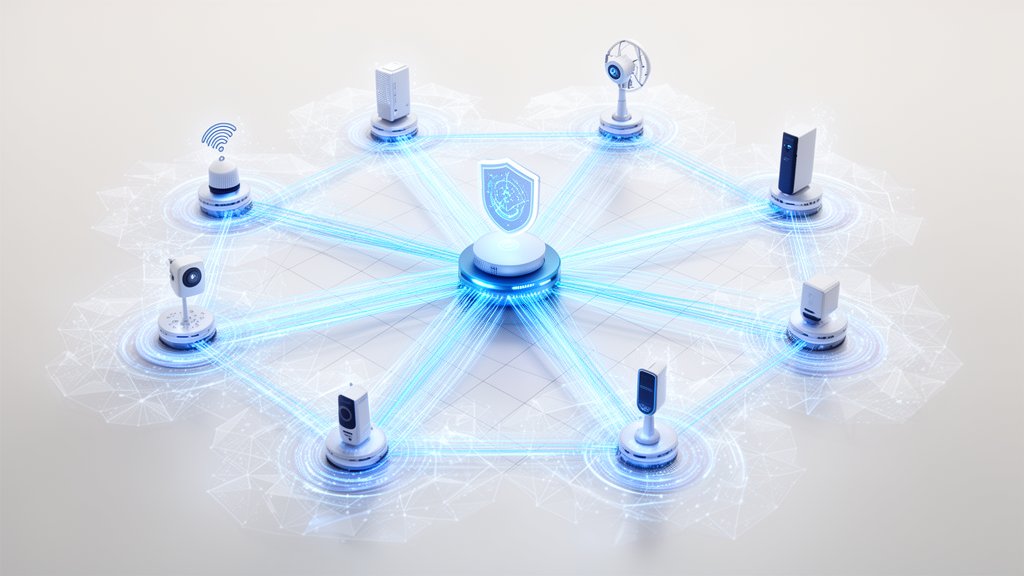
Researchers have introduced FedDynamic, a trust-aware federated learning framework engineered to resolve fundamental security and robustness challenges within open and dynamic Internet of Things environments. Federated learning allows distributed IoT devices to collaboratively train shared machine learning models while safeguarding sensitive user and device data privacy. However, operating within open, real-world deployment settings introduces significant vulnerabilities, where untrustworthy client devices, adversarial attacks, and insufficient update traceability routinely undermine the overall stability, accuracy, and security of distributed learning architectures.

To counter these vulnerabilities, FedDynamic features a comprehensive defense built upon dual-layer authentication and adaptive client selection designed to regulate system participation. The authentication framework pairs physical device-level fingerprint verification with model watermark embedding, working in tandem to validate client identity and ensure the complete integrity and authenticity of local model updates. This coordinated verification pipeline enables end-to-end update traceability and accountability, preventing malicious actors or corrupted devices from altering updates undetected across distributed networks.

Client evaluation within the framework is governed by a multi-metric trust scoring mechanism that assesses participating nodes across three specific performance dimensions: training efficiency, watermark consistency, and model accuracy. By evaluating how effectively a node trains, whether its embedded watermarks remain intact and consistent, and the precision of its local model parameters, the system generates an empirical measure of reliability for every connected IoT client involved in the collaborative training process.

To handle the volatile operational environments inherent to decentralized networks, the researchers developed a negative-feedback-driven dynamic weighting strategy. This mathematical approach adjusts model aggregation weights dynamically during the update consolidation phase, systematically promoting consistently reliable clients while aggressively suppressing risky, low-quality, or potentially compromised participants. The dynamic negative-feedback mechanism ensures that erratic or adversarial nodes are prevented from degrading global model parameters as network conditions evolve.

The research team validated the FedDynamic architecture through simulated experiments designed to capture realistic client behavior, specifically incorporating dynamic join-and-exit patterns that reflect the intermittent availability of real IoT hardware. Under rigorous experimental testing involving adversarial threats and fluctuating client participation, the experimental results demonstrated that FedDynamic consistently maintained high global model accuracy, rapid convergence rates, and strong robustness against adversarial disruption, establishing its effectiveness for secure, scalable federated learning deployments in practical IoT systems.

Subject of Research: Trust-aware secure aggregation for federated learning in dynamic IoT systems

Article Title: FedDynamic: trust-aware secure aggregation for federated learning in dynamic IoT

Article References: Yin, J., Zhou, X., Liu, Z., Luo, X., & Lin, F. (2026). FedDynamic: trust-aware secure aggregation for federated learning in dynamic IoT. Journal of Cloud Computing. https://doi.org/10.1186/s13677-026-00993-4

Image Credits: AI Generated

DOI: 10.1186/s13677-026-00993-4

Keywords: federated learning, Internet of Things, secure aggregation, trust-aware framework, dual-layer authentication, device-level fingerprinting, model watermark embedding, multi-metric trust scoring, adaptive client selection, dynamic weighting strategy, adversarial attacks, traceability, client join-and-exit patterns, training efficiency, model accuracy, intermittent availability

News Source: Veronica Carney. (November 19, 2026). Trust-Aware Federated Learning Framework Secures Dynamic Internet of Things Networks. Scienmag.


Tags: adaptive client selectionadversarial attacksclient join-and-exit patternsdevice-level fingerprintingdual-layer authenticationdynamic weighting strategyfederated learningintermittent availabilityInternet of Thingsmodel accuracymodel watermark embeddingmulti-metric trust scoringsecure aggregationtraceabilitytraining efficiencytrust-aware framework
Share12Tweet7Share2ShareShareShare1

Related Posts

Ultrasonic Pulse Velocity Tracks Compressive Strength Gains in Cement-Stabilized Mine Tailings

Ultrasonic Pulse Velocity Tracks Compressive Strength Gains in Cement-Stabilized Mine Tailings

November 19, 2026
LiDAR-Gated Motion Magnification Enables Automated Structural Monitoring from Mobile Platforms

LiDAR-Gated Motion Magnification Enables Automated Structural Monitoring from Mobile Platforms

November 19, 2026

Recursive Fitness-Based Scheduling Enhances 5G Uplink Efficiency for Machine Communications

November 19, 2026

Neural-ODE Framework Models Cuprate Bulk Fields but Encounters High-Temperature Limitations

November 19, 2026

POPULAR NEWS

  • Dyspnea and Eco-Anxiety Independently Link to Poorer Quality of Life in COPD

    Dyspnea and Eco-Anxiety Independently Link to Poorer Quality of Life in COPD

    29 shares
    Share 12 Tweet 7
  • Dystrophic Epidermolysis Bullosa Patients in Poland Face High Mental Health Morbidity

    29 shares
    Share 12 Tweet 7
  • Machine Learning Predicts Liver Fibrosis Risk in Prior Schistosoma Japonicum Infection

    29 shares
    Share 12 Tweet 7
  • Israeli Policy and Nursing Perspectives Diverge on Second Victim Phenomenon

    29 shares
    Share 12 Tweet 7

About

We bring you the latest biotechnology news from best research centers and universities around the world. Check our website.

Follow us

Recent News

Ultrasonic Pulse Velocity Tracks Compressive Strength Gains in Cement-Stabilized Mine Tailings

Eighty-One Percent of Elbow Disorder Patients Experience Nocturnal Pain and Poor Sleep

Systematic Review Reveals Occupational Health Burden for Indian Informal Women Workers

Subscribe to Blog via Email

Enter your email address to subscribe to this blog and receive notifications of new posts by email.

Join 88 other subscribers
  • Contact Us

Bioengineer.org © Copyright 2023 All Rights Reserved.

Welcome Back!

Login to your account below

Forgotten Password?

Retrieve your password

Please enter your username or email address to reset your password.

Log In
No Result
View All Result
  • Homepages
    • Home Page 1
    • Home Page 2
  • News
  • National
  • Business
  • Health
  • Lifestyle
  • Science

Bioengineer.org © Copyright 2023 All Rights Reserved.