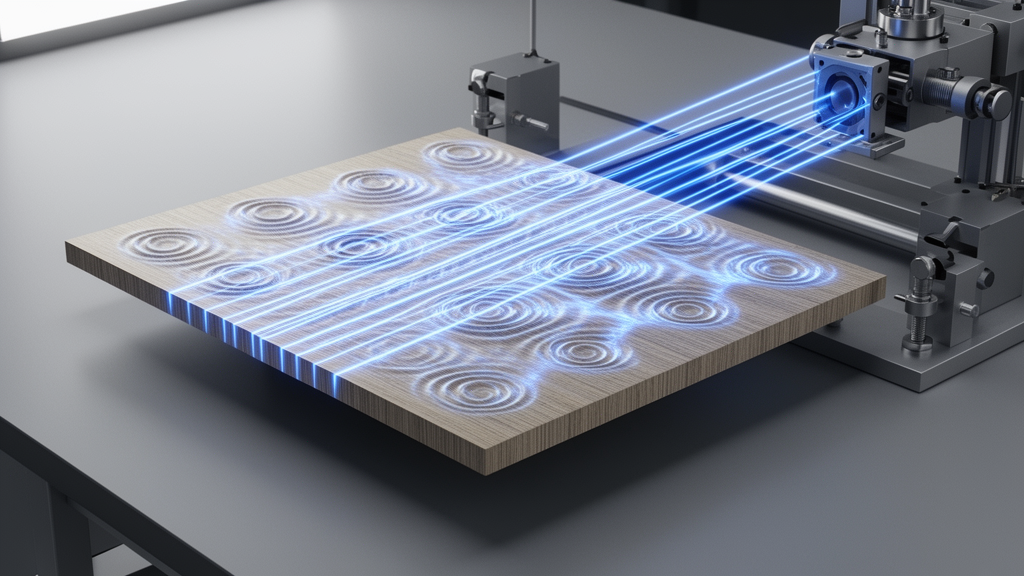
Researchers have developed a robust mathematical technique known as the Wide Strip Transition Matrix (WSTM) method to analyze the vibration behavior of orthotropic plates resting on Winkler-Pasternak elastic foundations and subjected to in-plane compression. This semi-analytical approach represents a significant advancement in structural engineering, addressing the complexity associated with modeling advanced plate configurations found in critical applications such as aerospace panels, composite bridge decks, pavements, and machine foundations. By integrating analytical nodal lines with wide strips via transition matrices derived directly from the plate’s modal ordinary differential equations, the method produces high-accuracy modal results while significantly reducing computational costs and memory requirements compared to traditional numerical methods like finite element, finite difference, or finite strip methods. The innovative WSTM framework allows for precise propagation of nodal state vectors across wide strips without the need for traditional numerical assembly procedures or the solution of massive systems of simultaneous algebraic equations.
The structural analysis of plates reinforced by stiffeners is inherently complex, often requiring modeling as an orthotropic plate to simplify the design process. These orthotropic structures exhibit distinct mechanical properties, including varying Young’s modulus and Poisson’s ratio in different directions, which necessitate sophisticated analysis to understand their dynamic response. The Winkler-Pasternak model adds further complexity by accounting for foundation interactions, where the Winkler component describes soil as a series of independent springs, and the Pasternak component introduces shear interaction between adjacent springs. Analyzing the vibration and stability of such restrained plates under in-plane compression is a challenging task that requires careful examination of various geometric, material, and loading parameters. The WSTM method fills a gap in the literature by providing a cohesive and analytical framework that addresses these factors simultaneously.
Mathematically, the WSTM method decomposes the partial differential equation of motion into a modal system of ordinary differential equations for each nodal line. The plate domain is divided into a minimal number of wide strips, and the transition matrix for each strip is evaluated using a power series expansion. This analytical construction allows the method to achieve rapid convergence, with the study demonstrating that a division into only four wide strips is sufficient to yield high-precision results with minimal quantitative error. The efficiency of the method is particularly notable in its ability to maintain numerical robustness as the restrained plate is subjected to increasing in-plane compressive forces. By bypassing the time-intensive process of solving a large number of simultaneous equations required in mesh-based techniques, WSTM offers a streamlined alternative that maintains accuracy comparable to more cumbersome approaches.
A critical aspect of the current study is the modeling of elastically restrained boundaries, where edges are freely restrained but not fully fixed against rotation. The restraint coefficient against rotation, characterized in this research, describes the physical stiffness of the plate edges. The study explores these restrained boundary conditions across a spectrum, ranging from simply supported edges to fully clamped conditions. The researchers successfully utilized the WSTM method to derive shape functions that satisfy these specific boundary conditions at the edges, ensuring that the transformed modal ordinary differential equations accurately reflect the structural support configuration. This capability is essential for accurately capturing the influence of partial rotational restraint on the natural frequency parameters of the plate.
Extensive validation of the WSTM method was conducted by comparing its results with established solutions reported in the literature, including those based on Ritz, Fourier, finite element, and Rayleigh-Ritz methods. The analysis of isotropic square elastically restrained plates under varied restraint levels showed excellent agreement, with discrepancies consistently remaining below one percent. This consistency was maintained across different plate geometries and boundary conditions, confirming the reliability of the method as a predictive benchmark. The strong correlation between WSTM results and reference data validates its efficiency and its capability to capture the influence of complex boundary restraint on plate dynamics, providing a robust tool for future engineering design optimization.
The study also investigates the influence of various parameters on the plate’s natural frequencies, including biaxial compression forces, Winkler foundation stiffness, and the combined Winkler-Pasternak effects. In cases involving orthotropic clamped rectangular plates under biaxial compression, the findings illustrate a consistent decrease in natural frequencies as compression increases, with the fundamental mode demonstrating the highest sensitivity at approximately 40 percent reduction under significant load. This indicates that uniform in-plane compression significantly reduces the plate’s overall structural rigidity and resistance to dynamic forces. However, the introduction of Winkler and Pasternak foundation layers effectively mitigates these effects, providing vertical stiffness and shear interaction that counteract compression-induced destabilization.
The Pasternak shear layer, in particular, emerges as a decisive factor in improving dynamic stability. Unlike the Winkler foundation, which primarily provides vertical stiffness, the Pasternak layer introduces shear coupling between adjacent springs, which reduces localized deformation and distributes loads more effectively across the structure. Numerical results showed that incorporating the Pasternak coefficient led to substantial growth in natural frequencies, with the fundamental mode benefiting the most due to its global dependence on structural stiffness. This behavior confirms that the combined Winkler-Pasternak foundation is significantly more effective than a Winkler-only foundation in resisting the destabilizing effects of in-plane compressive forces, thereby extending the stability limits of the orthotropic plate.
Orthotropic properties further influence the dynamic behavior, with the study highlighting an increased sensitivity to compression and restraint variation compared to isotropic cases. Results for rectangular orthotropic restrained plates demonstrate that while compression lowers the natural frequencies, stronger rotational restraint significantly enhances stiffness and mitigates the adverse impacts. Clamped edges were found to provide the highest frequency response, while simple support provided the lowest, with restrained edges offering intermediate resistance. This underlines the competitive interaction between boundary stiffness, foundation properties, and in-plane loading, demonstrating that engineering design must account for the simultaneous influence of these variables to prevent resonance and buckling failures.
From a design perspective, the WSTM method’s ability to quickly extract natural frequencies provides engineers with a means to identify potential resonance points where excitation frequencies might align with the plate’s natural modes. By adjusting the foundation properties and structural elements accordingly, designers can optimize lightweight designs to improve dynamic performance and structural safety. The methodology enables a comprehensive assessment of the plate-foundation system, which is vital for engineering applications where regulators may restrict resonance-prone structures or require high vibration resistance. The current study reinforces that achieving high accuracy with minimal computational effort is not only possible but beneficial for the iterative design processes required in advanced engineering fields.
While the WSTM method has proven highly effective for rectangular geometries, the authors acknowledge that further research is required to adapt this approach to other geometric shapes and curved boundaries. The current framework serves as a foundational development that future studies may build upon, particularly regarding the investigation of more complex elastic-restrained conditions that account for partial translational and torsional effects at the edges. The methodology remains a significant contribution to the toolbox for analyzing plate vibration, providing a versatile and stable semi-analytical solution that offers deeper insights into the complex interactions governing the dynamic stability and structural performance of restrained orthotropic plates under diverse engineering scenarios.
In implementing the mathematical framework, calculations were executed using the computer-aided mathematical software Maple, following an executive procedure that formulates the transition matrix through an eighth-order power series expansion. The plate domain is discretized into equal strips bounded by nodal lines, where each nodal state vector contains the displacement and its first three derivatives with respect to the dimensionless coordinate. At the starting edge, the rotational restraint conditions establish two known boundary values and two independent unknowns, designated as ac and bc. By successively multiplying the initial state vector by the derived strip transition matrices up to the opposite boundary, the procedure constructs a compact two-by-two determinant characteristic equation. Setting this determinant to zero directly isolates the circular natural frequency parameters as roots, avoiding iterative matrix assembly.
The parametric investigations provided specific quantitative benchmarks demonstrating the stabilizing capacity of elastic foundations under severe compressive loading. For a clamped orthotropic plate with an aspect ratio of 1.25 and rigidity ratios of 2 and 0.5 subjected to biaxial compression of -50, increasing the dimensionless Winkler foundation coefficient from 0 to 3000 produced a marked 112 percent increase in the fundamental frequency parameter, rising from 29.3085 to 62.1208. The second and third mode parameters exhibited more modest gains, increasing by approximately 20 percent from 83.1358 to 99.5568 and by 5.5 percent from 162.6688 to 171.6424, confirming that vertical foundation support predominantly stabilizes lower-order global deformation.
Introducing the Pasternak shear interaction yielded even greater structural gains under an elevated biaxial compression of -60 with a baseline Winkler stiffness of 500. When the Pasternak shear parameter increased from 0 to 50 on a plate with rigidity ratios of 0.5, the fundamental frequency parameter escalated from 17.2258 to 43.4629, representing a 152 percent increase. In comparison, the second and third modes rose by approximately 31 percent and 16 percent, respectively. Furthermore, examining edge restraints on orthotropic rectangular plates revealed that applying a compressive force of -60 decreased the fundamental frequency parameter from 61.33 to 43.52 under clamped boundaries, compared to a steeper drop from 50.64 to 30.01 under simply supported edges.
Subject of Research: Computational semi-analytical method for analyzing structural vibration in restrained orthotropic plates on elastic foundations.
Article Title: Vibration of a restrained orthotropic plate subjected to in-plane compression forces and resting on Winkler-Pasternak elastic foundation
Article References: Sheikh, A. M. F. E., Albogami, A., Saddek, A. B., Alshehari, A. M., Yousef, S. E. A. S., & Bousalem, B. (2026). Vibration of a restrained orthotropic plate subjected to in-plane compression forces and resting on Winkler-Pasternak elastic foundation. Journal of King Saud University – Engineering Sciences, 38(5), Article 34. https://doi.org/10.1007/s44444-026-00101-6
Image Credits: AI Generated
DOI: 10.1007/s44444-026-00101-6
Keywords: Orthotropic plate, Winkler-Pasternak foundation, Vibration analysis, WSTM method, Structural engineering, In-plane compression, Modal accuracy, Semi-analytical modeling, Restrained edges, Composite structures, Aerospace panels, Mechanical stiffness, Buckling resistance, Numerical stability, Plate dynamics, Shear layer, Transition matrix, Modal ODEs, Elastic foundation, Dynamic stability
News Source: Denise Maddox. (November 19, 2026). New Matrix Method Improves Vibration Accuracy for Restrained Orthotropic Plates. Scienmag.