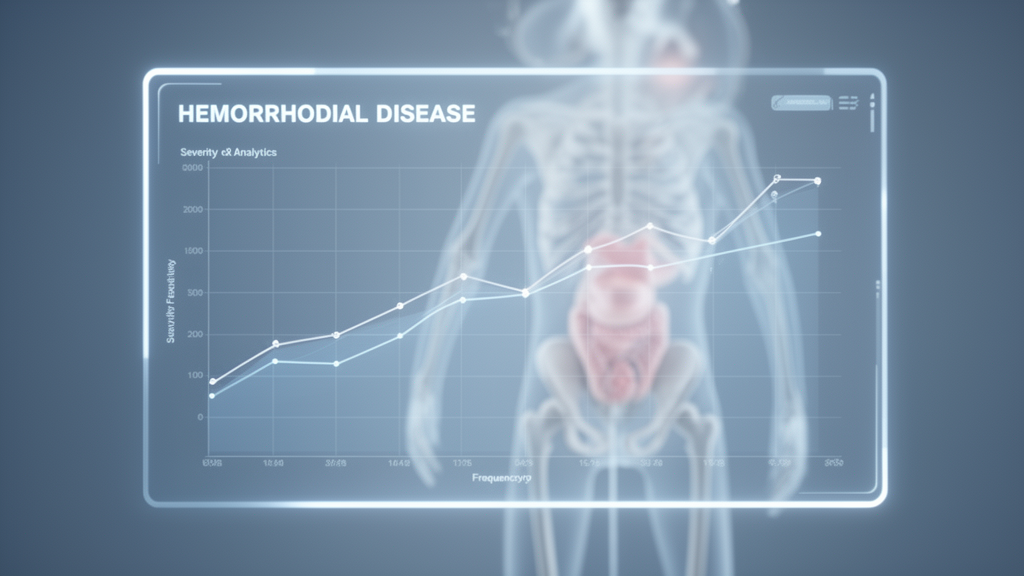
A newly developed composite patient-reported outcome measure called the GRAVITY score successfully integrates symptom severity and symptom frequency for patients with hemorrhoidal disease, demonstrating strong internal consistency and responsiveness to clinical change. Reported in a prospective multicentric observational study published in the International Journal of Colorectal Disease, the instrument was designed to bridge existing assessment tools that evaluate separate clinical dimensions. By capturing both how severely symptoms impact patients and how often those symptoms recur, the novel scoring system provides clinicians and researchers with a unified metric for baseline evaluation, longitudinal follow-up, and therapeutic comparison across various stages of disease presentation.
Hemorrhoidal disease presents with a notably heterogeneous profile of clinical manifestations, including bleeding, prolapse, pain, itching, and soiling.
The primary validation phase enrolled 265 consecutive patients presenting with hemorrhoidal disease who underwent systematic prospective evaluation across multiple clinical centers between October 2025 and March 2026. The research protocol sought to examine the internal consistency of the newly derived composite metric and to evaluate how closely its measurements correlated with each of the parent questionnaires across the entire patient cohort as well as across specific clinical subgroups.
Statistical analysis of the initial cohort demonstrated that the GRAVITY score possesses high internal reliability, yielding an overall Cronbach’s alpha of 0.908. Furthermore, significant differences in the symptom scores measured by the PROM-HISS, the HDSS/SHSHD, and the composite GRAVITY instrument were detected across patients classified according to Goligher grade, with differences reaching statistical significance at p < 0.001.
Across the full cohort of 265 patients, correlation analyses revealed that the symptom domains of the PROM-HISS and the HDSS/SHSHD shared 70 percent of explained variance, with a Pearson correlation coefficient of r = 0.839 and a coefficient of determination of R2 = 0.704. This substantial but incomplete overlap highlighted that symptom severity and symptom frequency represent overlapping yet distinct clinical dimensions. In comparison, the composite GRAVITY score exhibited noticeably stronger statistical correlations with both underlying parent instruments, registering a correlation coefficient of r = 0.946 (R2 = 0.895) with the PROM-HISS symptom domain and r = 0.970 (R2 = 0.941) with the HDSS/SHSHD symptom domain.
Importantly, stratified subgroup analyses revealed that the relationship between the two established parent instruments degraded substantially at the extremes of disease classification. In patients presenting with either early-stage Goligher grade I disease or advanced Goligher grade IV disease, the correlation between the symptom domains of the PROM-HISS and the HDSS/SHSHD weakened noticeably. In contrast, the composite GRAVITY score maintained consistently robust, high correlation coefficients with both individual instruments across all four Goligher grades, demonstrating that the integrated score functions reliably irrespective of whether a patient exhibits mild initial symptoms or extensive anatomical disease.
The investigators also assessed longitudinal responsiveness in a distinct secondary cohort comprising 42 patients who underwent treatment with three percent polidocanol foam sclerotherapy, completing score assessments at baseline and 30 days post-procedure. In this intervention cohort, the baseline correlation between the symptom domains of the PROM-HISS and the HDSS/SHSHD was markedly lower than in the broader observational sample, showing a Pearson coefficient of r = 0.413 and an R2 of 0.170. Despite this baseline divergence between parent tools, the GRAVITY score maintained robust correlations with both instruments. Following sclerotherapy, all patient-reported outcome measures demonstrated statistically significant improvement at 30 days (p < 0.001), confirming the composite score’s sensitivity and responsiveness to therapeutic change. The authors concluded that while these preliminary findings support GRAVITY as a useful composite measure, broader clinical implementation will require further psychometric validation.
Subject of Research: Development and clinical evaluation of the composite GRAVITY score for hemorrhoidal disease
Article Title: The GRAVITY score (grading severity and frequency in hemorrhoidal disease): development and initial evaluation of a composite patient-reported outcome measure
Article References: Gravante, G., Quazzico, A., Sorge, R., Bracchitta, S., Lobascio, P., De Simone, V., Sileri, P., Gallo, G., & Picciariello, A. (2026). The GRAVITY score (grading severity and frequency in hemorrhoidal disease): development and initial evaluation of a composite patient-reported outcome measure. International Journal of Colorectal Disease. https://doi.org/10.1007/s00384-026-05248-x
Image Credits: AI Generated
DOI: 10.1007/s00384-026-05248-x
Keywords: GRAVITY score, hemorrhoidal disease, patient-reported outcome measures, symptom severity, symptom frequency, Goligher grade, PROM-HISS, HDSS, SHSHD, polidocanol foam sclerotherapy, internal consistency, Cronbach's alpha, longitudinal responsiveness, prolapse, bleeding, itching
News Source: Ophelia Keating. (November 18, 2026). New Composite GRAVITY Score Integrates Severity and Frequency in Hemorrhoidal Disease. Scienmag.