• HOME
  • NEWS
  • EXPLORE
    • CAREER
      • Companies
      • Jobs
    • EVENTS
    • iGEM
      • News
      • Team
    • PHOTOS
    • VIDEO
    • WIKI
  • BLOG
  • COMMUNITY
    • FACEBOOK
    • INSTAGRAM
    • TWITTER
Wednesday, November 18, 2026
BIOENGINEER.ORG
No Result
View All Result
  • Login
  • HOME
  • NEWS
  • EXPLORE
    • CAREER
      • Companies
      • Jobs
        • Lecturer
        • PhD Studentship
        • Postdoc
        • Research Assistant
    • EVENTS
    • iGEM
      • News
      • Team
    • PHOTOS
    • VIDEO
    • WIKI
  • BLOG
  • COMMUNITY
    • FACEBOOK
    • INSTAGRAM
    • TWITTER
No Result
View All Result
Bioengineer.org
No Result
View All Result
Home NEWS Science News Biology

DNA Encoding Framework Achieves 98.90% Accuracy in Clinical Oral Cancer Classification

by
November 18, 2026
in Biology, Technology
Reading Time: 2 mins read
0
DNA Encoding Framework Achieves 98.90% Accuracy in Clinical Oral Cancer Classification

DNA Encoding Framework Achieves 98.90% Accuracy in Clinical Oral Cancer Classification

Share on FacebookShare on TwitterShare on LinkedinShare on RedditShare on Telegram

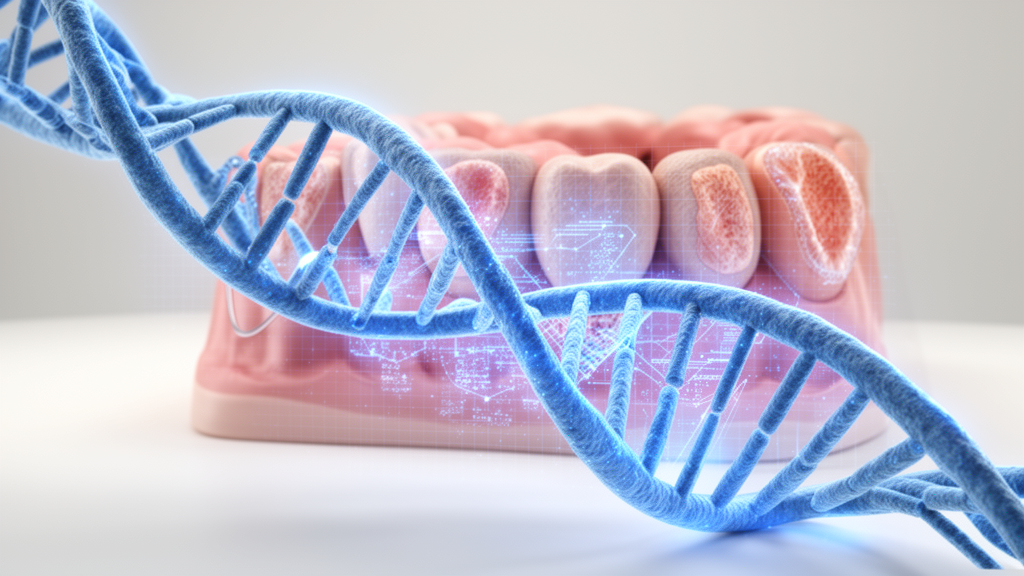
Researchers have developed a novel framework for oral cancer classification that utilizes pixel-level DNA encoding combined with codon-pattern feature extraction. This study, published in BMC Bioinformatics, addresses the critical need for reliable diagnostic tools to facilitate early detection and improve patient prognosis for one of the most aggressive cancer types globally.

The methodological framework operates by converting the first six bits of every pixel in an oral cancer image into specific nucleotide sequences. The encoding scheme maintains run-length and GC-content constraints. Once these DNA planes are generated, the researchers group consecutive nucleotides into triplets, or codons. Probability histograms of these codon patterns are then computed to create structured feature vectors that represent the underlying image characteristics at a granular level.

To classify these feature vectors, the team implemented a variety of transformer-based models, including TabPFN, TabTransformer, SAINT, and FT-Transformer, alongside an integrated ensemble model. The researchers evaluated the framework’s effectiveness across ten publicly accessible datasets, which included a diverse range of four clinical and six histopathological image sources.

The experimental results demonstrate a high level of diagnostic performance. On clinical datasets, the proposed framework achieved an accuracy of 98.90%, with a precision of 98.90%, recall of 98.89%, and an F1-score of 98.90%. Performance metrics remained robust when the framework was applied to histopathological datasets, yielding 97.49% precision, 98.09% recall, 97.78% F1-score, and 97.99% accuracy. These findings highlight the potential of compact codon-derived representations in enhancing classification tasks.

The study concludes that the integration of pixel-level DNA encoding with transformer-based ensembles offers a highly accurate method for identifying oral cancer.

Subject of Research: Bioinformatics and medical image classification for oral cancer diagnosis.

Article Title: Pixel-level DNA encoding with codon pattern feature extraction for oral cancer classification using transformer ensembles

Article References: Patel, G. N., Pradhan, J., & Dey, T. K. (2026). Pixel-level DNA encoding with codon pattern feature extraction for oral cancer classification using transformer ensembles. BMC Bioinformatics. https://doi.org/10.1186/s12859-026-06685-9

Image Credits: AI Generated

DOI: 10.1186/s12859-026-06685-9

Keywords: Oral Cancer, DNA Encoding, Bioinformatics, Machine Learning, Transformer Models, Image Classification, Histopathology, Clinical Diagnostics, Codon Patterns, Feature Extraction, Automated Detection, Medical Imaging, Ensemble Learning, Cancer Prognosis, Computational Biology

News Source: Nathaniel Bowman. (November 18, 2026). DNA Encoding Framework Achieves 98.90% Accuracy in Clinical Oral Cancer Classification. Scienmag.

Tags: Automated DetectionBioinformaticsCancer prognosisclinical diagnosticsCodon Patternscomputational biologyDNA encodingensemble learningfeature extractionhistopathologyimage classificationMachine LearningMedical Imagingoral cancerTransformer models
Share12Tweet7Share2ShareShareShare1

Related Posts

Smartphone Driving Dataset in Pakistan Reveals Behavior Labels Primarily Reflect Speed

Smartphone Driving Dataset in Pakistan Reveals Behavior Labels Primarily Reflect Speed

November 18, 2026
Machine Learning Model Predicts Concrete Fracture Toughness Under Repeated Freeze–Thaw Cycles

Machine Learning Model Predicts Concrete Fracture Toughness Under Repeated Freeze–Thaw Cycles

November 18, 2026

Novel DivIVA Protein CidIVA Controls Envelope Integrity in Mycobacterial Survival

November 18, 2026

Halomonas Elongata N1T Yields Exopolysaccharides That Bind Human C-Type Lectins

November 18, 2026

POPULAR NEWS

  • Novel Wheat Gene TaRLK-1B Identified as Key Leaf Rust Defense Regulator

    Novel Wheat Gene TaRLK-1B Identified as Key Leaf Rust Defense Regulator

    29 shares
    Share 12 Tweet 7
  • Herbal Decoction Drives Molecular Rearrangement Into Chiral Nanoribbons That Aid Lipophagy

    29 shares
    Share 12 Tweet 7
  • Semi-Supervised Deep Learning Framework Detects Smart Grid Cyber Attacks With High Accuracy

    29 shares
    Share 12 Tweet 7
  • County Physical Inactivity Strongly Links to Youth Obesity Rates Across Tennessee

    29 shares
    Share 12 Tweet 7

About

We bring you the latest biotechnology news from best research centers and universities around the world. Check our website.

Follow us

Recent News

Surgeons Successfully Repair Rare Vascular Ring in Neonate With DiGeorge Syndrome

Review Links Gastric Tissue Architecture Changes to Precancerous Gastric Lesion Progression

Two-Injection Aripiprazole Start Shows Numerically Lower Hospitalizations but Lacks Statistical Significance

Subscribe to Blog via Email

Enter your email address to subscribe to this blog and receive notifications of new posts by email.

Join 88 other subscribers
  • Contact Us

Bioengineer.org © Copyright 2023 All Rights Reserved.

Welcome Back!

Login to your account below

Forgotten Password?

Retrieve your password

Please enter your username or email address to reset your password.

Log In
No Result
View All Result
  • Homepages
    • Home Page 1
    • Home Page 2
  • News
  • National
  • Business
  • Health
  • Lifestyle
  • Science

Bioengineer.org © Copyright 2023 All Rights Reserved.