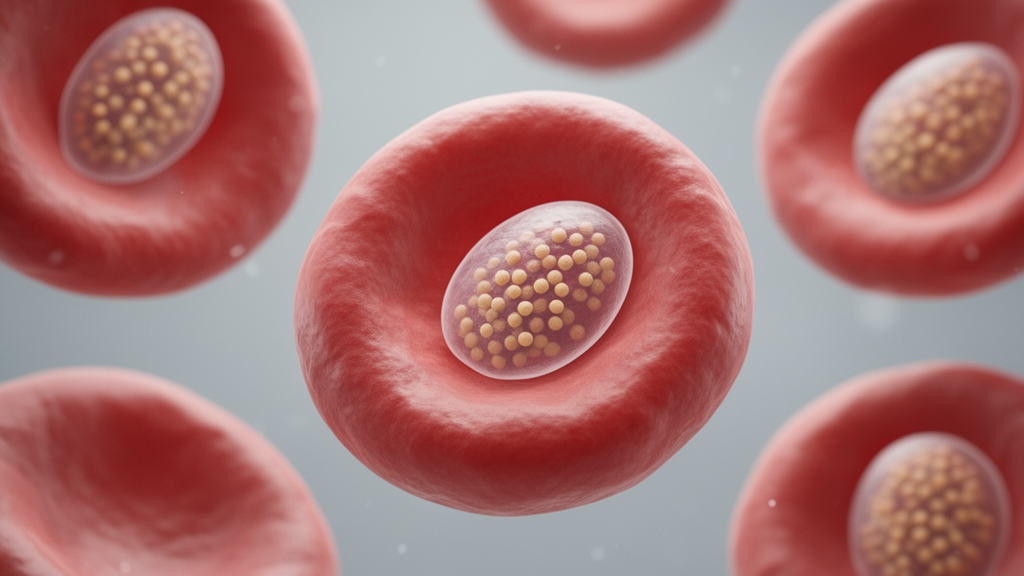
A retrospective laboratory analysis conducted by researchers at the Chongqing Municipal Reference Laboratory for malaria diagnosis has characterized twelve misdiagnosed cases of imported Plasmodium ovale malaria identified between January 2013 and October 2024. The investigation evaluated discrepancies between initial findings reported by submitting medical institutions and confirmatory testing carried out at the municipal reference facility in Chongqing, China. Across the nearly twelve-year observation period, the reference laboratory identified twenty-eight single Plasmodium ovale infections, from which the twelve misdiagnosed cases were systematically screened and enrolled for detailed investigation.
All twelve patients included in the misdiagnosed cohort were young to middle-aged males who had acquired their infections abroad in African countries before traveling to China. In non-endemic regions where cross-border population mobility has expanded, imported ovale malaria represents a notable public health challenge. Plasmodium ovale infections frequently present with intermittent fever patterns and low circulating parasitaemia, clinical characteristics that often complicate prompt recognition. These clinical features, paired with the insufficient diagnostic sensitivity of conventional laboratory assays, render Plasmodium ovale particularly vulnerable to diagnostic errors during initial clinical presentations at front line healthcare facilities.
The evaluation demonstrated that species misidentification constituted the predominant category of error among submitting medical facilities, accounting for ten of the twelve discrepancies. Medical institutions misclassified eight cases as Plasmodium vivax, one case as Plasmodium falciparum, and one case as Plasmodium malariae. The remaining two enrolled cases involved qualitative diagnostic discrepancies rather than misidentification of the parasite species.
To establish definitive diagnoses and understand the technical sources of diagnostic discordance, the investigation combined thick-and-thin blood-smear microscopy, rapid diagnostic tests, real-time quantitative polymerase chain reaction, and gene sequencing. The assessment showed that microscopy performance was heavily dependent on blood-smear preparation quality as well as the morphological distinctiveness of parasite stages present in each specimen. In parallel, rapid diagnostic test kits demonstrated marked diagnostic limitations, as the assays could not reliably differentiate between Plasmodium ovale, Plasmodium vivax, and Plasmodium malariae, and one rapid test produced an outright false-negative result.
In contrast to conventional methods, real-time quantitative polymerase chain reaction assays reliably confirmed single Plasmodium ovale infection across all twelve discrepant patient samples. Following nucleic acid confirmation, gene sequencing was conducted to resolve the subspecies identity and examine genetic polymorphisms among the isolates. Sequencing classified seven infections as Plasmodium ovale curtisi and five infections as Plasmodium ovale wallikeri. The molecular analysis demonstrated distinct subspecies-specific dimorphic genetic variations at the cytochrome c oxidase subunit 1 (cox1) and cytochrome b (cytb) mitochondrial gene loci, while rare missense mutations were also detected among the Plasmodium ovale wallikeri isolates.
The study authors concluded that the pronounced morphological resemblance between Plasmodium ovale and Plasmodium vivax, combined with the inherent limitations of conventional diagnostic tools, serves as a plausible driver of diagnostic failure in local medical settings. Diagnostic misclassification carries serious clinical ramifications, as suboptimal or inappropriate antimalarial treatment regimens increase the risk of disease relapse in affected individuals. Furthermore, unrecognized or improperly managed cases could theoretically introduce risks of onward malaria transmission within regions that have successfully achieved malaria elimination.
To safeguard and sustain national malaria elimination achievements, the researchers emphasized the critical importance of enhancing frontline diagnostic capabilities. The study findings highlight an urgent need to strengthen quality control procedures for blood-smear preparation and staining, expand local access to nucleic acid testing platforms, and provide structured professional training for laboratory personnel stationed at primary medical institutions responsible for evaluating suspected imported malaria cases.
Subject of Research: Diagnostic discrepancies and genetic characterization of imported Plasmodium ovale malaria infections
Article Title: Analysis on the characteristics of misdiagnosed cases of imported Plasmodium ovale in Chongqing municipal reference laboratory for malaria diagnosis
Article References: Tan, Y., Jiang, D., Liu, G., Wang, W., Liao, C., & Xu, J. (2026). Analysis on the characteristics of misdiagnosed cases of imported Plasmodium ovale in Chongqing municipal reference laboratory for malaria diagnosis. Frontiers in Medicine, 13, Article 1933548. https://doi.org/10.3389/fmed.2026.1933548
Image Credits: AI Generated
DOI: 10.3389/fmed.2026.1933548
Keywords: Plasmodium ovale, Plasmodium vivax, Plasmodium falciparum, Plasmodium malariae, malaria diagnosis, diagnostic discrepancy, species misidentification, imported malaria, Chongqing Municipal Reference Laboratory, Plasmodium ovale curtisi, Plasmodium ovale wallikeri, real-time quantitative PCR, rapid diagnostic tests, blood-smear microscopy, cox1 locus, cytb locus, malaria elimination
News Source: Ophelia Keating. (November 18, 2026). Reference Laboratory Identifies Misdiagnosis Patterns in Imported Plasmodium Ovale Malaria Cases. Scienmag.