Fusing geometric depth features with depth statistics allows lightweight machine learning classifiers to recover up to 100 percent accuracy across different robotic platforms, according to a study published in the Journal of Intelligent and Robotic Systems. The findings demonstrate that feature-based sensor fusion can resolve the severe performance drops that occur when perception algorithms encounter geometric sensor variations across distinct robot designs inspecting high-voltage power transmission lines, evaluating both mechanical obstacle traversal and algorithm transferability.
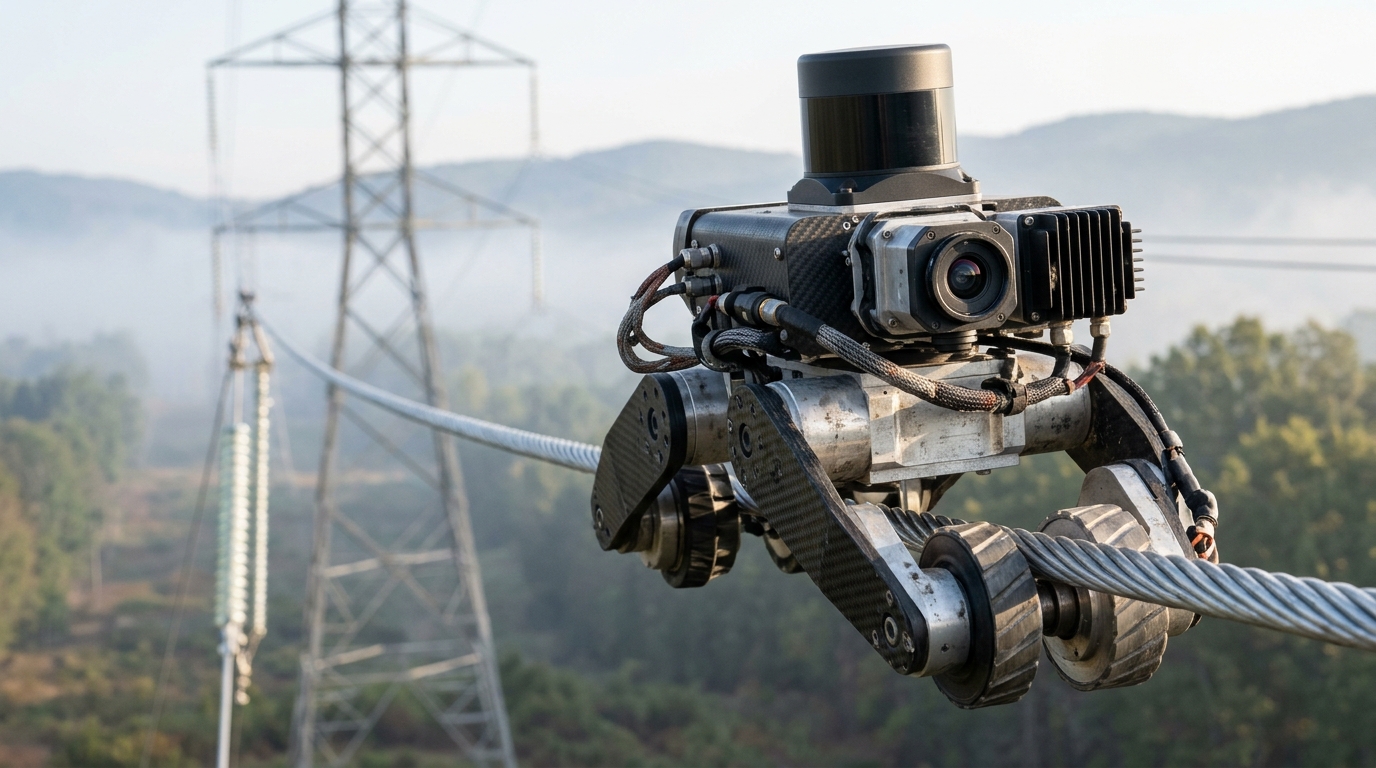
The authors investigated a multimodal perception suite combining depth sensors alongside reconfigurable mechanical architectures designed to identify and negotiate physical obstacles along utility lines.
To analyze how mechanical design affects operational effectiveness, the investigation comparatively evaluated three distinct robot topologies: Line Walker, ModuClimber, and FlexRover.
The comparative analysis revealed a clear trade-off between mechanical simplicity and obstacle negotiation capabilities among the tested models. While simpler configurations offer reduced mechanical complexity, the authors determined that complex articulated designs are essential for successfully traversing obstacles encountered along power transmission lines during autonomous inspection runs.
Beyond mechanical navigation, the study identified substantial challenges regarding algorithm portability across different robot configurations. Machine learning models trained on one specific robot topology suffered severe performance degradation when transferred to others, a performance breakdown driven primarily by geometric sensor variations and shifts in spatial perspective across differing mechanical frames.
To overcome this portability limitation, the authors demonstrated that combining geometric depth features with statistical depth metrics allowed lightweight classifiers to recover up to 100 percent accuracy across different platforms.
The findings indicate that while deep learning models like SqueezeNet provide inherent baseline robustness across topological shifts, feature-based sensor fusion represents the key enabler for building portable autonomous inspection systems. The research establishes that fusing depth features ensures reliable cross-platform perception while accommodating the articulated mechanical designs necessary for power line navigation.
Subject of Research: Autonomous robotic inspection of power transmission lines using multimodal depth sensing and reconfigurable mechanical topologies
Article Title: Integrated Robotic System for Autonomous Inspection of Power Transmission Lines Using Multimodal Perception and Reconfigurable Topologies
Article References: Nishihara, J. M., Domingues, A., Goto do Valle, D. R., Ramos Neto, O., de Oliveira, A. S., & Rohrich, R. F. (2026). Integrated Robotic System for Autonomous Inspection of Power Transmission Lines Using Multimodal Perception and Reconfigurable Topologies. Journal of Intelligent & Robotic Systems. https://doi.org/10.1007/s10846-026-02458-x
Image Credits: AI Generated
DOI: 10.1007/s10846-026-02458-x
Keywords: power transmission lines, autonomous inspection, robotic inspection, Line Walker, ModuClimber, FlexRover, reconfigurable topologies, multimodal perception, depth sensors, obstacle negotiation, algorithm portability, sensor fusion, geometric depth features, depth statistics, lightweight classifiers, SqueezeNet, machine learning portability
News Source: Denise Maddox. (November 18, 2026). Sensor Fusion Restores Classifier Accuracy Across Differing Power Line Inspection Robots. Scienmag.