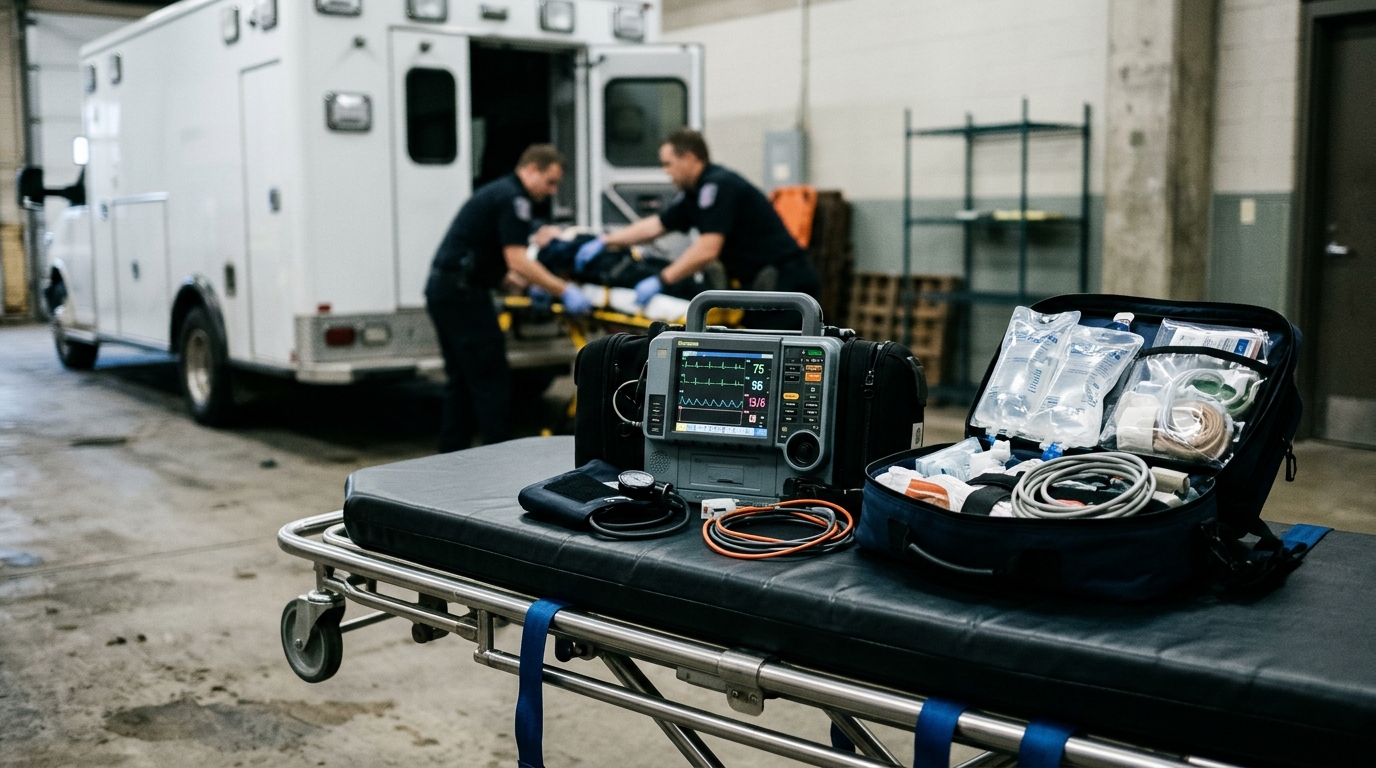
Chemical restraint during law-enforcement encounters has emerged as a significant public health and human rights concern in the United States, according to a recent narrative review evaluating national trends and clinical outcomes between 2022 and 2025. The study, which synthesized peer-reviewed clinical research, investigative datasets, and legal analyses, highlights that the administration of sedative medications in custodial environments frequently occurs under clinically unstable conditions that lack the essential guardrails found in hospital settings. Researchers found that this practice remains a site of preventable morbidity and mortality, with emerging evidence confirming persistent risks including medication-induced respiratory depression, restraint-related asphyxia, and pronounced racial inequities in how chemical sedation is applied.
A central finding of the synthesis involves the clinical trajectory of ketamine when utilized in the field. Multiple investigations, including recent reports by Muldowney et al. and Kwong et al., reveal that prehospital ketamine administration is associated with intubation rates reaching 30% to 40% in custodial settings, a figure that stands in stark contrast to the less than 5% rate observed for similar interventions within emergency department environments. Comparative data suggests that ketamine produces higher incidences of hypersalivation, laryngospasm, and oxygen desaturation than benzodiazepines when administered outside controlled hospital facilities. These adverse effects appear particularly hazardous when compounded by the physical constraints often present in police-involved encounters, such as prone positioning or the application of force by multiple officers, which can further jeopardize the patient’s airway and cardiopulmonary stability.
The study also addresses the persistence of the term “excited delirium,” a construct formally rejected in 2022 by major professional medical organizations, including the American Medical Association, the American Psychiatric Association, and the American College of Emergency Physicians. Despite this rejection, the terminology continues to appear in emergency medical services (EMS) protocols, police training materials, and various medico-legal narratives. Analysts argue that this persistence functions to obscure the true physiological mechanisms leading to death—such as untreated medical emergencies, hypoxia, or the interaction of sedative agents with physical force—by framing the patient’s behavior as the primary cause of the incident. Historical evidence indicates that the diagnosis is not a discrete psychiatric condition but rather a label that lacks consistent diagnostic criteria and evidence-based treatment pathways.
Racial disparities are identified as a defining feature of these practices, with evidence suggesting that Black individuals are disproportionately subjected to chemical restraint. Analyses of the use of “excited delirium” as a justification suggest that it disproportionately implicates Black men, reinforcing long-standing, racialized stereotypes of dangerousness and superhuman strength. These patterns appear to persist even when controlling for presenting symptoms, indicating that systemic implicit bias and structural racism influence clinical decision-making in the field, transforming medical intervention into a mechanism for enacting racialized social control.
The review emphasizes that the prehospital environment inherently lacks the robust safety infrastructure required for safe sedation. In a hospital setting, chemical restraint is managed through physician oversight, continuous monitoring, ready access to advanced airway equipment, and rapid escalation pathways. Conversely, paramedics operating in the field under standing orders often lack these safeguards, and law enforcement presence can exert coercive pressure on clinical staff to prioritize scene control over medical necessity. This institutional environment creates a breakdown in clinical autonomy, as paramedics may feel compelled to sedate individuals to facilitate transport or custody transfer, despite lacking the monitoring capabilities or interruption mechanisms necessary to mitigate the risks associated with potent sedative administration.
Policy gaps and administrative fragmentation are identified as major contributors to these adverse outcomes. While some jurisdictions have taken steps to restrict ketamine use or eliminate “excited delirium” language, many others retain permissive policies characterized by minimal medical oversight. This inconsistency complicates accountability and allows unsafe practices to persist even as clinical evidence of harm grows. The study suggests that professional society statements have not been uniformly translated into the operational standards that govern daily practice on the ground.
The manuscript draws upon findings from the AP/FRONTLINE Lethal Restraint project, which documented at least 94 sedative-associated custody deaths occurring between 2012 and 2021, with additional cases emerging through 2025. Autopsy reports frequently associate these outcomes with acute airway compromise or sudden cardiopulmonary collapse following the administration of sedatives. Researchers argue that the combination of physical force and sedation in the field is a particularly dangerous intersection that necessitates immediate intervention. The study asserts that without coordinated, evidence-based national standards, these preventable harms will continue, as current protocol variability allows for significant departures from safe practice standards without meaningful oversight or interruption.
To address these systemic failings, the study provides a set of protocol reform recommendations consistent with contemporary clinical evidence. These include the explicit and universal removal of “excited delirium” terminology from all EMS and law enforcement materials to prevent the misclassification of medical emergencies. Furthermore, the researchers propose the implementation of mandatory medical control consultation before the initiation of chemical restraint, whenever the clinical situation allows, to ensure that sedation is medically indicated and not merely a tool for custodial management. Such oversight is intended to restore the focus of paramedics to patient assessment and safety rather than operational expediency.
Additional safety recommendations focus on the mechanical and procedural aspects of custodial encounters. The authors call for the clear establishment of maximum dosing thresholds with automatic, non-negotiable protocol interruptions if those limits are reached. They also advocate for an absolute prohibition of chemical restraint while patients are maintained in prone or piled-on restraint positions, which significantly increases the risk of positional asphyxia.
The review also emphasizes the importance of transparency and accountability through structured documentation and independent review. The researchers argue that centering patient safety over custodial convenience is essential for aligning prehospital practice with both evidence-based medicine and health equity goals. They conclude that the current convergence of clinical risk, structural inequity, and protocol weakness necessitates an urgent national response to prevent further preventable morbidity and mortality in custodial settings.
Finally, the study examines the role of professional practice statements in shaping these outcomes. The persistent disparity between clinical standards in hospitals and the operational reality of prehospital custodial settings remains a primary driver of risk. The authors suggest that systemic change must involve not only the modification of individual EMS protocols but a fundamental shift in how law enforcement encounters are viewed through the lens of patient safety, prioritizing medical stability over the facilitation of custody.
The conclusion drawn by the research team is that chemical restraint in police-associated prehospital settings continues to impose unacceptable clinical and ethical burdens. The persistence of racial disparities in the application of these practices, combined with the continued use of clinically abandoned diagnostic constructs, highlights the failure of existing policy to protect vulnerable populations. The researchers emphasize that reform requires a coordinated national effort to standardize protocols, eliminate dangerous terminology, and empower medical control to halt unsafe practices before they result in catastrophic outcomes.
Subject of Research: Clinical risks and systemic policy inequities associated with prehospital chemical restraint in custodial settings.
Article Title: Chemical restraint in custody: national trends, clinical outcomes, and policy implications (2022–2025)
Article References: Gomez, L. E. (2026). Chemical restraint in custody: national trends, clinical outcomes, and policy implications (2022–2025). Health & Justice, 14(1), Article 38. https://doi.org/10.1186/s40352-026-00435-y
Image Credits: AI Generated
DOI: 10.1186/s40352-026-00435-y
Keywords: chemical restraint, ketamine, EMS protocols, custodial medicine, respiratory complications, racial inequity, excited delirium, police custody, public health, prehospital sedation, medical oversight, patient safety, policy reform, structural racism, intubation risk, narrative review, clinical practice standards, law enforcement, healthcare equity
News Source: Ophelia Keating. (November 18, 2026). Ketamine Use in Custodial Settings Linked to Elevated Clinical Risks. Scienmag.