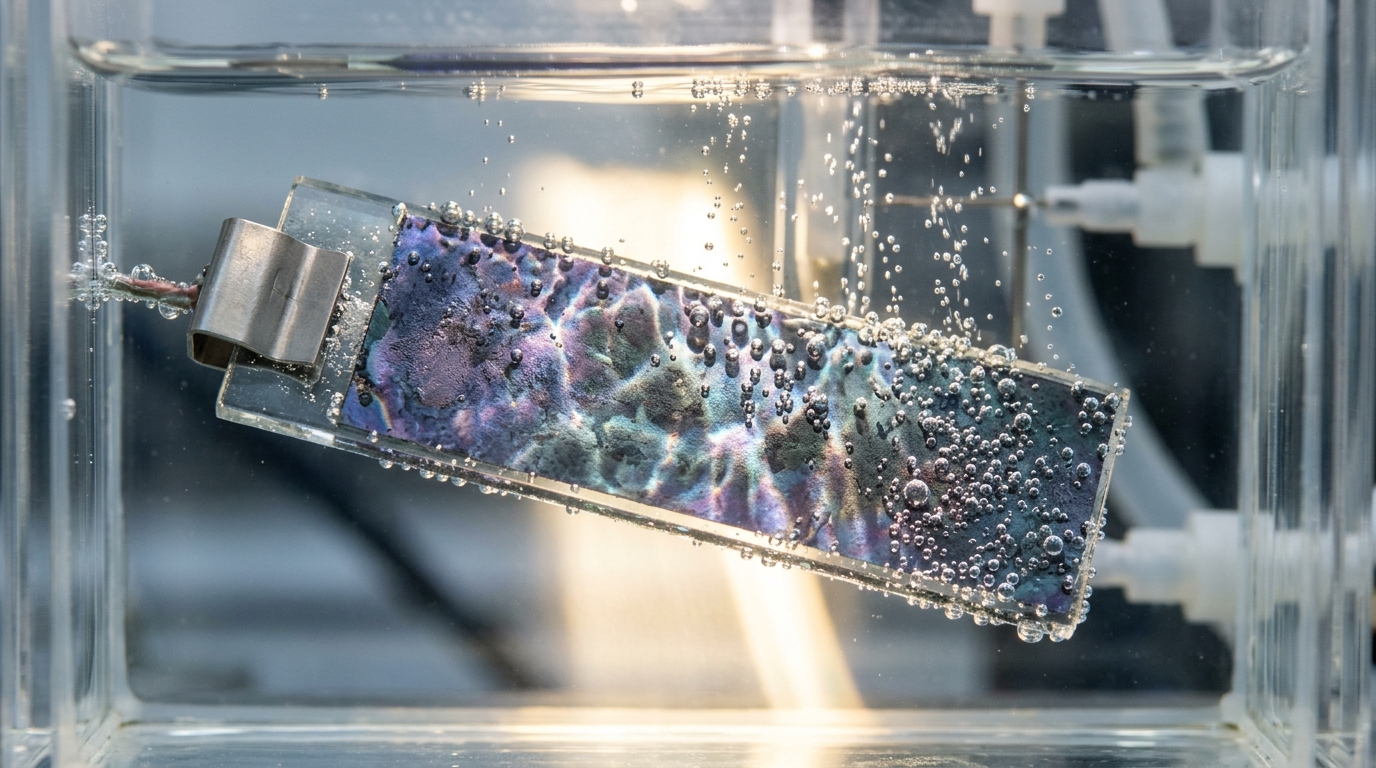
First-principles calculations demonstrate that boron and nitrogen co-doping within a two-dimensional silicon carbide and platinum dioxide heterostructure substantially optimizes its optical response and hydrogen evolution performance for solar-driven water splitting. In the theoretical investigation, researchers systematically evaluated the structural, electronic, and photocatalytic properties of the constructed two-dimensional SiC/PtO2 material. The computational modeling indicates that solar-driven photocatalytic water splitting offers a viable strategy for sustainable hydrogen production, with interface engineering and nonmetal doping functioning together to create an efficient photocatalytic platform.
To ensure the structural integrity of the modeled interface, the researchers validated the thermal stability of the two-dimensional SiC/PtO2 heterostructure using ab initio molecular dynamics simulations. Detailed electronic structure analyses subsequently established that the combined two-dimensional system possesses a bandgap of 1.44 electron volts. In addition to this bandgap value, the electronic structure calculations identified favorable band alignment across the heterostructure, confirming that the energy levels are well suited to facilitate the chemical reactions required for splitting water molecules.
The investigation examined the interfacial charge dynamics through several independent theoretical methods, including charge redistribution assessments, work function variation analyses, built-in electric field evaluations, and Bader charge analysis. These complementary analyses consistently support the formation of a direct Z-scheme charge-transfer pathway across the SiC/PtO2 heterostructure. This specific pathway promotes directional carrier migration between the constituent layers while simultaneously preserving strong oxidation and reduction abilities, preventing the loss of redox capacity during carrier transport.
Performance improvements were further achieved by introducing boron and nitrogen co-doping into the silicon carbide layer of the two-dimensional material. This nonmetal doping strategy significantly enhanced visible light harvesting and imparted favorable photocatalytic characteristics to the system. On the catalytic front, the calculations revealed that the Gibbs free energy for the hydrogen evolution reaction was optimized from an initial 1.20 electron volts down to −0.02 electron volts, bringing the value exceptionally close to the thermoneutral ideal for hydrogen generation.
The reduction in hydrogen evolution reaction free energy was accompanied by lower energy barriers for the oxygen evolution reaction, easing the kinetic constraints associated with the overall water splitting process. The authors concluded that combining interface engineering with nonmetal B–N co-doping represents an effective theoretical strategy for designing high-performance two-dimensional photocatalysts. While these first-principles predictions provide a clear mechanistic framework for solar water splitting, the findings reflect computational modeling and simulations of the SiC/PtO2 heterostructure under theoretical conditions.
Subject of Research: Photocatalytic water splitting using a two-dimensional SiC/PtO2 heterostructure
Article Title: B–N Co-doping regulated optical response and hydrogen evolution performance of a Z-scheme SiC/PtO2 2D heterostructure: a first-principles study
Article References: Cui, Z., Duan, L., Fan, J., Zhang, Y., Ni, L., & Wei, X. (2026). B–N Co-doping regulated optical response and hydrogen evolution performance of a Z-scheme SiC/PtO2 2D heterostructure: a first-principles study. Journal of Materials Science. https://doi.org/10.1007/s10853-026-14093-w
Image Credits: AI Generated
DOI: 10.1007/s10853-026-14093-w
Keywords: photocatalytic water splitting, solar hydrogen production, two-dimensional heterostructure, SiC/PtO2 heterostructure, first-principles calculations, boron-nitrogen co-doping, Z-scheme charge transfer, hydrogen evolution reaction, oxygen evolution reaction, ab initio molecular dynamics, Bader charge analysis, bandgap engineering, carrier migration, visible light harvesting, interface engineering, thermal stability, silicon carbide, platinum dioxide
News Source: Gavin Prescott. (November 18, 2026). Simulations Show Co-Doped 2D Heterostructure Optimizes Solar Hydrogen Evolution. Scienmag.