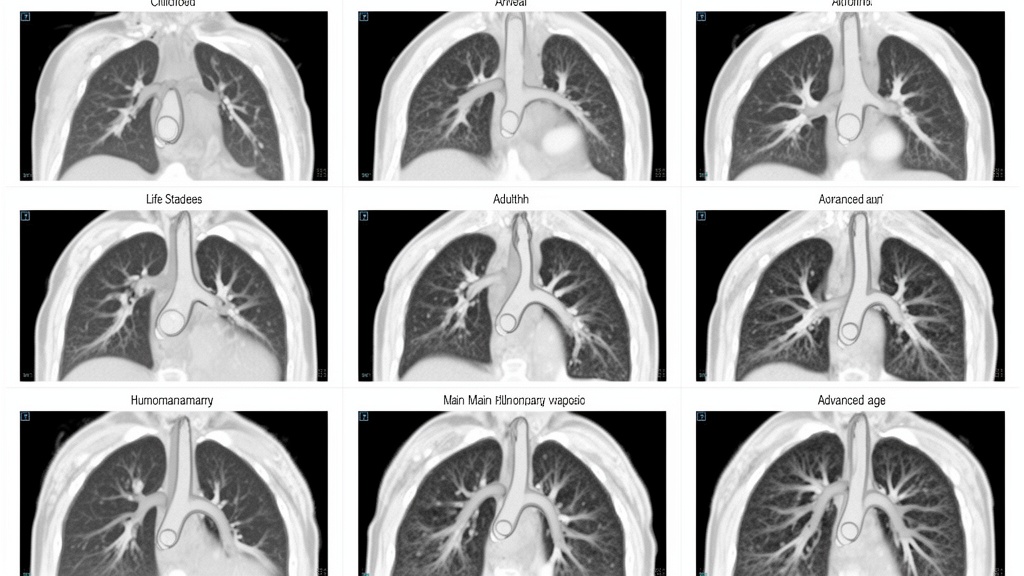
A retrospective radiologic study evaluating 800 subjects has characterized how main pulmonary artery caliber changes across the human lifespan. Published in BMC Pulmonary Medicine, the investigation examined computed tomography scans from a clinically selected cohort aged one to 80 years to document variations in thoracic vascular dimensions. The researchers established that main pulmonary artery caliber associates significantly with age and sex, providing computed tomography reference distributions to help interpret measurements alongside clinical findings.
To establish baseline reference distributions, investigators reviewed clinically indicated contrast-enhanced thoracic computed tomography examinations and available patient reports. The analysis included 800 individuals with no documented clinical or computed tomography evidence of conditions known to affect thoracic vascular dimensions. Imaging assessments were conducted by measuring vascular and skeletal diameters at or near the level of the main pulmonary artery bifurcation, standardizing comparisons across all participants.
The measurement protocol captured multiple vascular and skeletal dimensions to assess thoracic structures. Alongside the main pulmonary artery, the team measured diameters of the right pulmonary artery, left pulmonary artery, ascending aorta, and descending aorta, as well as the thoracic vertebral body diameter. These measurements allowed investigators to analyze statistical differences in absolute dimensions and calculate derived vascular-to-vascular and vertebra-based ratios across age groups and sexes.
Statistical evaluations identified significant age-related differences across all vascular and vertebral measurements, each reaching significance at p < 0.001. Main pulmonary artery diameter increased markedly from the first to the fourth decade of life. Following this initial expansion, measurements remained relatively stable across subsequent decades, although the researchers observed a modest increase in caliber during the eighth decade.
Categorical analyses revealed substantial differences between pediatric and adult cohorts. Adult individuals demonstrated significantly larger main pulmonary artery diameters than children, averaging 26.44 ± 3.22 millimeters compared to 18.98 ± 3.81 millimeters, with p < 0.001. Sex comparisons also demonstrated significant variation, as males had larger main pulmonary artery diameters than females, averaging 24.92 ± 4.78 millimeters compared to 24.22 ± 4.54 millimeters, with p = 0.035.
Derived vascular ratios demonstrated distinct age-related patterns throughout the cohort. Proportions comparing the main pulmonary artery to aortic segments, including the main pulmonary artery to ascending aorta and descending aorta ratios, decreased with advancing age. In contrast, vertebra-based ratios—including main pulmonary artery, ascending aorta, and descending aorta dimensions divided by thoracic vertebral body diameter—increased significantly with age, all yielding p < 0.001.
Sex-related analyses of derived ratios showed divergent patterns across different anatomical metrics. The ratio of the main pulmonary artery to the ascending aorta showed no significant difference between sexes, recording p = 0.596. However, the ratio of the main pulmonary artery to the descending aorta and all vertebra-based ratios differed significantly between males and females, offering cohort-derived reference distributions for evaluating computed tomography measurements alongside clinical examinations.
Subject of Research: Computed tomography morphometry of main pulmonary artery diameter across the human lifespan
Article Title: Main pulmonary artery diameter across the lifespan: a CT-based morphometric study of 800 subjects
Article References: Yerlikaya, M. B., Binici, S., Beger, B., Özdemir, A., Aslan, F., Eryılmaz, I., Bayram, H., Tahiroğlu, V., Yanç, U., Uslu, N., Dündar, İ., & Beger, O. (2026). Main pulmonary artery diameter across the lifespan: a CT-based morphometric study of 800 subjects. BMC Pulmonary Medicine. https://doi.org/10.1186/s12890-026-05013-4
Image Credits: AI Generated
DOI: 10.1186/s12890-026-05013-4
Keywords: main pulmonary artery, pulmonary artery diameter, thoracic computed tomography, contrast-enhanced CT, morphometric study, lifespan morphometry, ascending aorta, descending aorta, thoracic vertebral body, right pulmonary artery, left pulmonary artery, pulmonary artery bifurcation, vascular ratios, MPA caliber, pediatric vascular diameter, adult vascular diameter, sex-related vascular differences, retrospective radiologic study
News Source: Ophelia Keating. (November 18, 2026). Thoracic CT Study Maps Main Pulmonary Artery Caliber Across Human Lifespan. Scienmag.