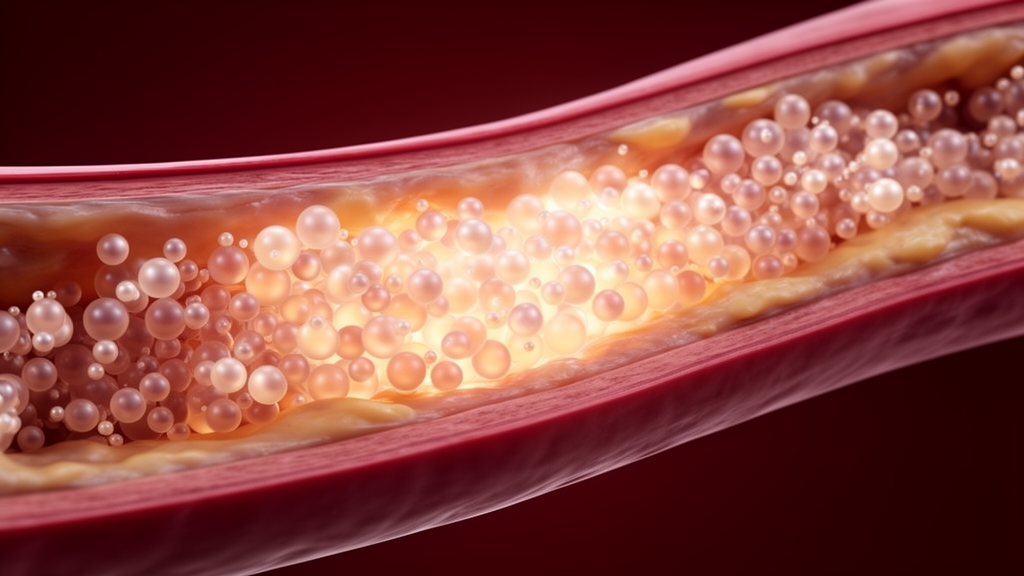
In a three-year longitudinal study of healthy older adults, researchers discovered that dynamic shifts in circulating adaptive immune cells and endothelial markers predict the silent formation of subclinical atherosclerotic plaques before cardiovascular disease manifests. Published in Immunity and Ageing, the investigation demonstrates that remodeling among CD8+ effector memory T cells and regulatory T cells, alongside elevated vascular cell adhesion molecule-1, identifies vascular vulnerability far more effectively than traditional cardiovascular risk markers such as blood pressure, blood glucose, or lipid panels. Examining individuals who were initially free of carotid plaques, investigators observed that nearly one-third developed newly detectable arterial deposits over the study period. Rather than reflecting generalized age-related immune decline, this plaque initiation was tied to distinct, directional changes in specific cytotoxic and regulatory lymphocyte populations.
Atherosclerotic cardiovascular disease remains a leading cause of mortality worldwide, driven by progressive arterial changes that develop silently over decades. During this asymptomatic phase, endothelial dysfunction and subclinical plaque formation progress without triggering clinical symptoms or standard diagnostic thresholds. Chronic low-grade inflammation and adaptive immune responses are increasingly recognized as primary drivers of atherogenesis, with T lymphocytes modulating local and systemic vascular inflammation. Different subsets of CD4+ and CD8+ T cells exert distinct pro- and anti-inflammatory actions within the vascular wall, while regulatory T cells typically suppress excessive immune activation to help maintain plaque stability. While earlier cross-sectional studies showed that existing plaques correlate with altered immune profiles, static snapshots cannot determine whether these alterations precede lesion initiation or merely reflect downstream responses to established vascular damage.
To understand these temporal dynamics, researchers evaluated participants from the Giessen Immune Aging Study between August 2020 and December 2024 at Justus-Liebig-University Giessen and University Hospital Giessen and Marburg. The investigation originally recruited seventy-nine healthy older adults who had no acute or chronic diseases, were free from active infections or injuries, and took no prescription medications. Over the three-year follow-up, several participants were excluded due to study withdrawal, incident malignancies, other emergent morbidities, or the initiation of statin therapies or antihypertensive medications. The final longitudinal analysis cohort consisted of forty-nine participants, including thirty men and nineteen women, with a mean baseline age of 63.8 years and an average body mass index of 25.0. Predictive analyses focused on thirty-three participants who were completely plaque-free at baseline.
Vascular assessments utilized high-resolution carotid sonography performed with a Philips cx50 ultrasound machine equipped with a linear transducer operating at 3 to 12 megahertz. Both carotid arteries were systematically imaged in cross-sectional B-mode from the subclavian artery origin to the carotid bifurcation. A semi-automated edge-detection program measured intima-media thickness along a ten-millimeter section of the distal common carotid artery wall located one to one and a half centimeters from the bifurcation bulb. In accordance with American Society of Echocardiography guidelines, subclinical atherosclerotic plaque was predefined as an intima-media thickness measurement equal to or exceeding 1.5 millimeters. Three ultrasound frames per side were analyzed offline by a single-blinded reader, and the average of all six measurements established plaque status alongside non-invasive oscillometric blood pressure recordings.
Fasting venous blood samples were obtained between 08:00 and 10:00 to isolate peripheral blood mononuclear cells and collect serum for protein profiling. Mononuclear cells were separated through density gradient centrifugation using Lymphoprep in SepMate tubes, washed, resuspended in Bambanker cryopreservation medium, and stored at minus eighty degrees Celsius. Flow cytometry conducted on a CytoFLEX S system evaluated T cell subsets across two specialized antibody panels after excluding dead cells with a viability kit. Panel one measured CD4+ and CD8+ T cells to identify naïve, central memory, effector memory, and CD45RA-re-expressing effector memory populations, alongside CD57 expression indicating advanced differentiation. Panel two evaluated CD3+CD4+ regulatory T cells, identifying effector T cells with high CD127 expression and regulatory T cells with low CD127 expression, alongside resting and memory-like subsets.
The study also evaluated cardiorespiratory fitness, muscle strength, body composition, and circulating biochemical markers. Cardiopulmonary exercise testing on an electronically braked cycle ergometer assessed peak oxygen uptake using standardized ramp protocols adjusted for training history. Ventilatory and metabolic parameters were collected by continuous respiration analysis to establish peak oxygen uptake. Grip strength was measured across three contractions on a hydraulic dynamometer, while activity levels were quantified using the International Physical Activity Questionnaire. Body fat and visceral adipose tissue percentages were determined via bioelectrical impedance analysis. Fasting clinical laboratory tests measured glucose, insulin, lipid panels, and cortisol, while serum protein profiling quantified fifteen inflammatory and vascular mediators, including vascular cell adhesion molecule-1, growth differentiation factor-15, and osteoprotegerin, using multiplex assays alongside cytomegalovirus serology.
Over three years, ten of thirty-three initially plaque-free participants developed new subclinical carotid plaques, representing an incidence of 30.3 percent and raising cohort plaque prevalence to 53 percent. Repeated-measures analysis of variance revealed clear divergences in physical and metabolic trajectories between participant groups over time. Participants who developed new plaques exhibited significant increases in total body fat percentage and visceral adipose tissue percentage, with visceral fat accumulating at a significantly steeper rate compared to those who remained free of plaques. Cardiorespiratory fitness showed a pronounced decline in participants with persistent plaques and a trend toward decline in those with new plaques. While grip strength declined across all groups, conventional markers including fasting glucose, low-density lipoprotein cholesterol, and blood pressure displayed no group-specific longitudinal differences.
Univariate logistic regression analyses evaluating baseline parameters in initially plaque-free participants revealed that distinct immune cell frequencies predicted future plaque development. Lower baseline proportions of CD8+ effector memory T cells significantly predicted new plaque development, yielding an odds ratio of 0.92 with a 95 percent confidence interval of 0.85 to 0.99. Conversely, higher baseline levels of CD8+ effector memory cells re-expressing CD45RA correlated with increased plaque risk, showing an odds ratio of 1.06. Elevated baseline regulatory T cell frequencies also predicted new plaque occurrence, producing an odds ratio of 1.67. Although baseline body mass index, insulin resistance, age, and vascular cell adhesion molecule-1 trended toward elevated risk, none reached univariate significance, while blood lipids showed no predictive association.
Examining within-person changes across the three-year follow-up demonstrated that longitudinal immune shifts were strongly linked to incident plaque development. A longitudinal increase in CD8+ effector memory T cells significantly predicted new plaque formation, showing an odds ratio of 1.08 with a 95 percent confidence interval of 1.01 to 1.15. Simultaneously, a decline in total regulatory T cells was associated with higher plaque odds, yielding an odds ratio of 0.57. Greater preservation of the regulatory-to-effector T cell ratio demonstrated a strong protective effect with an odds ratio of 0.19, whereas steeper declines corresponded to increased disease odds. Within regulatory cells, resting naïve subsets declined across all groups, while memory-like subsets became proportionally enriched. Additionally, visceral adiposity increases predicted higher plaque odds, whereas peak oxygen uptake improvements conferred protection.
To determine whether immune markers remained predictive after adjusting for confounding variables, the researchers performed stepwise multivariable logistic regression analyses controlling for age, body mass index, insulin resistance, blood pressure, lipid ratios, and physical performance. In fully adjusted baseline models, lower circulating CD8+ effector memory T cell frequencies remained an independent predictor of incident plaque formation, retaining statistical significance with a p-value of 0.042. Notably, baseline vascular cell adhesion molecule-1 emerged as a strong independent predictor of new plaque development in the fully adjusted model with a p-value of 0.025, despite showing no significant univariate association. In contrast, baseline associations for CD8+ effector memory cells re-expressing CD45RA and regulatory T cells lost significance after adjustment. In longitudinal change models, CD8+ effector memory expansion remained independently associated with plaque formation.
The authors proposed an immuno-metabolic framework to explain these findings, suggesting that adaptive immune remodeling follows a phase-dependent pattern during subclinical plaque initiation. Lower circulating CD8+ effector memory cells at baseline followed by subsequent expansion during plaque development indicates stage-dependent shifts in cellular trafficking and activation. Lower circulating baseline levels may reflect early recruitment and redistribution of effector memory lymphocytes into vulnerable vascular tissues. As endothelial and metabolic stress persists, ongoing stimulation likely drives the systemic clonal expansion of circulating CD8+ effector memory cells. Similarly, higher baseline regulatory T cell frequencies may represent an early compensatory response to low-grade inflammatory stress, which eventually fails as chronic activation erodes regulatory pools. Meanwhile, elevated vascular cell adhesion molecule-1 reflects early endothelial activation and leukocyte adhesion, linking vascular endothelial stress to systemic immune dysregulation.
The authors noted several important study limitations that warrant consideration when interpreting these longitudinal findings. The observational design precludes establishing direct causality, and the precise timing of plaque initiation during the three-year window could not be determined. Carotid ultrasound evaluated plaque presence as a binary outcome without capturing plaque volume or structural composition. Furthermore, immune analyses examined only circulating peripheral cells rather than plaque-resident or antigen-specific T cells. The lack of younger control groups also made it difficult to separate plaque-associated immune dynamics from standard age-related immunosenescence. Additionally, the moderate sample size limited statistical power for extensive subgroup evaluations based on sex or cytomegalovirus serostatus. Nevertheless, the study provides compelling longitudinal evidence that adaptive immune profiling and endothelial activation markers identify early vascular vulnerability in healthy older adults, suggesting new possibilities for cardiovascular risk assessment.
Subject of Research: Predictive value of adaptive immune dynamics and endothelial biomarkers for incident subclinical carotid atherosclerosis in healthy older adults
Article Title: CD8+ effector memory and regulatory T cell dynamics predict subclinical atherosclerotic plaque formation in healthy aging
Article References: Weyh, C., Größer, V., Minuzzi, L. G., Frech, T., Gebhardt, K., Nolte, S., Dombrowski, T. R., Böttrich, T., Hoffmann, M. A., Sommer, N., Ringseis, R., Eder, K., Sossalla, S., Bauer, P., & Krüger, K. (2026). CD8+ effector memory and regulatory T cell dynamics predict subclinical atherosclerotic plaque formation in healthy aging. Immunity & Ageing, 23(1), Article 29. https://doi.org/10.1186/s12979-026-00588-2
Image Credits: AI Generated
DOI: 10.1186/s12979-026-00588-2
Keywords: subclinical atherosclerosis, carotid plaque, CD8+ effector memory T cells, regulatory T cells, VCAM-1, immunosenescence, vascular aging, intima-media thickness, Treg/Teff ratio, TEMRA cells, cardiorespiratory fitness, visceral adiposity, endothelial activation, flow cytometry, Giessen Immune Aging Study, longitudinal study, VO2peak, carotid ultrasound
News Source: Beatrice Stafford. (November 18, 2026). Immune Cell Dynamics and Endothelial Markers Predict Silent Plaque Formation in Aging. Scienmag.