• HOME
  • NEWS
  • EXPLORE
    • CAREER
      • Companies
      • Jobs
    • EVENTS
    • iGEM
      • News
      • Team
    • PHOTOS
    • VIDEO
    • WIKI
  • BLOG
  • COMMUNITY
    • FACEBOOK
    • INSTAGRAM
    • TWITTER
Wednesday, November 18, 2026
BIOENGINEER.ORG
No Result
View All Result
  • Login
  • HOME
  • NEWS
  • EXPLORE
    • CAREER
      • Companies
      • Jobs
        • Lecturer
        • PhD Studentship
        • Postdoc
        • Research Assistant
    • EVENTS
    • iGEM
      • News
      • Team
    • PHOTOS
    • VIDEO
    • WIKI
  • BLOG
  • COMMUNITY
    • FACEBOOK
    • INSTAGRAM
    • TWITTER
No Result
View All Result
Bioengineer.org
No Result
View All Result
Home NEWS Science News Health

Extracellular Vesicles Link Systemic Comorbidities to Vascular Dysfunction in Atherogenesis

by
November 18, 2026
in Health
Reading Time: 2 mins read
0
Extracellular Vesicles Link Systemic Comorbidities to Vascular Dysfunction in Atherogenesis

Extracellular Vesicles Link Systemic Comorbidities to Vascular Dysfunction in Atherogenesis

Share on FacebookShare on TwitterShare on LinkedinShare on RedditShare on Telegram

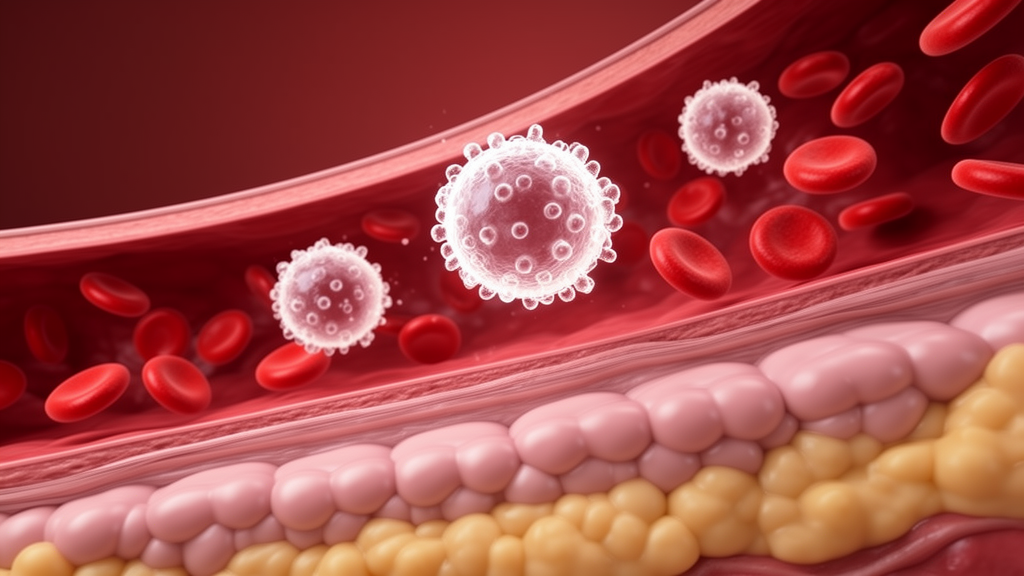
A recent comprehensive review has identified extracellular vesicles (EVs) as a critical, conserved inter-organ communication language that bridges systemic comorbidities with the development of atherosclerosis. Traditionally, clinical risk frameworks have struggled to account for a substantial residual cardiovascular burden observed in patients suffering from diverse systemic conditions, including obesity, diabetes, metabolic-associated steatotic liver disease (MASLD), and chronic infections. This research proposes that these disparate conditions utilize EVs to translate pathological signals into convergent vascular dysfunction, potentially reframing atherosclerosis as a systemic disorder of disrupted crosstalk between organs.

The study introduces an integrative “encode-transport-decode” working model to explain how this process occurs. Within this framework, diseased tissues selectively package pathogenic microRNAs and proteins into EVs. These vesicles circulate stably throughout the body until they reach vascular recipient cells, where they unpack their contents and activate a restricted, pro-atherogenic signaling repertoire. Despite the varied clinical origins of the vesicles, the researchers identified that they converge on the same biological pathways in the cardiovascular system.

Specifically, the investigation highlights three synergistic axes where these EV-mediated signals operate. First, the cargo induces NF-κB-driven disruption of the endothelial barrier. Second, the signals suppress the PPARγ-LXRα-ABCA1/ABCG1 pathways, which significantly impairs cholesterol efflux. Finally, these vesicles drive systemic inflammatory immune reprogramming. By acting through these unified mechanisms, EVs allow diverse systemic states to coordinate their impact on vascular health, even when the original diseases appear biologically unrelated.

Building on these observations, the authors introduce a convergent synergy hypothesis. This proposal suggests that when multiple comorbidities coexist, they do not simply add to one another but produce cumulative and synergistic vascular damage that exceeds the sum of their individual effects.

Translational applications for this discovery are promising. The researchers suggest that specific EV signatures could be utilized for dynamic risk stratification in patients with multiple morbidities.

Despite the potential for precision interventions, the review notes significant remaining hurdles. Additionally, researchers must still decipher the complex rules that govern how diseased tissues determine which cargo to sort into EVs under stress.

Subject of Research: Extracellular vesicle-mediated inter-organ communication in atherosclerosis

Article Title: Extracellular vesicles as inter-organ messengers in atherogenesis: convergent pathways linking systemic comorbidities to vascular dysfunction

Article References: Liu, Y., Chen, C., Yuan, Y., Cheng, W., & Zhang, H.-G. (2026). Extracellular vesicles as inter-organ messengers in atherogenesis: convergent pathways linking systemic comorbidities to vascular dysfunction. Molecular Medicine. https://doi.org/10.1186/s10020-026-01680-5

Image Credits: AI Generated

DOI: 10.1186/s10020-026-01680-5

Keywords: Extracellular vesicles, Atherogenesis, Vascular dysfunction, Systemic comorbidities, Inter-organ communication, MicroRNA, Pathogenic proteins, Endothelial barrier, PPARγ-LXRα-ABCA1/ABCG1, Inflammatory signaling, MASLD, Diabetes, Obesity, Cardiovascular disease, Translational medicine, Lipid metabolism, Immune reprogramming

News Source: Ophelia Keating. (November 18, 2026). Extracellular Vesicles Link Systemic Comorbidities to Vascular Dysfunction in Atherogenesis. Scienmag.


Tags: atherogenesisCardiovascular diseaseDiabetesendothelial barrierextracellular vesiclesimmune reprogramminginflammatory signalinginter-organ communicationlipid metabolismMASLDmicroRNAobesityPathogenic proteinsPPARγ-LXRα-ABCA1/ABCG1systemic comorbiditiestranslational medicinevascular dysfunction
Share12Tweet7Share2ShareShareShare1

Related Posts

Review Urges Shift From Diagnostic Tool Availability to Preventive One Health Capacity

Review Urges Shift From Diagnostic Tool Availability to Preventive One Health Capacity

November 18, 2026
HIV and Tuberculosis Co-Infection Rates Dropped in Liangshan Between 2019 and 2024

HIV and Tuberculosis Co-Infection Rates Dropped in Liangshan Between 2019 and 2024

November 18, 2026

Behavior Setting Theory Guides Blood Pressure Monitoring Adaptation Across Different Healthcare Contexts

November 18, 2026

Short-Video Shopping Predicts Distress Through Compulsive Buying When Emotionally Motivated

November 18, 2026

POPULAR NEWS

  • Neural Network Inverse Design Optimizes Broadband Hybrid Plasmonic Leaky Wave Antenna

    Neural Network Inverse Design Optimizes Broadband Hybrid Plasmonic Leaky Wave Antenna

    29 shares
    Share 12 Tweet 7
  • Livestock Holdings and Agroecology Shape Carnivore Conservation Attitudes in Southern Ethiopia

    29 shares
    Share 12 Tweet 7
  • Researchers Identify GRAM Genes Across Cultivated Sweetpotato and Two Diploid Relatives

    29 shares
    Share 12 Tweet 7
  • Sensor Weighted Crop Simulations Significantly Improve Drone Maize Leaf Area Retrieval

    29 shares
    Share 12 Tweet 7

About

We bring you the latest biotechnology news from best research centers and universities around the world. Check our website.

Follow us

Recent News

Review Urges Shift From Diagnostic Tool Availability to Preventive One Health Capacity

Biochar Platforms Enable Simultaneous Toxic Element Remediation and Real-Time Biosensing

Resting Bacterial Cells Outperform Growing Cultures in Cadmium Sulfide Quantum Dot Biosynthesis

Subscribe to Blog via Email

Enter your email address to subscribe to this blog and receive notifications of new posts by email.

Join 88 other subscribers
  • Contact Us

Bioengineer.org © Copyright 2023 All Rights Reserved.

Welcome Back!

Login to your account below

Forgotten Password?

Retrieve your password

Please enter your username or email address to reset your password.

Log In
No Result
View All Result
  • Homepages
    • Home Page 1
    • Home Page 2
  • News
  • National
  • Business
  • Health
  • Lifestyle
  • Science

Bioengineer.org © Copyright 2023 All Rights Reserved.