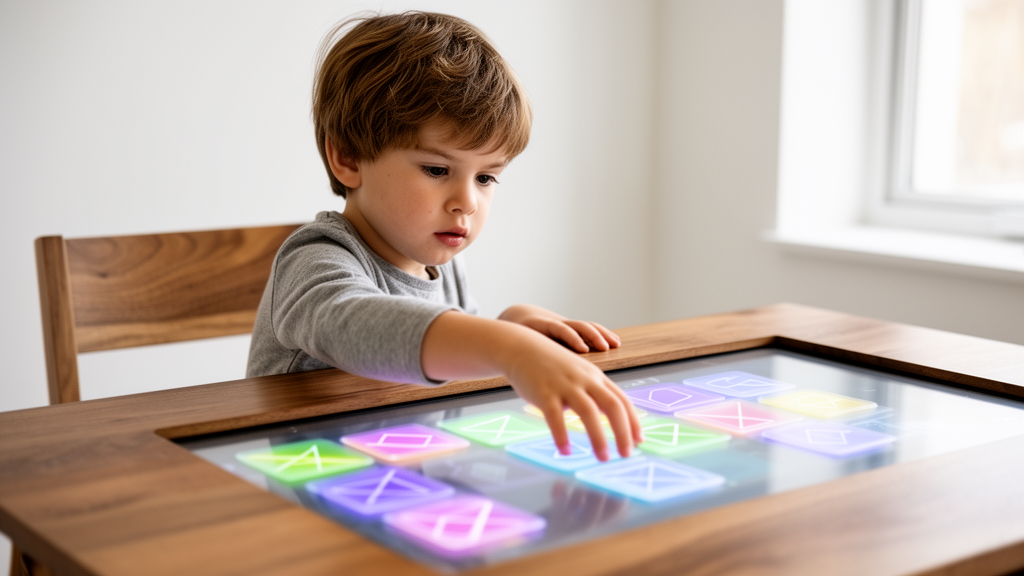
Researchers have identified distinct behavioral patterns in children with Attention-Deficit/Hyperactivity Disorder (ADHD) by analyzing click-level data from a visuospatial working memory game called Honey Memory. The exploratory, hypothesis-generating study, which observed 174 children aged 7 to 10 years, sought to move beyond traditional diagnostic tools like clinical interviews and rating scales. By adopting a data-driven approach, the team engineered a comprehensive set of behavioral features to better understand the underlying cognitive mechanisms that differentiate ADHD from typical development. These features encompassed working memory capacity, error monitoring, behavioral variability, response-time dynamics, and spatial search strategies.
The study found that children with ADHD displayed a multi-aspect behavioral profile characterized by reduced working memory capacity, which was evidenced by shorter memory spans and lower overall task accuracy. Furthermore, participants with ADHD exhibited impaired error-monitoring processes, as indicated by more frequent and longer sequences of consecutive errors compared to their typically developing peers.
Behavioral variability was another key differentiator observed in the data. Children with ADHD showed increased trial-to-trial fluctuations and a higher frequency of correct-incorrect response toggling during game play. The researchers also noted that ADHD-related differences were apparent in spatial search patterns, with children in the ADHD group employing less efficient strategies, such as shorter, proximity-bound paths, while navigating the game interface. These disparities in search efficiency and performance consistency were most pronounced when the children were tasked with medium-level difficulty challenges.
In contrast to the observed differences in error monitoring, search strategies, and working memory metrics, the study found that response-time dynamics did not show a statistically significant difference between the ADHD and typical development groups.
To assess the utility of these behavioral features, the research team employed Random Forest classifiers. These models achieved high within-site classification accuracy, peaking at 90.1 percent, and demonstrated moderate cross-site generalization. This high classification performance suggests that the interpretable metrics identified—such as spatial search efficiency and error-monitoring indices—can serve as powerful features for identifying ADHD-related behavioral patterns.
The study underscores the potential of utilizing interactive, data-rich games to gain deeper insight into the cognitive profiles associated with ADHD. By identifying these specific, multi-aspect behavioral markers, the researchers provide a foundation for future studies aiming to improve the granularity of ADHD assessment. While the study provides significant hypothesis-generating findings, it emphasizes the need for objective, task-based metrics that can clarify the behavioral properties distinguishing ADHD from typical development in a way that traditional clinical rating scales may not.
Subject of Research: Behavioral profiling of ADHD in children via visuospatial working memory tasks
Article Title: Beyond accuracy: interpretable behavioural profiling of children with ADHD using a visuospatial working memory game
Article References: Arabzadeh, M., Shokravi, K., Shahangian, S. A., Zakani, Z., Kambarani, N., Bahrami Esfarjani, Z., Kabki, M., Vahabie, A.-H., & Moradi, H. (2026). Beyond accuracy: interpretable behavioural profiling of children with ADHD using a visuospatial working memory game. Journal of Neurodevelopmental Disorders. https://doi.org/10.1186/s11689-026-09727-8
Image Credits: AI Generated
DOI: 10.1186/s11689-026-09727-8
Keywords: ADHD, working memory, visuospatial cognition, behavioral profiling, child development, error monitoring, cognitive performance, spatial search, data-driven research, Honey Memory game, Random Forest, classification metrics, behavioral variability, clinical assessment, pediatric neurodevelopment
News Source: Ophelia Keating. (November 18, 2026). Visuospatial Memory Game Reveals Interpretable Behavioral Profiles in Children With ADHD. Scienmag.