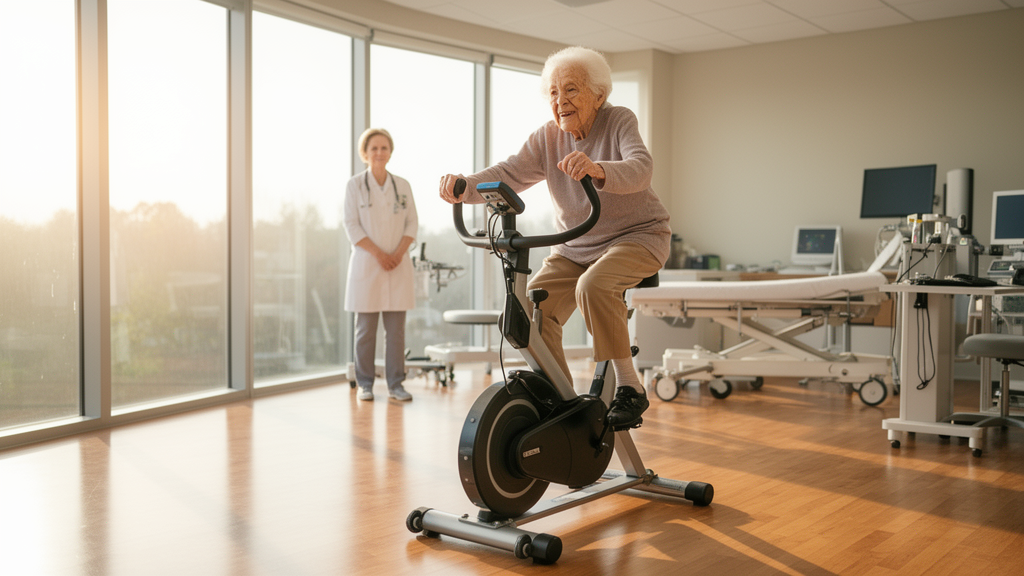
New research published in Immunity & Ageing indicates that individuals who have reached extreme old age, specifically centenarians, exhibit a selective but attenuated immune cell response to acute physical exercise. While physical activity is well-documented as a potent stimulus for rapid immune cell redistribution in younger populations, the physiological mechanisms governing immune adaptability in those surviving to 100 years or beyond have remained largely uncharacterized. This study provides an exploratory look into how these long-lived individuals maintain immune homeostasis under the physiological stress of a short, acute exercise intervention, offering preliminary insights into the nature of immune resilience in extreme aging.
The study employed a randomized crossover design to evaluate the immune response of seven centenarians, aged 100 to 104 years, consisting of six women and one man. Participants completed an acute exercise session involving approximately 20 minutes of combined walking, mobility, and resistance exercises, alongside a time-matched seated control condition to allow for comparative analysis. Researchers collected peripheral blood mononuclear cells (PBMCs) both before and immediately after each condition, utilizing high-dimensional spectral flow cytometry to characterize changes in circulating immune cell populations and their specific phenotypes.
Analysis revealed that the acute exercise session was associated with nominally significant condition-by-time interactions in certain immune cell subpopulations, most notably within natural killer (NK) cell subsets and classical monocytes. These interactions, all occurring at a nominal significance level of p < 0.05, suggest that specific components of the immune system in centenarians retain a degree of responsiveness to physiological stress. However, the study authors emphasize that these findings must be interpreted with substantial caution, given the exploratory nature of the investigation and the high number of immune outcomes tested, which increases the likelihood of observing nominal significance by chance.
Furthermore, the magnitude of these exercise-induced effects was characterized as modest. The observed changes appeared to reflect divergent temporal patterns in immune cell counts between the exercise and control conditions rather than the pronounced, widespread redistribution commonly reported in healthy, younger cohorts. Importantly, the researchers observed no statistically significant changes in the expression of phenotypic markers or in the relative abundance of immune cell metaclusters following the exercise bout, indicating that the overall systemic impact of this acute exercise protocol on the circulating immune landscape was limited.
These observations support the evolving hypothesis that immune resilience in extreme aging may not be defined by a robust or exaggerated reactive capacity to stressors, but rather by the efficient maintenance of immune homeostasis under physiological demand. The attenuation observed in this study suggests that while some selective components of immune adaptability remain detectable, the overall reactivity of the circulating immune compartment is diminished compared to that seen in younger adults.
The study’s authors acknowledge that the small sample size and the exploratory design represent significant limitations in the scope of the findings.
Subject of Research: Immune cell response to acute exercise in centenarians
Article Title: Selective but attenuated immune cell responses to acute exercise in centenarians
Article References: Yanguas-Casás, N., Plaza-Florido, A., Carrera-Bastos, P., Alejo, L. B., Collao, N., Rosado-Muñoz, M., Pagola-Aldazabal, I., Barranco-Gil, D., Rodríguez-Romo, G., Radom-Aizik, S., Castro, J. P., Fiuza-Luces, C., & Lucia, A. (2026). Selective but attenuated immune cell responses to acute exercise in centenarians. Immunity & Ageing. https://doi.org/10.1186/s12979-026-00593-5
Image Credits: AI Generated
DOI: 10.1186/s12979-026-00593-5
Keywords: centenarians, acute exercise, immune resilience, spectral flow cytometry, NK cells, monocytes, immune homeostasis, extreme aging, physiological stress, immune adaptability, immunosenescence, circulating immune cells, crossover study, high-dimensional analysis, exercise physiology
News Source: Ophelia Keating. (November 18, 2026). Centenarians Show Selective but Attenuated Immune Cell Responses to Acute Exercise. Scienmag.