A recent study published in the journal Microbial Cell Factories has demonstrated that optimizing phosphate feeding through the integration of metabolomics and capacitance-based real-time control significantly enhances the production of L-threonine in Escherichia coli. The research addresses a critical process bottleneck in industrial fermentation, where fixed or manual phosphate feeding strategies frequently fail to accommodate the dynamic metabolic demands of growing microbial populations.
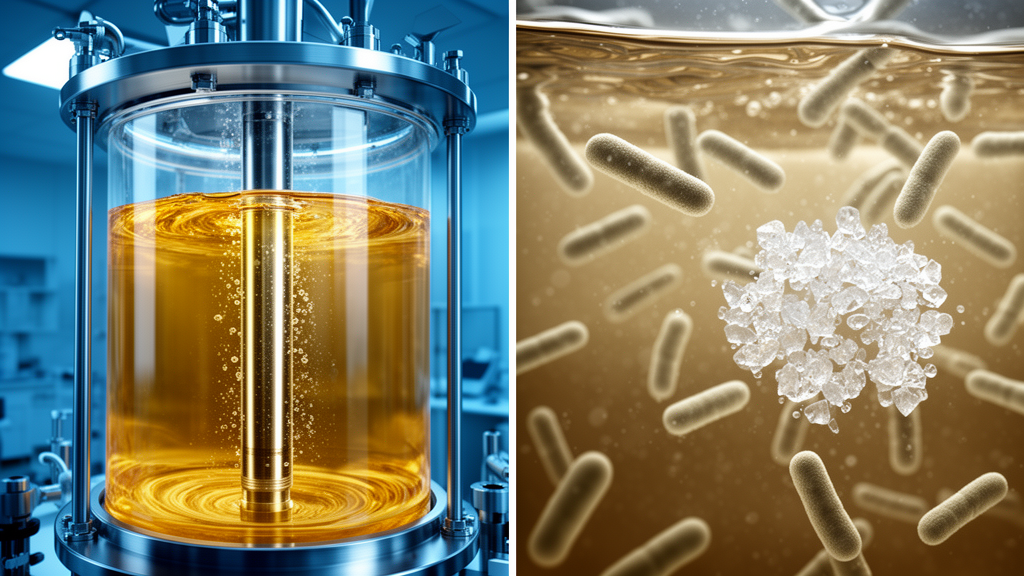
Industrial biotechnology relies heavily on the efficient biosynthesis of amino acids like L-threonine, which are in high global demand. To investigate the role of phosphate in this process, the researchers first conducted experiments in a 5 L bioreactor to assess the impact of varying initial phosphate concentrations on L-threonine production. They identified an optimal phosphate concentration that improved the final L-threonine titer by 21.9% compared to the control group, establishing a clear baseline for subsequent metabolic investigations.
To understand the mechanisms driving this improvement, the team utilized metabolomics and 13C metabolic flux analysis. The data revealed that the optimized phosphate concentration actively reprograms the central carbon metabolism of E. coli. Specifically, the flux through the pentose phosphate pathway was increased by 28.9%. This metabolic shift proved crucial for enhancing both the supply of biosynthetic precursors and the availability of NADPH, two fundamental requirements for efficient L-threonine biosynthesis, thereby elucidating the metabolic basis of phosphate-mediated regulation.
Building upon these mechanistic findings, the researchers developed a precision feeding strategy based on real-time on-line capacitance signals. This method allows for the continuous monitoring of cell growth status, enabling the fermentation system to adjust phosphate intake dynamically and accurately. This innovation ensures that nutrient availability is closely matched with the changing metabolic requirements of the microbial population, rather than relying on pre-programmed or manual additions that may not reflect the actual physiological state of the cell factory.
When this capacitance-guided control strategy was scaled up to a 50 L bioreactor, it successfully produced an L-threonine titer of 168.41 g/L. This performance represents a 14.3% improvement over conventional manual feeding control protocols. The results highlight the efficacy of using real-time physiological indicators to overcome established production limitations in industrial microbial systems, suggesting that such physiology-driven control frameworks could be applied to improve the efficiency of various other industrial fermentation processes beyond L-threonine production.
The study provides a comprehensive look at how precise nutrient management, grounded in an understanding of metabolic fluxes, can optimize microbial cell factories. By moving away from fixed feeding strategies toward systems that respond in real-time to the organism’s growth, the authors have developed a scalable approach that offers significant potential for enhancing the output of large-scale industrial biotechnology.
Subject of Research: Optimization of microbial L-threonine production via real-time capacitance-based phosphate feeding control.
Article Title: Optimizing phosphate feeding through metabolomics and capacitance-based real‑time control enhances L‑threonine production in Escherichia coli
Article References: Huo, Y., Di, Z., Meng, Q., Li, B., & Zhuang, Y. (2026). Optimizing phosphate feeding through metabolomics and capacitance-based real‑time control enhances L‑threonine production in Escherichia coli. Microbial Cell Factories. https://doi.org/10.1186/s12934-026-03064-0
Image Credits: AI Generated
DOI: 10.1186/s12934-026-03064-0
Keywords: L-threonine, Escherichia coli, fermentation, metabolomics, capacitance-based control, phosphate feeding, bioprocess optimization, metabolic flux analysis, industrial biotechnology, pentose phosphate pathway, microbial cell factories, NADPH availability, precision fermentation, biosynthesis, process scalability
News Source: Morgan Morrow. (November 18, 2026). Real-Time Capacitance Control Boosts Microbial L-threonine Production. Scienmag.