• HOME
  • NEWS
  • EXPLORE
    • CAREER
      • Companies
      • Jobs
    • EVENTS
    • iGEM
      • News
      • Team
    • PHOTOS
    • VIDEO
    • WIKI
  • BLOG
  • COMMUNITY
    • FACEBOOK
    • INSTAGRAM
    • TWITTER
Tuesday, November 17, 2026
BIOENGINEER.ORG
No Result
View All Result
  • Login
  • HOME
  • NEWS
  • EXPLORE
    • CAREER
      • Companies
      • Jobs
        • Lecturer
        • PhD Studentship
        • Postdoc
        • Research Assistant
    • EVENTS
    • iGEM
      • News
      • Team
    • PHOTOS
    • VIDEO
    • WIKI
  • BLOG
  • COMMUNITY
    • FACEBOOK
    • INSTAGRAM
    • TWITTER
No Result
View All Result
Bioengineer.org
No Result
View All Result
Home NEWS Science News Biology

Long-Read Sequencing Shows Ensilication Protects Human RNA at Elevated Temperatures

by
November 17, 2026
in Biology
Reading Time: 2 mins read
0
Long-Read Sequencing Shows Ensilication Protects Human RNA at Elevated Temperatures

Long-Read Sequencing Shows Ensilication Protects Human RNA at Elevated Temperatures

Share on FacebookShare on TwitterShare on LinkedinShare on RedditShare on Telegram

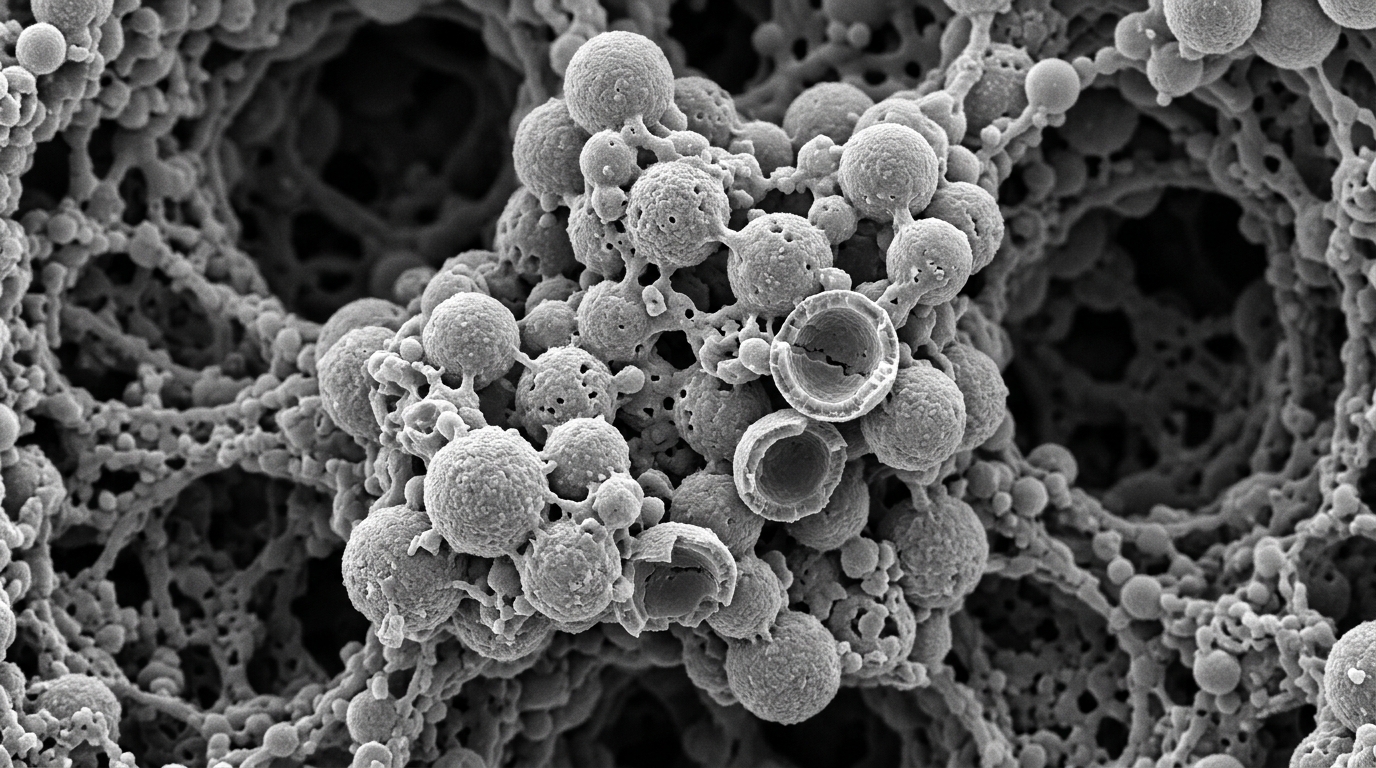
Ensilication limits storage-associated loss and distortion of recoverable transcriptome-wide information in pooled human total RNA, according to findings evaluated by long-read RNA sequencing. The study investigated the protective capabilities of ensilication during ambient and elevated-temperature storage conditions. Evaluating RNA preservation requires a precise understanding of how specific storage environments influence recoverable transcriptome data, and the research team demonstrated that ensilication maintains a protective effect across the tested temperature environments.

To perform a comprehensive assessment of the preservation technique, the researchers utilized long-read RNA sequencing to evaluate transcript representation, isoform composition, and support for annotated transcript structures. The experimental framework examined pooled human total RNA analyzed on the PacBio Kinnex platform. Across the testing protocol, six distinct storage conditions were established to systematically contrast preserved samples against controls and unprotected RNA.

The six analyzed experimental conditions included frozen storage, an ensilicated control released one hour after encapsulation, and both ensilicated and unprotected RNA stored for seven days at room temperature or at 40°C. This comparative setup permitted direct evaluation of how room-temperature ambient conditions and elevated 40°C conditions degrade human RNA over seven days when left unprotected versus when shielded by ensilication.

Quantitative analysis revealed substantial preservation benefits for the ensilicated samples at matched input depth and a threshold of at least one qualifying sequence per transcript. Under these parameters, ensilicated samples retained 88 to 89 percent of a fixed frozen-reference transcript set at room temperature and about 85 percent at 40°C. In contrast, unprotected RNA retained 78 to 83 percent of the frozen-reference transcript set at room temperature, while dropping sharply to between 42 and 64 percent at 40°C.

Beyond bulk transcript retention, long-read sequencing tracked preservation across complex structural features of multi-isoform genes. Ensilicated samples showed smaller changes in isoform composition among multi-isoform genes detected in both frozen and non-frozen samples. Furthermore, this storage advantage persisted even when sequences were strictly required to support a uniquely distinguishing complete intron chain and both annotated transcript boundaries, confirming that ensilication protects structural transcript information under ambient and elevated temperatures.

Subject of Research: Transcriptome preservation by ensilication evaluated with long-read RNA sequencing

Article Title: Evaluating transcriptome-wide information preservation by ensilication using long-read RNA sequencing

Article References: Muraleedharan, M., Gowda, H., & Banal, J. L. (2026). Evaluating transcriptome-wide information preservation by ensilication using long-read RNA sequencing. BMC Genomics. https://doi.org/10.1186/s12864-026-13591-0

Image Credits: AI Generated

DOI: 10.1186/s12864-026-13591-0

Keywords: ensilication, long-read RNA sequencing, PacBio Kinnex, transcriptome preservation, human total RNA, ambient temperature storage, elevated temperature storage, isoform composition, transcript representation, annotated transcript structures, frozen storage control, intron chain, transcript boundaries, RNA degradation, transcript retention, molecular encapsulation

News Source: Drew Townsend. (November 17, 2026). Long-Read Sequencing Shows Ensilication Protects Human RNA at Elevated Temperatures. Scienmag.


Tags: ambient temperature storageannotated transcript structureselevated temperature storageensilicationfrozen storage controlhuman total RNAintron chainisoform compositionlong-read RNA sequencingmolecular encapsulationPacBio KinnexRNA degradationtranscript boundariestranscript representationtranscript retentiontranscriptome preservation
Share12Tweet7Share2ShareShareShare1

Related Posts

Dynamic Neural States in Rat Cortex Track Aversion-Resistant Alcohol Seeking

Dynamic Neural States in Rat Cortex Track Aversion-Resistant Alcohol Seeking

November 17, 2026
Rare Inherited Anaemias Expose Essential Checkpoints for Engineering Laboratory Red Blood Cells

Rare Inherited Anaemias Expose Essential Checkpoints for Engineering Laboratory Red Blood Cells

November 17, 2026

Researchers Discover Nine New Microcaddisfly Species in Serbia’s Vojvodina Province

November 17, 2026

Local Regulatory T Cell Delivery Strategies Show Preclinical Promise in Bone Repair

November 17, 2026

POPULAR NEWS

  • Plane-Based Gonial Angle Segmentation Better Represents Mandibular Growth in Longitudinal Study

    Plane-Based Gonial Angle Segmentation Better Represents Mandibular Growth in Longitudinal Study

    29 shares
    Share 12 Tweet 7
  • Quality Improvement Project Raises Pre-Antibiotic Microbiological Analysis Rate to 79.2 Percent

    29 shares
    Share 12 Tweet 7
  • LLM-Driven Social Simulations Face Significant Epistemic Validity Challenges

    29 shares
    Share 12 Tweet 7
  • Veterinary Brucellosis Testing Requires Validated Decision Rules Across Animal Populations

    29 shares
    Share 12 Tweet 7

About

We bring you the latest biotechnology news from best research centers and universities around the world. Check our website.

Follow us

Recent News

Cervical Dumbbell Tumor Anatomy and Artery Encasement Predict Incomplete Surgical Resection

Review Links Acid-Sensing Ion Channels to Chronic Pain and Psychiatric Comorbidities

First-Trimester Immune-Inflammatory Indices Associate With Miscarriage in Recurrent Pregnancy Loss

Subscribe to Blog via Email

Enter your email address to subscribe to this blog and receive notifications of new posts by email.

Join 88 other subscribers
  • Contact Us

Bioengineer.org © Copyright 2023 All Rights Reserved.

Welcome Back!

Login to your account below

Forgotten Password?

Retrieve your password

Please enter your username or email address to reset your password.

Log In
No Result
View All Result
  • Homepages
    • Home Page 1
    • Home Page 2
  • News
  • National
  • Business
  • Health
  • Lifestyle
  • Science

Bioengineer.org © Copyright 2023 All Rights Reserved.