A multifunctional hybrid antimicrobial peptide designated as LL37-TP5 has demonstrated broad-spectrum antibacterial activity, potent endotoxin-neutralizing capacity, and anti-inflammatory properties while maintaining minimal toxicity toward mammalian cells in preclinical laboratory evaluations. The escalating global prevalence of antimicrobial resistance and severe inflammation mediated by bacterial endotoxins has intensified the demand for alternative therapeutic molecules capable of integrating direct bactericidal performance with immunomodulatory defense mechanisms. Naturally occurring human cathelicidin LL-37 provides substantial antimicrobial and lipopolysaccharide-neutralizing activity, yet its clinical application and commercial translation have been significantly constrained by eukaryotic cytotoxicity and expensive production methods. In a study published in Frontiers in Pharmacology, an international research team designed a recombinant 29-amino-acid construct uniting the central lipopolysaccharide-binding domain of cathelicidin LL-37 with the synthetic immunomodulatory pentapeptide thymopentin to mitigate cellular injury while enhancing biological stability and therapeutic efficacy against major bacterial pathogens.
The engineering strategy was rooted in the structural biology of innate host defense peptides and the regulatory pathways governing systemic inflammation. Bacterial infections caused by poultry-associated pathogens represent an enduring challenge across poultry production systems, driving economic losses and escalating conventional antibiotic consumption. Antimicrobial peptides, which are naturally generated by epithelial and neutrophil cells, act as vital components of the innate immune system to neutralize microbes, fungi, and viruses, primarily through membrane disruption that carries a substantially lower probability of inducing bacterial resistance than classic antibiotics. Parental LL-37 is an amphipathic helical peptide of 37 amino acid residues that protects against local and systemic infections, suppresses the macrophage production of pro-inflammatory cytokines such as tumor necrosis factor-alpha, interleukin-6, and interleukin-1-beta, and directly binds lipopolysaccharide, an integral structural component shed from Gram-negative outer membranes during bacterial replication or cell death. However, LL-37 exhibits pronounced cytotoxicity against eukaryotic membranes, prompting the investigators to combine its core functional residues with thymopentin, an immunoregulatory pentapeptide consisting of arginine, lysine, aspartic acid, valine, and tyrosine.
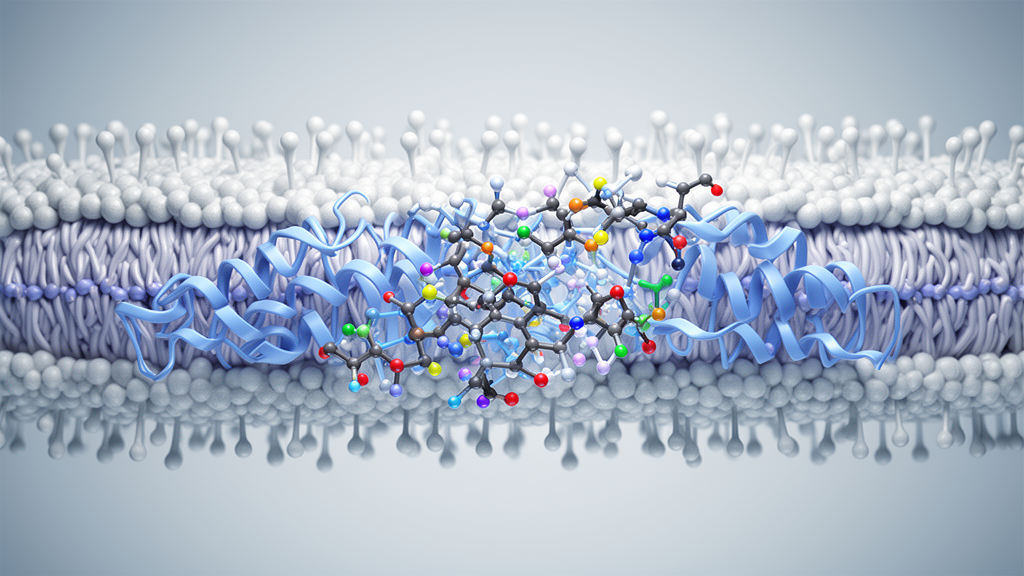
To design LL37-TP5, the research team isolated the active lipopolysaccharide-binding region spanning residues 13 through 36 of parental LL-37 and linked it directly to thymopentin, yielding the primary sequence IGKEFKRIVQRIKDFLRNLVPRTERKDVT. The investigators subjected this hybrid sequence to extensive bioinformatics analyses to determine theoretical physicochemical and conformational parameters prior to gene synthesis. Computational modeling conducted via the ExPASy ProtParam server and HeliQuest revealed a 29-amino-acid sequence with a calculated molecular weight of 3,555 daltons, a theoretical isoelectric point of 10.95, and a strong net positive charge of plus nine at physiological pH. Helical wheel projections indicated a well-defined amphipathic alpha-helical conformation, showing a pronounced spatial segregation between hydrophobic residues on one face and positively charged lysine and arginine residues on the opposite face. Hydropathy distribution assessed via the Kyte-Doolittle algorithm demonstrated predominantly negative hydropathic scores with an overall grand average of hydropathicity of negative 0.80 and no extended continuous hydrophobic tracts, pointing toward reduced membrane-lytic potential against host cells.
Structural predictions were subsequently validated using computational charge titration profiling and circular dichroism spectral modeling. Charge-pH titration analyses revealed that LL37-TP5 retains a robust net positive surface charge across the physiological pH range, an electrostatic trait that strongly favors selective attraction toward negatively charged bacterial cell walls and anionic lipid A domains of lipopolysaccharide rather than neutral eukaryotic membranes. The calculated hydrophobic moment of approximately 0.77 confirmed balanced amphipathicity, while an aliphatic index of 97.24 and an instability index score of 22.98 indicated favorable structural robustness. Predicted circular dichroism spectroscopy displayed characteristic alpha-helical signatures, specifically featuring a positive ellipticity peak near 190 nanometers alongside two distinct negative minima near 208 and 222 nanometers. In silico proteolytic mapping using PeptideCutter predicted several potential cleavage sites for physiological proteases, providing insight into possible degradation vulnerabilities that must be considered during subsequent pharmacological optimization.
Because commercial chemical synthesis of long peptide sequences is economically restrictive, the investigators established a scalable recombinant production system utilizing the methylotrophic yeast Pichia pastoris strain X-33. The hybrid peptide sequence was codon-optimized for yeast expression through the Java Codon Adaptation Tool and synthesized as a 126-base-pair fragment fused to a tobacco etch virus protease cleavage site and a C-terminal six-histidine affinity tag. The recombinant cassette was inserted downstream of the alpha-factor secretion signal into the methanol-inducible pPICZalphaA expression vector using restriction sites Kpn I and Xba I, yielding the plasmid construct pPICZalphaA-LL37-TP5. After linearizing the plasmid with Sac I, the cassette was electroporated into competent yeast cells and screened on Zeocin-selective plates. Genomic integration was verified by polymerase chain reaction using alcohol oxidase-specific primers, confirming successful insertion into the host genome.
Recombinant expression was carried out in buffered glycerol-complex medium followed by transfer into buffered methanol-complex medium under controlled conditions of 28 degrees Celsius, pH 5.5, and methanol induction levels of 0.5 to 1.0 percent every 24 hours for a duration of 120 hours. Following cultivation, the secreted fusion peptide was harvested from culture supernatants and initially isolated by nickel-nitrilotriacetic acid affinity chromatography. The purified fusion protein contained the primary sequence IGKEFKRIVQRIKDFLRNLVPRTERKDVTENLYFQGHHHHHH. To isolate the native peptide, the eluate was concentrated through centrifugal filtration using a three-kilodalton molecular weight cut-off membrane and digested with recombinant tobacco etch virus protease at an enzyme-to-substrate ratio of 1 to 50 for 16 hours at 4 degrees Celsius to cleave the histidine tag. The resulting intermediate peptide bearing the residual ENLYFQ motif was treated with Carboxypeptidase Y at an enzyme-to-substrate ratio of 1 to 100 in sodium acetate buffer at pH 5.5 for two hours at 25 degrees Celsius to remove the residual amino acids.
The fully digested preparation was subjected to final purification using reverse-phase high-performance liquid chromatography on an analytical C18 column with a linear acetonitrile gradient containing 0.1 percent trifluoroacetic acid. Chromatographic analysis yielded a single sharp elution peak at a retention time of approximately 12.3 minutes, providing a final purified yield of approximately 20.5 milligrams per liter of culture from a crude yield of approximately 46 milligrams per liter. The purified product exhibited 95.2 percent chromatographic purity and produced a distinct band at approximately 3.5 kilodaltons on Tricine-SDS-PAGE gels. Capillary electrophoresis confirmed charge homogeneity with sharp symmetric peaks detected at 214 and 280 nanometers. Electrospray ionization tandem mass spectrometry verified complete enzymatic maturation, displaying molecular ion peaks at mass-to-charge ratios of 889.8 for four-fold protonation, 1,186.0 for three-fold protonation, and 1,778.5 for two-fold protonation, precisely matching the theoretical molecular mass of 3,555 daltons.
Antibacterial potency was systematically tested against major poultry-associated bacterial pathogens using standard broth microdilution assays conducted according to Clinical and Laboratory Standards Institute guidelines. The recombinant peptide demonstrated strong bactericidal efficacy against both Gram-negative and Gram-positive isolates. Among Gram-negative pathogens, LL37-TP5 inhibited Pasteurella multocida, the causative agent of fowl cholera, at a minimum inhibitory concentration of 4 micrograms per milliliter and a minimum bactericidal concentration of 8 micrograms per milliliter. The peptide achieved minimum inhibitory concentrations of 8 micrograms per milliliter and minimum bactericidal concentrations of 16 micrograms per milliliter against Escherichia coli and Salmonella enterica serovar Enteritidis. Moderate activity was recorded against Salmonella enterica serovar Typhimurium and Campylobacter jejuni, each displaying minimum inhibitory concentrations of 16 micrograms per milliliter and bactericidal concentrations of 32 micrograms per milliliter. Across all bacterial groups, bactericidal concentrations remained within two-fold of inhibitory concentrations, indicating rapid bactericidal membrane disruption.
Evaluations against poultry-associated Gram-positive pathogens confirmed broad-spectrum antimicrobial activity. Against Clostridium perfringens, the primary pathogen responsible for necrotic enteritis in poultry operations, LL37-TP5 achieved a minimum inhibitory concentration of 4 micrograms per milliliter and a minimum bactericidal concentration of 8 micrograms per milliliter. The peptide yielded minimum inhibitory concentrations of 8 micrograms per milliliter and minimum bactericidal concentrations of 16 micrograms per milliliter against Staphylococcus aureus and Listeria monocytogenes. Minimum inhibitory concentrations of 16 micrograms per milliliter and bactericidal concentrations of 32 micrograms per milliliter were measured against Enterococcus faecalis and Bacillus subtilis. The ability of LL37-TP5 to retain potent antibacterial activity at low microgram concentrations reflects the preserved integrity of its cationic alpha-helical binding interface, which enables strong electrostatic attraction toward anionic bacterial outer envelopes.
Endotoxin-binding and neutralization efficacy were quantified using a chromogenic Limulus Amebocyte Lysate assay, comparing LL37-TP5 directly against parental LL-37 and thymopentin. When incubated with bacterial lipopolysaccharide at 37 degrees Celsius for 30 minutes, LL37-TP5 exhibited dose-dependent neutralization. At a concentration of 30 micrograms per milliliter, the hybrid peptide neutralized 84.33 plus or minus 1.17 percent of endotoxin activity, rising to 95.12 plus or minus 1.51 percent neutralization at 40 micrograms per milliliter. These inhibition rates were statistically significantly higher than those achieved by either parental LL-37 or isolated thymopentin at identical peptide concentrations, demonstrating that hybridization and the resulting net plus nine charge enhanced electrostatic binding affinity toward negatively charged lipid A structures on endotoxin molecules.
Biocompatibility was established through cellular membrane integrity and hemolysis experiments. When incubated with freshly isolated mouse red blood cells at concentrations up to 40 micrograms per milliliter for one hour, LL37-TP5 induced less than one percent hemolysis, representing negligible erythrocyte disruption compared to the robust hemolysis caused by parental LL-37. Cytotoxicity was examined in murine RAW264.7 macrophages exposed to 1 microgram per milliliter of lipopolysaccharide. While endotoxin stimulation alone triggered severe cellular membrane damage indicated by lactate dehydrogenase release values of 3.33 plus or minus 0.14, co-treatment with LL37-TP5 reduced enzyme leakage to 2.39 plus or minus 0.18 at 30 micrograms per milliliter and 2.09 plus or minus 0.20 at 40 micrograms per milliliter, demonstrating substantial attenuation of cell death compared to parental LL-37.
Anti-inflammatory evaluations in lipopolysaccharide-stimulated RAW264.7 macrophages demonstrated that LL37-TP5 substantially suppresses the release of inflammatory mediators and pro-inflammatory cytokines. In Griess reagent assays measuring nitrite accumulation, the peptide reduced nitric oxide levels in a dose-dependent manner from peak inflammatory levels down to 33.70 micromolar at 30 micrograms per milliliter and 26.74 micromolar at 40 micrograms per milliliter. Quantifications using mouse-specific enzyme-linked immunosorbent assays revealed parallel suppression of key cytokines. Tumor necrosis factor-alpha secretion dropped from elevated positive-control levels to 715.66 picograms per milliliter at 30 micrograms per milliliter and 538.90 picograms per milliliter at 40 micrograms per milliliter. Interleukin-6 concentrations declined to 633.40 picograms per milliliter and 493.88 picograms per milliliter across the same respective doses, while interleukin-1-beta concentrations decreased to 541.22 picograms per milliliter and 498.33 picograms per milliliter. In all cytokine evaluations, the inhibitory effects of LL37-TP5 were statistically significantly stronger than those displayed by the parental peptide LL-37.
Despite these favorable in vitro metrics, the authors highlighted critical experimental boundaries and translational limitations. While parental LL-37 and thymopentin have previously undergone independent human clinical investigations for topical wound healing, oncology, and rheumatoid arthritis, the hybrid construct LL37-TP5 remains unexamined in human clinical trials. Furthermore, the experimental design compared LL37-TP5 against full-length LL-37 and thymopentin, meaning the isolated contributions of the LL-37 residue 13 to 36 fragment versus thymopentin cannot be definitively distinguished without testing the truncated fragment alone. Structural stability findings derived from in silico protease cleavage predictions indicate theoretical degradation risks that require thorough validation. In addition, prior rat plasma stability measurements of approximately 240 minutes represent ex vivo conditions rather than systemic in vivo pharmacokinetics or cell-culture stability. Downstream signaling mechanisms involving toll-like receptor 4 and nuclear factor-kappa B suppression represent proposed pathways that require targeted molecular confirmation in future live animal models before LL37-TP5 can be deployed as an antimicrobial therapeutic or agricultural feed additive.
Subject of Research: Recombinant engineering and biological evaluation of the antimicrobial and immunomodulatory hybrid peptide LL37-TP5
Article Title: Engineering a multifunctional LL37-TP5 hybrid peptide with potent antimicrobial endotoxin-neutralizing and anti-inflammatory properties
Article References: Ahmad, B., Khurshid, K., Xubiao, W., Hussain, K., Raza, M. A., Gong, H., Hölzel, C., & Dayong, S. (2026). Engineering a multifunctional LL37-TP5 hybrid peptide with potent antimicrobial endotoxin-neutralizing and anti-inflammatory properties. Frontiers in Pharmacology, 17, Article 1886263. https://doi.org/10.3389/fphar.2026.1886263
Image Credits: AI Generated
DOI: 10.3389/fphar.2026.1886263
Keywords: LL37-TP5, antimicrobial peptide, cathelicidin LL-37, thymopentin, Pichia pastoris, recombinant expression, endotoxin neutralization, lipopolysaccharide, RAW264.7 macrophages, poultry pathogens, Pasteurella multocida, Clostridium perfringens, antibacterial activity, anti-inflammatory, cytotoxicity assay, hemolysis, reverse-phase HPLC, tandem mass spectrometry
News Source: William Thompson. (November 17, 2026). Engineered Hybrid Peptide Neutralizes Bacterial Endotoxin and Combats Poultry Pathogens. Scienmag.