Researchers have proposed an evidence-informed Obstetric Anaesthesia Readiness Framework designed to assess whether healthcare facilities in resource-constrained settings possess the essential capabilities required to safely administer anaesthesia during caesarean deliveries. In a perspective published in Perioperative Medicine, an international research team led by Khalid Hussein Ulusow argues that the sheer availability or volume of caesarean procedures does not equate to genuine access to safe operative obstetric care. The authors emphasise that health-system metrics must make safe anaesthetic and surgical capability an explicit element of maternal-health performance rather than an unverified assumption.
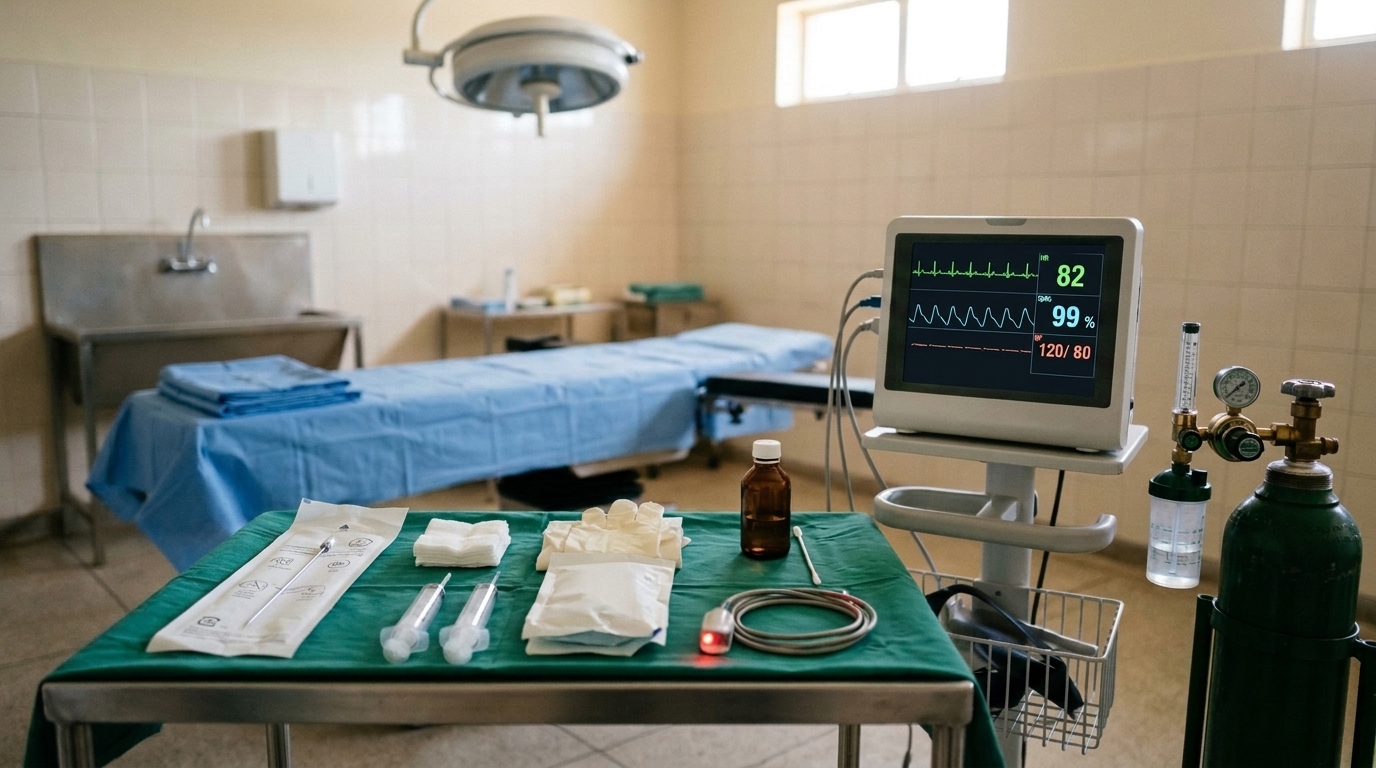
Conventional maternal-health evaluations have historically relied on procedure volumes, population-based caesarean-section rates, facility designations, and geographical-access indicators to track surgical care. While these conventional metrics remain essential for detecting regional disparities, underuse, and overuse, they are primarily gathered because they are more accessible than detailed indicators of perioperative clinical quality. Crucially, tracking the number of operations performed fails to confirm whether a facility is equipped with qualified personnel, physiological monitoring, medical oxygen, suction apparatus, essential medicines, blood transfusion access, postoperative surveillance, or functional escalation pathways when life-threatening complications emerge.
To address this critical assessment gap, the authors developed their framework through a focused, non-systematic synthesis encompassing international anaesthesia standards, emergency obstetric-care guidance, facility-readiness reports, obstetric anaesthesia literature, and field evidence from resource-limited healthcare environments. The investigators organised potential readiness indicators strictly by clinical function. They systematically mapped these candidate elements across four fundamental dimensions of healthcare delivery: physical structure, clinical processes, emergency rescue capacity, and institutional learning.
The resulting framework establishes five interconnected domains necessary to evaluate facility preparedness for operative obstetric care. These domains comprise workforce and clinical competency; infrastructure, monitoring, and documentation; airway management, resuscitation, and essential medicines; haemorrhage response and referral capacity; and recovery, surveillance, and safety governance. Together, these domains provide a functional blueprint for assessing whether surgical facilities maintain the multidisciplinary teams, diagnostic tools, emergency pharmaceuticals, and protocols required to prevent avoidable perioperative harm.
The researchers contextualised the framework using Somalia as an illustrative example of a fragile health system confronting pronounced systemic challenges. In this setting, the concentration of the clinical workforce, marked disparities in facility infrastructure, and restricted emergency and critical-care capabilities make the distinction between nominal surgical availability and effective safe access especially critical. Rather than replacing existing evaluations, the proposed readiness model is explicitly designed to complement routine caesarean tracking, comprehensive emergency obstetric and newborn care indicators, international anaesthesia standards, and maternal and perinatal death surveillance audits.
The authors stress that the proposed framework represents an evidence-informed conceptual model that has not yet undergone formal consensus development or empirical clinical validation. Before the candidate indicators can be adopted for routine facility monitoring, institutional accreditation, or regulatory governance, they require structured expert consensus, formal feasibility reviews, inter-rater reliability testing, and rigorous evaluation against objective maternal safety outcomes. The authors conclude that maternal-health systems must actively evaluate whether the staff, clinical monitoring, rescue mechanisms, haemorrhage management, recovery protocols, team preparedness, and safety governance are reliably functioning whenever surgical care is required.
The published perspective represents a broad collaborative investigation authored by Abdullahi Abdi Yusuf, Iqra Abdirazak Kabayare, Maaida Cabdullaahi Ahmed, Abdihamid Hirsi Abdulle, Salma Mohamed Ahmed, Aden Mohamed Hirsi, Deka Ahmed Abdi, Ayaan Ahmed Mohamed, Nasteho Mohamud Mohamed, Ayan Mohamed Hassan, and Liban Abdullahi Sudi, working alongside lead author Khalid Hussein Ulusow. Published on 06 November 2026, the open access paper appears in the journal Perioperative Medicine. The work directly explores foundational questions in maternal healthcare delivery, focusing on how obstetric anaesthesia readiness can be effectively measured in low-resource settings and how maternal health systems can ensure dependable access to safe and effective operative obstetric care.
To accelerate scientific dissemination across the international clinical community, the journal shared the article early to provide faster access to peer-reviewed, accepted research. The preliminary manuscript carries a permanent digital object identifier, ensuring that the findings are fully citable, although this version remains subject to further edits before it is automatically replaced by the final Version of Record. By making this conceptual framework available early, the authors provide timely methodological guidance for researchers and health authorities seeking to bridge the gap between nominal surgical access and effective clinical safety, offering an adaptable measurement structure designed to complement existing emergency obstetric indicators and maternal death surveillance systems.
Subject of Research: Obstetric anaesthesia readiness in resource-constrained healthcare settings
Article Title: Counting caesarean sections is not enough: a framework for measuring obstetric anaesthesia readiness in resource-constrained settings
Article References: Ulusow, K. H., Yusuf, A. A., Kabayare, I. A., Ahmed, M. C., Abdulle, A. H., Ahmed, S. M., Hirsi, A. M., Abdi, D. A., Mohamed, A. A., Mohamed, N. M., Hassan, A. M., & Sudi, L. A. (2026). Counting caesarean sections is not enough: a framework for measuring obstetric anaesthesia readiness in resource-constrained settings. Perioperative Medicine. https://doi.org/10.1186/s13741-026-00758-2
Image Credits: AI Generated
DOI: 10.1186/s13741-026-00758-2
Keywords: obstetric anaesthesia, caesarean delivery, resource-constrained settings, perioperative care, clinical competency, airway management, resuscitation, haemorrhage response, postoperative recovery, maternal health systems, Somalia, patient monitoring, essential medicines, safety governance, emergency obstetric care, referral capacity, fragile health systems
News Source: Ophelia Keating. (November 17, 2026). Obstetric Anaesthesia Readiness Framework Proposed for Safe Surgery in Resource-Constrained Settings. Scienmag.