In high-risk cardiac surgery patients diagnosed with infective endocarditis, integrating intraoperative hemoadsorption therapy with cardiopulmonary bypass was associated with a marked reduction in both postoperative vasoplegic syndrome and 30-day mortality, according to a prospective single-center comparative cohort study published in Intensive Care Medicine Experimental. The clinical investigation, conducted at the Department of Cardiac Surgery at Henri Mondor University Hospital in Creteil, Paris, evaluated 176 consecutive high-risk surgical patients treated between January 2020 and October 2024. Patients receiving intraoperative blood purification via a CytoSorb adsorber exhibited a 30-day mortality rate of 7.5 percent compared with 20.5 percent among historical controls who underwent surgery without the device. The study design, reported in accordance with STROCSS criteria, utilized a prospective non-randomized framework comparing patient outcomes across two consecutive two-year operational intervals immediately preceding and following the institutional adoption of the technology.
Despite timely anti-infective medical regimens, many patients face urgent indications for surgical intervention to clear infection, prevent irreversible heart failure, and mitigate systemic embolization. However, surgical intervention performed under cardiopulmonary bypass carries substantial risks of post-procedural systemic inflammatory response syndrome and severe sepsis. This systemic inflammatory cascade, orchestrated in large part by elevated levels of circulating cytokines, frequently precipitates refractory postoperative hemodynamic instability characterized by severe vasoplegia.
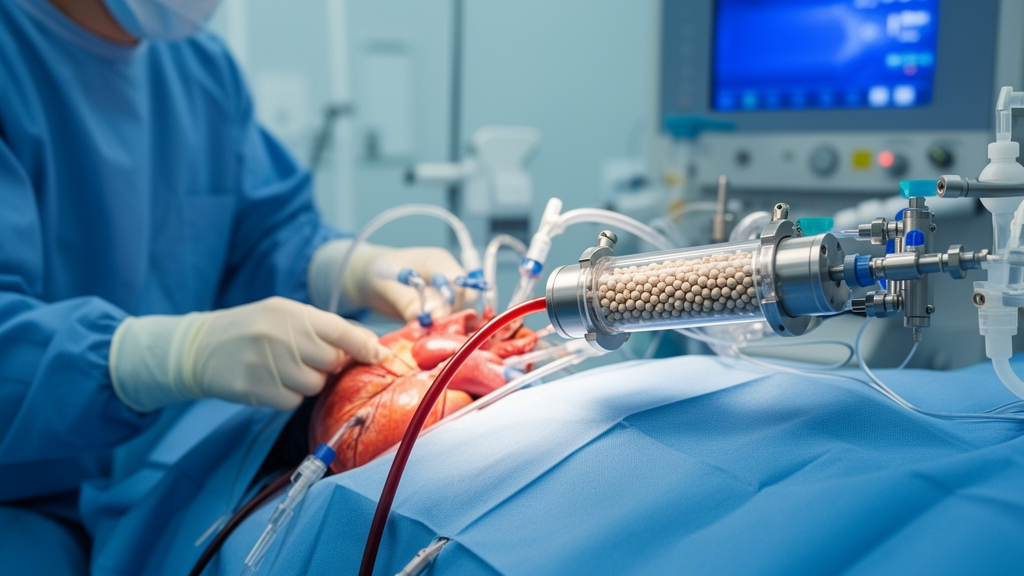
To mitigate this dysregulated inflammatory response during cardiopulmonary bypass, researchers examined the therapeutic deployment of extracorporeal hemoadsorption. The investigated technology, the CE-approved CytoSorb device, utilizes an extracorporeal blood purification cartridge packed with biocompatible porous polymer beads coated with divinylbenzene. Each bead ranges from 300 to 800 micrometers in diameter and contains an extensive internal pore architecture that generates a total effective adsorptive surface area of approximately 40,000 square meters. Through hydrophobic interactions, the cartridge selectively captures and eliminates circulating small and medium-sized molecules with molecular weights up to 60 kilodaltons, a range encompassing broad classes of pro-inflammatory cytokines, chemokines, free hemoglobin, myoglobin, bilirubin, bioactive lipids, and bacterial exotoxins, while also clearing antithrombotic medications such as ticagrelor and rivaroxaban.
The study protocol prospectively followed consecutive adult patients presenting with definite infective endocarditis confirmed by modified Duke criteria who required surgery utilizing cardiopulmonary bypass. The cohort represented an exceptionally high-risk surgical population, characterized by a mean calculated EuroSCORE-II of approximately 12 percent in both comparative arms, with nearly half of all individuals presenting in New York Heart Association functional class III or IV and approximately one-fifth undergoing redo cardiac surgery. Major exclusions comprised patients with transcatheter aortic valve endocarditis, cardiac device-related infections requiring simple lead extraction without bypass, and individuals lost to follow-up. Between September 2022 and October 2024, 93 consecutive patients received intraoperative hemoadsorption through a cartridge installed directly into a parallel line of the heart-lung machine for an average run time of 106 minutes, whereas 83 consecutive historical control patients underwent operation without hemoadsorption between January 2020 and September 2022.
Baseline demographic, clinical, and operative variables remained remarkably balanced between the experimental and control cohorts. The mean age was 60.4 years in the treatment group compared with 61.4 years in the control group, and the median interval from definitive endocarditis diagnosis to operative intervention was 13 days versus 9 days, respectively. Operative profiles also showed comparable distributions across cardiac valve involvements, including aortic valve pathology, mitral valve endocarditis, and prosthetic valve infections. Operative complexity, cardiopulmonary bypass durations, aortic cross-clamp intervals, and administered volumes of cardioplegic arrest solutions did not differ significantly between cohorts. Throughout both operational windows, surgical procedures were executed by the identical surgical and anesthesiology team following standardized perioperative protocols, isolating the integration of the hemoadsorption device as the sole deliberate procedural change.
The primary effectiveness outcome was evaluated using an unmatched hierarchical win-ratio method based on the Finkelstein-Schoenfeld test, ranking three clinical components in descending hierarchy: 30-day mortality, the incidence of postoperative vasoplegic syndrome, and total intensive care unit stay duration. Patients treated with intraoperative hemoadsorption accumulated 5,987 wins, corresponding to 77.6 percent of pairwise comparisons, compared with 1,565 wins, or 20.3 percent, in the control group, with neutral ties occurring in only 2.2 percent of evaluations. The substantial win difference favoring the treatment arm was predominantly driven by a marked reduction in postoperative vasoplegic syndrome, which accounted for 25.6 percent of the win margin, followed by contributions from intensive care unit stay and 30-day survival.
Standardized clinical evaluations revealed that postoperative vasoplegic syndrome occurred in 24.7 percent of the hemoadsorption cohort compared with 49.4 percent of the control cohort, with all documented cases manifesting within the initial 24 hours following surgery. Vasoplegia was stringently defined as persistent hypotension requiring norepinephrine doses of at least 0.5 milligrams per hour to maintain a mean arterial pressure above 65 millimeters of mercury despite adequate fluid loading of more than 2 liters of crystalloids and confirmed preserved left ventricular ejection fraction above 45 percent, excluding septic shock, hemorrhage, or tamponade. In multivariate regression models, the use of CytoSorb remained independently associated with a significantly reduced risk of postoperative vasoplegic syndrome, yielding an odds ratio of 0.357 with a 95 percent confidence interval of 0.187 to 0.682, whereas baseline variables such as body mass index, EuroSCORE-II, age, and preoperative vasopressors showed no independent impact.
Beyond the reduction in 30-day mortality from 20.5 percent down to 7.5 percent (hazard ratio 0.33; 95 percent confidence interval: 0.14 to 0.78), tracking extended out to 90 days revealed sustained survival advantages, with mortality recorded at 8.6 percent in the treatment group versus 22.9 percent in the control arm (hazard ratio 0.35; 95 percent confidence interval: 0.15 to 0.80). Furthermore, patients treated with the adsorber experienced significantly shorter stays in the cardiac intensive care unit, averaging 7.8 days compared with 11.5 days among control participants. Secondary endpoints including mechanical circulatory support via intra-aortic balloon pump or extracorporeal membrane oxygenation, surgical re-exploration rates, and respiratory failure requiring reintubation showed no statistically significant differences, while new postoperative renal replacement therapy occurred in 14.0 percent of hemoadsorption patients compared with 25.3 percent of controls.
The study authors contextualized their observations within the broader clinical literature, acknowledging contrasting results from prior investigations such as the randomized REMOVE trial, which observed significant clearance of inflammatory markers like interleukin-6 without translating into statistically significant mortality or organ-failure differences. Investigators noted that hemoadsorption benefits appear most pronounced in non-elective, high-risk surgical populations exhibiting profound baseline inflammatory activation.
Despite the encouraging statistical outcomes, the authors outlined critical methodological limitations that require cautious interpretation of the findings. Because the study utilized a single-center design evaluating two consecutive historical timeframes rather than prospective randomization, unmeasured confounding related to temporal improvements in intensive care practices, surgical experience, or supportive therapies cannot be ruled out. Additionally, the diagnosis of vasoplegic syndrome was based on predefined institutional clinical criteria rather than invasive thermodynamic measurements of systemic vascular resistance or continuous cardiac index, introducing potential misclassification risks. Importantly, because circulating cytokine levels and inflammatory biomarkers were not measured directly in this patient cohort, the biological mechanism linking physical cytokine clearance to improved survival remains associative and unproven. The researchers concluded that while intraoperative hemoadsorption demonstrates promising clinical associations in high-risk infective endocarditis operations, large-scale multicenter randomized controlled trials are essential to confirm therapeutic efficacy and elucidate underlying pathophysiological mechanisms.
Subject of Research: Intraoperative hemoadsorption therapy during cardiac surgery for infective endocarditis
Article Title: The impact of intraoperative hemoadsorption during cardiac surgery for infective endocarditis
Article References: Serradj, A., Saiydoun, G., Radu, C., Bergoend, E., Fiore, A., Huguet, R., Lim, P., Moini, C., & Folliguet, T. (2026). The impact of intraoperative hemoadsorption during cardiac surgery for infective endocarditis. Intensive Care Medicine Experimental, 14(1), Article 137. https://doi.org/10.1186/s40635-026-00988-0
Image Credits: AI Generated
DOI: 10.1186/s40635-026-00988-0
Keywords: hemoadsorption, infective endocarditis, cardiac surgery, cardiopulmonary bypass, vasoplegic syndrome, CytoSorb, intensive care unit, 30-day mortality, extracorporeal blood purification, win ratio, cytokines, systemic inflammatory response syndrome, vasopressors, acute kidney injury, prospective cohort study, EuroSCORE-II
News Source: Ophelia Keating. (November 17, 2026). Intraoperative Hemoadsorption Linked to Reduced Mortality in High-Risk Endocarditis Surgery. Scienmag.