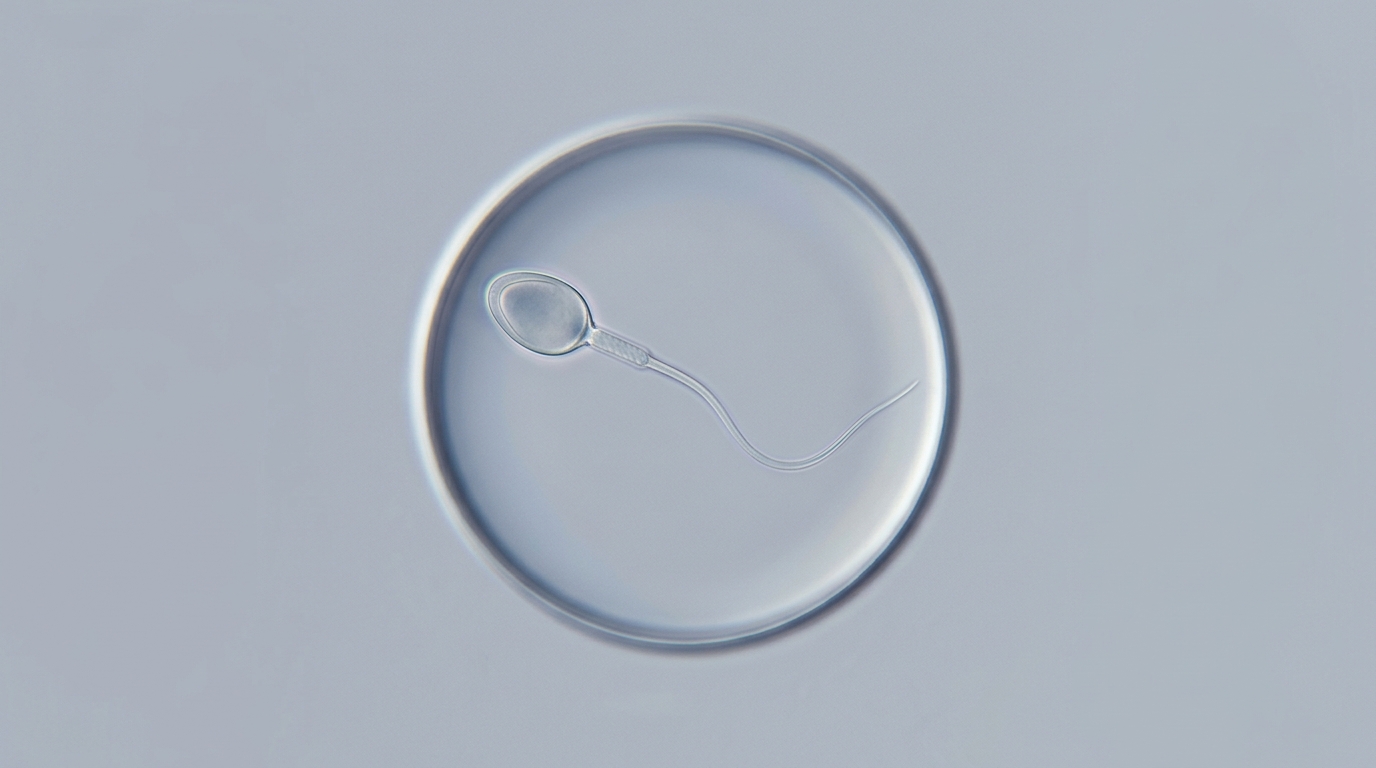
A multicenter retrospective study tracking single-sperm cryopreservation using the Cryopiece carrier system across five reproductive centers in China found an 87.27 percent post-thaw recovery rate and a 52.73 percent clinical pregnancy rate per embryo transfer. Published in the European Journal of Medical Research, the findings evaluate the clinical performance of freezing extremely small numbers of spermatozoa for couples undergoing intracytoplasmic sperm injection. Across 3,394 cryopreserved sperm cells analyzed in the dataset, post-thaw motility reached 55.57 percent, while the overall fertilization rate stood at 72.98 percent among 1,751 inseminations.
Single-sperm cryopreservation offers a clinical pathway for individuals diagnosed with severe oligospermia or azoospermia, allowing the preservation of sparse sperm samples for assisted reproductive technology. Earlier research established the general feasibility of the technique, but existing evidence remained constrained by single-center experimental designs, small patient cohorts, and unresolved questions regarding carrier performance. Because multiple carrier devices have been introduced over time, researchers sought to clarify the generalizability, practical handling, and clinical efficiency of the Cryopiece platform when deployed across diverse reproductive facilities.
To evaluate multicenter outcomes under routine conditions, investigators gathered assisted reproductive technology treatment records from five Chinese fertility centers between January 1, 2015, and May 31, 2025. The investigation focused on couples who received intracytoplasmic sperm injection specifically for male factor infertility over that ten-year interval. Participating clinics adhered to identical data forms, with trained local personnel collecting clinical details at each coordinating site before transmitting the information electronically to the central research group for unified compilation and analysis.
Laboratory measurements demonstrated consistent post-thaw retrieval, recovering 2,962 intact spermatozoa from the 3,394 cryopreserved cells, corresponding to an 87.27 percent recovery rate. Among recovered specimens, 1,646 sperm cells retained active motility, reflecting a post-thaw motility rate of 55.57 percent. When applied in clinical insemination procedures, these cells achieved normal two-pronuclei fertilization in 1,106 of 1,751 oocytes, yielding a 2PN fertilization rate of 63.16 percent alongside the 72.98 percent total fertilization rate observed across the entire multicenter cohort.
Clinical downstream outcomes encompassed 146 embryo transfer cycles, resulting in 77 confirmed clinical pregnancies, which established a pregnancy rate of 52.73 percent per transfer procedure. The delivery rate across these transfers reached 26.03 percent. In multivariable logistic regression modeling aimed at identifying factors influencing pregnancy success, the high-quality embryo rate was the only variable independently associated with achieving a clinical pregnancy, recording an odds ratio of 1.28 with a 95 percent confidence interval from 1.07 to 1.53 (P = 0.008).
Sperm origin introduced notable statistical differences across recovery, motility, and fertilization benchmarks. Epididymal spermatozoa demonstrated significantly higher post-thaw recovery (92.28 percent) and motility (63.50 percent) than either ejaculated sperm (87.03 percent recovery, 57.29 percent motility) or testicular sperm (86.49 percent recovery, 51.18 percent motility), with all pairwise comparisons reaching statistical significance (P < 0.05). Conversely, epididymal spermatozoa exhibited a fertilization rate of 64.49 percent, which was significantly lower than the 75.16 percent achieved with ejaculated sperm and the 71.96 percent observed with testicular sperm (P = 0.012).
The investigation also highlighted the impact of assisted oocyte activation when using thawed motile spermatozoa. Cycles incorporating assisted oocyte activation demonstrated a significantly higher two-pronuclei fertilization rate compared to standard handling (68.13 percent versus 58.80 percent, P < 0.01) and elevated the proportion of high-quality embryos (41.90 percent versus 28.78 percent, P < 0.01). Although the authors concluded that the Cryopiece system provides a reliable carrier for preserving limited sperm quantities, they noted that future prospective studies featuring standardized protocols and extended long-term follow-up remain necessary to confirm these multicenter retrospective findings.
Subject of Research: Clinical efficacy of the Cryopiece system for single-sperm cryopreservation in male factor infertility
Article Title: Effective single-sperm cryopreservation using the cryopiece system in China: a multi-center cohort study
Article References: Huang, C., Jiang, L.-Y., Wang, R.-X., Chen, W., Xiong, Q., Liu, F., Bai, F.-R., Ma, L.-H., Zhu, W.-B., Xue, S.-G., Yao, Y.-L., He, X.-J., & Li, Z. (2026). Effective single-sperm cryopreservation using the cryopiece system in China: a multi-center cohort study. European Journal of Medical Research. https://doi.org/10.1186/s40001-026-05511-5
Image Credits: AI Generated
DOI: 10.1186/s40001-026-05511-5
Keywords: single-sperm cryopreservation, Cryopiece system, intracytoplasmic sperm injection, male factor infertility, oligospermia, azoospermia, post-thaw sperm motility, sperm recovery rate, fertilization rate, clinical pregnancy rate, embryo transfer, assisted oocyte activation, epididymal spermatozoa, testicular spermatozoa, multicenter cohort study, high-quality embryo rate
News Source: Ophelia Keating. (November 17, 2026). Single Sperm Freezing System Achieves 87 Percent Recovery in Multicenter Study. Scienmag.