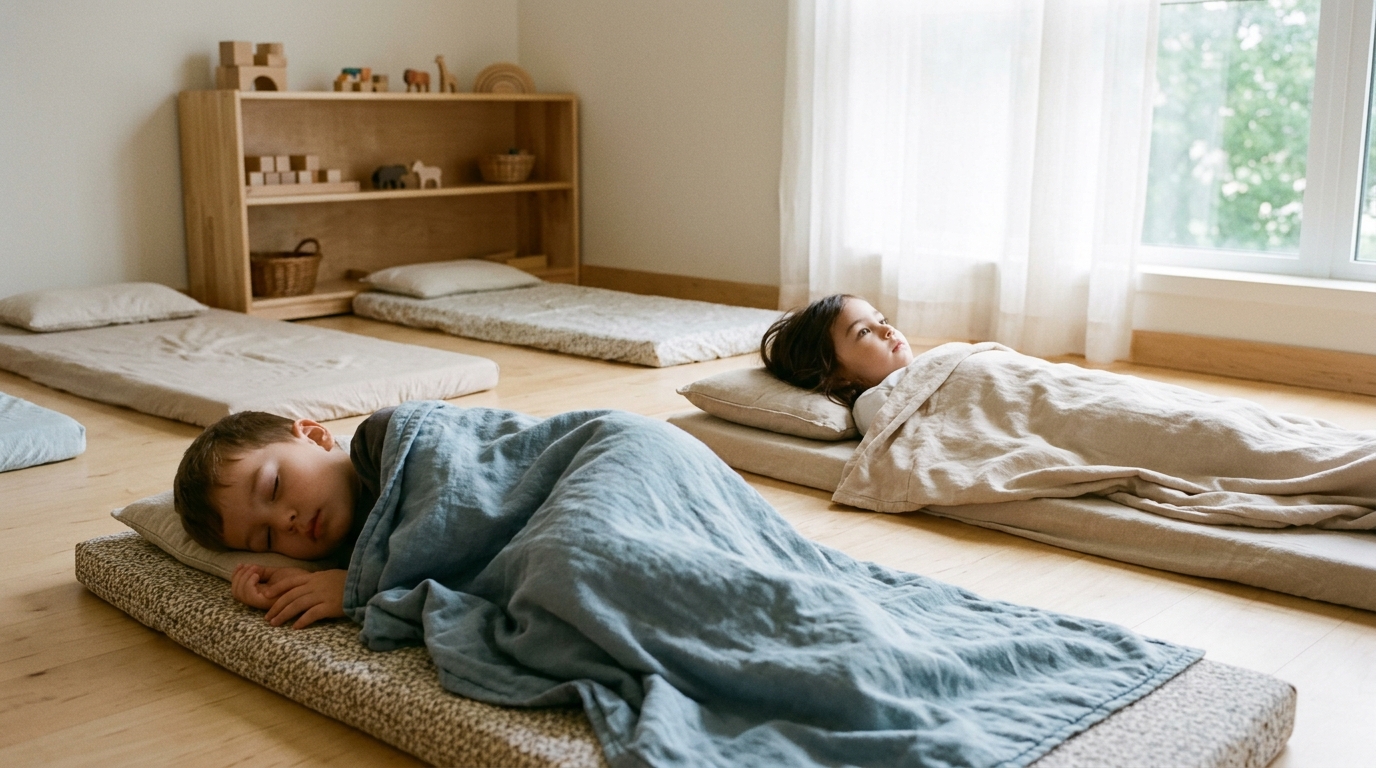
A six-month longitudinal tracking study of Canadian preschool-aged children reveals that daytime napping habits do not follow a simple, uniform path toward cessation, but instead evolve through distinct behavioral trajectories marked by significant reductions in regular nappers and the unexpected resumption of daytime rest among previous non-nappers. Across the overall cohort of children who napped at baseline, average weekly nap duration decreased significantly by 85.12 minutes over the half-year interval, and roughly a quarter discontinued daytime sleep entirely. However, the trajectory of these reductions differed substantially across baseline sleep classifications, demonstrating that early childhood daytime rest diminishes as a flexible, non-linear developmental process rather than a static milestone. While nighttime sleep duration remained remarkably stable across all examined groups, parents reported a significant decrease in nighttime sleep problems, showing that reductions in daytime rest occurred without disturbing overnight duration while coinciding with improvements in nighttime settling and maintenance.
Published by researchers Taylor H. Meiorin, Adam T. Newton, and Graham J. Reid, the study sought to resolve a long-standing gap in developmental sleep research by investigating how multiple distinct facets of napping evolve simultaneously over time. Early childhood, defined in the investigation as spanning ages one through six years inclusive, represents a crucial window wherein developing children transition from biphasic sleep, comprising both daytime naps and nighttime rest, to consolidated monophasic sleep concentrated entirely overnight. Existing sleep literature has largely documented that daytime napping ceases for the vast majority of children by six years of age, yet most preceding investigations evaluated only single isolated metrics such as nap duration or weekly frequency at isolated time points. To capture the full multidimensional reality of daytime rest, the investigators tracked five specific napping indicators across time: total nap duration, weekly nap frequency, clock timing of sleep onset, the proportion of naps occurring spontaneously rather than planned, and the proportion of total weekly sleep accounted for by daytime rest.
The study utilized a longitudinal cohort derived from a nationally representative initial sample of 702 Canadian parents who completed comprehensive baseline assessments regarding their young children. Six months after the initial survey, a follow-up cohort of 162 parents completed identical re-evaluations measuring daytime napping parameters alongside nighttime sleep duration and difficulties. The children participating in this longitudinal sample ranged from 1.25 to 6.67 years old at baseline, with a mean age of 44.51 months, and were aged 1.83 to 7.25 years at the follow-up assessment with a mean age of 50.65 months. The demographic makeup of the longitudinal sample remained balanced, comprising 48.1 percent girls and 51.2 percent boys. Approximately 49.4 percent of the children were White, 22.2 percent belonged to households with an annual income below 40,000 Canadian dollars, and 29 percent of parents held a university degree. When examining demographic distributions across profiles, regular nappers were concentrated at younger chronological ages, whereas spontaneous nappers and non-nappers were predominantly represented among older children.
Children were categorized at baseline into four distinct napping behavior profiles established through empirical clustering methods: regular nappers, intermittent nappers, spontaneous nappers, and non-nappers. Regular nappers were baseline-defined by long average nap durations of 138 minutes, high proportions of daytime sleep averaging 16 percent of weekly totals, low nap spontaneity averaging 25 percent, earlier nap timings in the day, and high consistency, with 84 percent napping six to seven days per week. Intermittent nappers exhibited standardized average values across all indicators, commonly sleeping one to two days per week or three to five days weekly. Spontaneous nappers demonstrated high spontaneity averaging 87 percent unplanned sleep, later nap timing, and very low daytime sleep proportions averaging 1.15 percent, with 75 percent napping less than once weekly. Baseline non-nappers were identified as children who had not taken a single nap over the preceding month according to parental reports.
Data collection relied on a detailed one-month retrospective parent report capturing nap timing, frequency, length, spontaneity, and night patterns. Nap frequency was coded from zero to four, differentiating children who never napped from those napping less than weekly, one to two days, three to five days, or six to seven days per week. Nap timing was recorded in minutes from midnight based on typical start times, while spontaneity was measured along a continuous zero-to-one-hundred scale ranging from entirely planned to entirely spontaneous. Nighttime sleep duration was computed by subtracting parent-reported sleep onset times from morning wake times across weekdays and weekends, weighted across the full week. To quantify nighttime sleep disturbances, the researchers administered the nine-item Tayside Sleep Questionnaire, yielding continuous severity scores ranging from zero to 36 without artificial clinical cutoff thresholds. Statistical comparisons utilized General Linear Models testing main effects of time and profile interactions, with missing values handled through expectation-maximization procedures.
Among the 127 children who were actively napping at the study baseline, representing 78.4 percent of the longitudinal analytic sample, 25.2 percent had completely stopped napping by the six-month follow-up. However, the probability of discontinuing naps varied drastically depending on initial profile membership. Regular nappers showed remarkable persistence with a cessation rate of only 2.5 percent, representing just one child out of forty. By contrast, 23.9 percent of intermittent nappers, accounting for eleven out of forty-six children, and 48.8 percent of spontaneous nappers, comprising twenty out of forty-one children, ceased daytime sleeping altogether within the six-month window. Furthermore, analysis of children who did not nap at baseline revealed that nap cessation is not always permanent: 11.4 percent of initial non-nappers, representing four children, resumed napping during the follow-up period. Exploratory analyses showed that these resumed naps were largely irregular, with 86 percent occurring spontaneously in the late afternoon around a mean time of 3:41 PM, accompanied by low weekly duration averaging 270 minutes and low daytime sleep proportions averaging five percent.
Statistical modeling of daytime sleep parameters revealed a significant Time by Nap Profile interaction effect for both daytime sleep proportion and nap duration. Children classified as regular nappers experienced the steepest reductions in both metrics over the six-month evaluation period, showing a significant drop in their proportion of daytime sleep with a mean difference of 0.036. Intermittent nappers also exhibited a statistically significant decrease in daytime sleep proportion with a mean difference of 0.012, whereas spontaneous nappers experienced a non-significant change of 0.003. In terms of nap duration, regular nappers displayed the most pronounced declines, while intermittent and spontaneous groups maintained relatively stable durations. Notably, individual variability in nap length expanded substantially over time across all groups. For regular nappers, the standard deviation increased from approximately 30 percent of the mean at baseline to nearly 60 percent at follow-up; for intermittent nappers, follow-up standard deviations exceeded the group mean; and for spontaneous nappers, the standard deviation remained more than twice the mean across both time points.
In contrast to the dramatic shifts observed in duration and proportion, nap timing and nap spontaneity remained remarkably stable across the six-month span. Regular nappers consistently initiated naps earlier in the day, intermittent nappers slept in the mid-afternoon, and spontaneous nappers rested latest, with statistical tests showing no significant main effect of time and no interaction between time and baseline nap profiles. Similarly, the proportion of spontaneous versus planned naps did not significantly change over the study period. While regular nappers displayed a modest numerical increase in spontaneous naps, the shift failed to reach statistical significance, and spontaneous nappers continued to exhibit predominantly unplanned rest. Weekly nap frequency nevertheless declined across all categories: the proportion of regular nappers sleeping six to seven days per week fell from 95 percent at baseline to 67.5 percent at follow-up, while 15 percent shifted to three to five days weekly and 2.5 percent stopped completely, demonstrating a broad downward transition in scheduled daytime sleep across early childhood.
Evaluations of nighttime sleep parameters demonstrated that consolidated overnight duration was preserved despite notable daytime declines. General linear models revealed no significant main effects of time, no profile differences, and no interaction effects for nighttime sleep duration, indicating that children did not lengthen overnight sleep to compensate for lost daytime naps. Concurrently, scores on the Tayside Sleep Questionnaire demonstrated a statistically significant reduction in nighttime sleep problems across the sample, with neither the main effect of nap profile nor the interaction effect reaching significance.
The study authors highlighted several methodological limitations that provide essential context for interpreting these developmental findings. Data collection took place across Canada during the evolving COVID-19 pandemic, an era characterized by shifting public health restrictions and alterations to schooling, childcare, and domestic family schedules. Because participant-level data regarding local restrictions were not recorded, the degree to which observed changes reflected pandemic adjustments rather than normative maturation could not be isolated. Furthermore, the longitudinal cohort experienced substantial participant attrition, dropping from 702 to 162 parents, with follow-up completion associated with child ethnicity, sibling status, parental occupation, and baseline nap timing. Finally, the reliance on one-month retrospective parental surveys introduces potential recall bias, although these measures historically correlate well with prospectively collected sleep diaries. Despite these constraints, the researchers emphasized that these findings challenge rigid, binary definitions of nap cessation and underscore the importance of flexible, individualized approaches when managing and accommodating early childhood sleep schedules.
Subject of Research: Longitudinal developmental changes in preschool daytime napping and nighttime sleep behaviors
Article Title: Longitudinal trends in early childhood sleep and napping behaviors
Article References: Meiorin, T. H., Newton, A. T., & Reid, G. J. (2026). Longitudinal trends in early childhood sleep and napping behaviors. Journal of Clinical Sleep Medicine, 22(1), Article 224. https://doi.org/10.1007/s44470-026-00181-w
Image Credits: AI Generated
DOI: 10.1007/s44470-026-00181-w
Keywords: pediatric sleep, preschool napping, daytime sleep duration, sleep consolidation, nap cessation, nap frequency, nap timing, spontaneous napping, regular nappers, intermittent nappers, spontaneous nappers, nighttime sleep problems, Tayside Sleep Questionnaire, early childhood development, biphasic sleep, monophasic sleep, longitudinal cohort, parent-reported sleep
News Source: Ophelia Keating. (November 17, 2026). Preschool Napping Drops Dynamically Over Six Months While Some Non-Nappers Resume Sleep. Scienmag.