• HOME
  • NEWS
  • EXPLORE
    • CAREER
      • Companies
      • Jobs
    • EVENTS
    • iGEM
      • News
      • Team
    • PHOTOS
    • VIDEO
    • WIKI
  • BLOG
  • COMMUNITY
    • FACEBOOK
    • INSTAGRAM
    • TWITTER
Tuesday, November 17, 2026
BIOENGINEER.ORG
No Result
View All Result
  • Login
  • HOME
  • NEWS
  • EXPLORE
    • CAREER
      • Companies
      • Jobs
        • Lecturer
        • PhD Studentship
        • Postdoc
        • Research Assistant
    • EVENTS
    • iGEM
      • News
      • Team
    • PHOTOS
    • VIDEO
    • WIKI
  • BLOG
  • COMMUNITY
    • FACEBOOK
    • INSTAGRAM
    • TWITTER
No Result
View All Result
Bioengineer.org
No Result
View All Result
Home NEWS Science News Technology

Random Forest Model Improves Geothermal Reservoir Permeability Predictions Using NMR Data

by
November 17, 2026
in Technology
Reading Time: 2 mins read
0
Random Forest Model Improves Geothermal Reservoir Permeability Predictions Using NMR Data

Random Forest Model Improves Geothermal Reservoir Permeability Predictions Using NMR Data

Share on FacebookShare on TwitterShare on LinkedinShare on RedditShare on Telegram

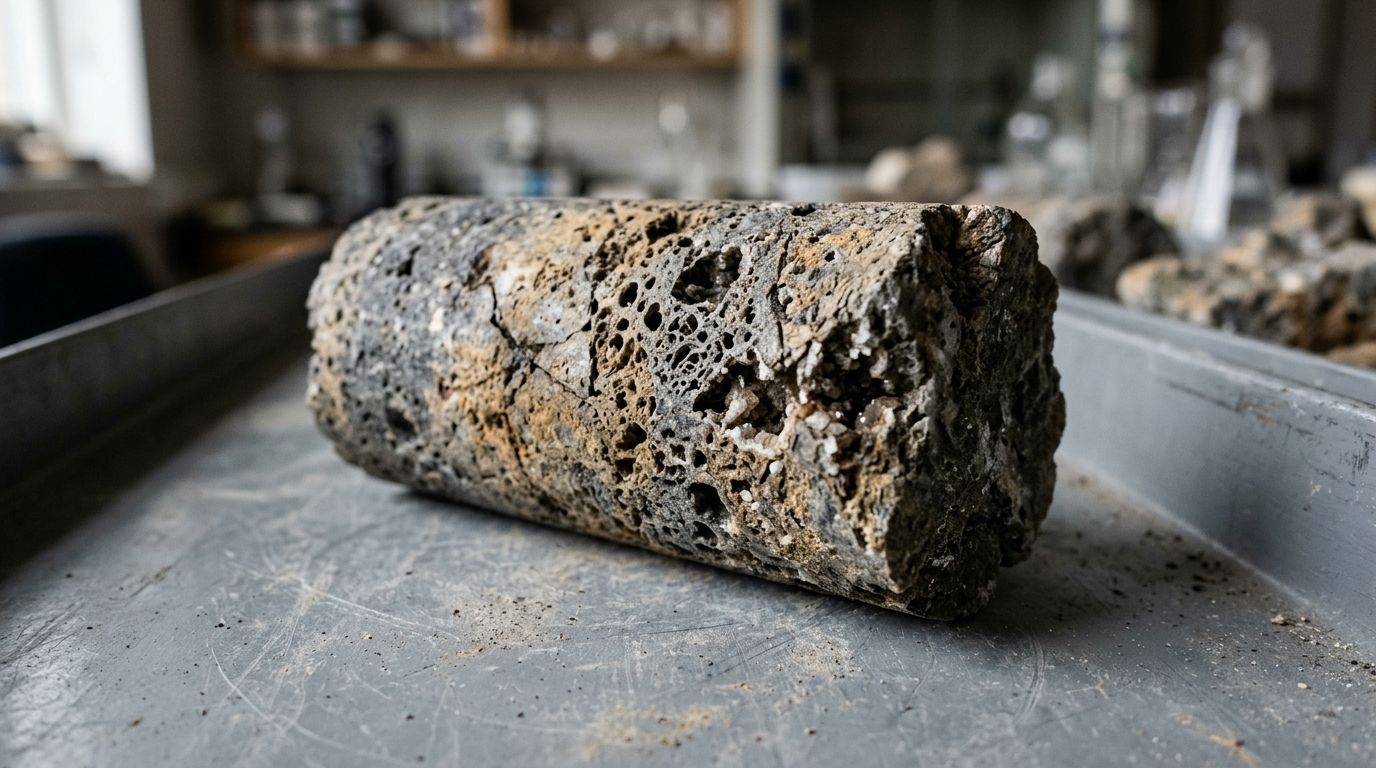
Accurate prediction of permeability in geothermal reservoirs remains a significant challenge for energy extraction and reservoir management, as conventional laboratory correlations often fail to capture the complex, nonlinear interactions among porosity, stress, and fluid properties under high-temperature, high-salinity conditions. To address these limitations, researchers developed an enhanced data-driven framework that integrates Nuclear Magnetic Resonance (NMR) laboratory measurements with machine-learning algorithms. By utilizing an expanded dataset of 204 core samples, the study aimed to improve the precision of permeability modeling in environments where traditional methods frequently fall short.

The research team trained and validated six distinct machine-learning models: Decision Tree, AdaBoost, Random Forest, K-Nearest Neighbors, Multilayer Perceptron, and Linear Regression. The input variables selected for the modeling process included effective porosity, total porosity, effective stress, salinity, and NMR relaxation parameters, specifically Tâ‚‚lm and Tâ‚‚mode. While the team employed the Leverage technique to conduct outlier detection, they ultimately retained all 204 samples, including those identified as high-leverage, to ensure the framework preserved the natural geological variability inherent in the dataset.

The performance of each model was rigorously evaluated using K-fold cross-validation and standard statistical metrics, including R², root mean square error (RMSE), and absolute average relative error (AARE). The results indicated that the Random Forest model achieved the strongest generalization on unseen data, recording an R² of 0.968, an RMSE of 52.414, and an AARE of 62.046%.

A SHAP-based sensitivity analysis was conducted to determine the relative influence of each feature on the predictive output. The findings confirmed that effective porosity was the most influential predictor of permeability, followed by total porosity and effective stress. While salinity and NMR relaxation parameters also contributed to the model, their impact was moderate compared to porosity metrics. By bridging experimental NMR characterization with advanced predictive modeling, this proposed workflow offers a physically consistent and computationally efficient alternative to traditional laboratory methods, providing a scalable solution for evaluating geothermal reservoir potential in challenging subsurface environments.

Subject of Research: Data-driven predictive modeling for geothermal reservoir permeability using NMR-derived features.

Article Title: Data‑driven characterization of geothermal reservoir permeability using NMR‑derived features

Article References: Yadav, K., Alshudukhi, J., Quadri, N. S., Dutta, D. K., & Mottaghi, M. (2026). Data‑driven characterization of geothermal reservoir permeability using NMR‑derived features. Geothermal Energy. https://doi.org/10.1186/s40517-026-00420-6

Image Credits: AI Generated

DOI: 10.1186/s40517-026-00420-6

Keywords: Geothermal Energy, Reservoir Management, Nuclear Magnetic Resonance, NMR, Permeability Prediction, Machine Learning, Random Forest, Data-Driven Modeling, Porosity, Effective Stress, Salinity, Geothermal Reservoirs, Core Sample Analysis, Predictive Modeling, Energy Extraction, Statistical Analysis, SHAP Analysis, Subsurface Characterization, Fluid Properties, Petrophysics

News Source: Violet Maxwell. (November 17, 2026). Random Forest Model Improves Geothermal Reservoir Permeability Predictions Using NMR Data. Scienmag.


Tags: Core Sample Analysisdata-driven modelingeffective stressEnergy ExtractionFluid PropertiesGeothermal Energygeothermal reservoirsMachine LearningNMRnuclear magnetic resonancepermeability predictionpetrophysicsporositypredictive modelingRandom Forestreservoir managementsalinitySHAP analysisstatistical analysisSubsurface Characterization
Share12Tweet7Share2ShareShareShare1

Related Posts

PUCC Framework Cuts Cloud GPU Training Time by 75 Percent

PUCC Framework Cuts Cloud GPU Training Time by 75 Percent

November 17, 2026
Digital Health Literacy Alone Does Not Ensure Active Rheumatic Disease Decisions

Digital Health Literacy Alone Does Not Ensure Active Rheumatic Disease Decisions

November 17, 2026

Plant-Synthesized Silver Nanoparticles Enhance Black Gram Seedling Growth in Laboratory Tests

November 17, 2026

Offshore Wind Wake Predictions Vary Up to Four Percent Across Software Implementations

November 17, 2026

POPULAR NEWS

  • Microbial Biomarkers Reshape Early Detection and Treatment Across Gastrointestinal Cancers

    Microbial Biomarkers Reshape Early Detection and Treatment Across Gastrointestinal Cancers

    29 shares
    Share 12 Tweet 7
  • Lasso-Logistic and Stepwise Methods Accurately Combine Markers Across Alzheimer’s Stages

    29 shares
    Share 12 Tweet 7
  • Review Evaluates How Polyclonal IgG Repertoires Modulate Developing and Ageing Lymphocytes

    29 shares
    Share 12 Tweet 7
  • Periodontal Treatment Reduces Gingival Fluid Prolactin Levels in Obese Patients

    29 shares
    Share 12 Tweet 7

About

We bring you the latest biotechnology news from best research centers and universities around the world. Check our website.

Follow us

Recent News

Cerebral Autoregulation Index Fluctuates Widely During One-Lung Ventilation in Two Cases

Bacteriophages Suppress Resistant Pseudomonas aeruginosa Isolates in Laboratory Assessment

Yarrowia lipolytica Yeast Mobilizes Phosphate and Enhances Tomato and Maize Growth

Subscribe to Blog via Email

Enter your email address to subscribe to this blog and receive notifications of new posts by email.

Join 88 other subscribers
  • Contact Us

Bioengineer.org © Copyright 2023 All Rights Reserved.

Welcome Back!

Login to your account below

Forgotten Password?

Retrieve your password

Please enter your username or email address to reset your password.

Log In
No Result
View All Result
  • Homepages
    • Home Page 1
    • Home Page 2
  • News
  • National
  • Business
  • Health
  • Lifestyle
  • Science

Bioengineer.org © Copyright 2023 All Rights Reserved.