A systematic investigation into tissue sample preparation has established an optimized, standardized homogenization workflow that substantially improves the recovery, accuracy, and reproducibility of metabolite profiling in biological tissues. Conducting targeted metabolomics and lipidomics on porcine muscle specimens, the research team demonstrated that a tissue weight to homogenization solution volume ratio of 1:12 milligram per microliter combined with a homogenate extract volume of 25 microliters consistently produced superior quantitative yields across more than 350 polar, semi-polar, and lipophilic metabolites. By systematically adjusting the mass of weighed tissue, the volume of homogenization solvent, the volume of homogenate aliquoted for extraction, and the resulting total homogenate volume, the researchers uncovered critical mechanical and physical constraints that govern metabolome analysis. Their findings reveal that simply adding more tissue does not boost metabolite recovery but instead triggers pronounced extraction saturation, particularly for lipophilic lipids and long-chain acylcarnitines. Consequently, the authors proposed a unified reporting convention that explicitly pairs the tissue-to-solvent ratio with the calculated total homogenate volume, addressing widespread inconsistencies that currently hinder comparability across clinical and translational metabolomics studies.
Tissue metabolomics provides unique and indispensable biological insight into localized metabolic alterations that cannot be detected through routine whole-body biofluids such as blood plasma or urine. While biofluids reflect integrated systemic processes occurring throughout an entire organism at the moment of collection, tissue-specific metabolomics captures localized cellular activity, organ-specific pathway perturbations, and distinct biochemical gradients strictly confined to affected histological regions. Despite this analytical promise, tissue metabolomics remains exceptionally vulnerable to pre-analytical and analytical variability introduced during sample procurement, cryopreservation, mechanical disruption, chemical extraction, and mass spectrometric quantification. Achieving rigorous methodological standardization across laboratories represents a major bottleneck in metabolomic biomarker discovery, particularly when working with scarce clinical specimens such as core biopsies or surgically excised human tissues. The initial mechanical disruption of the cellular matrix is critical because it disrupts cellular integrity, solubilizes intracellular compounds, and serves as the initial step of chemical extraction. When different laboratories employ disparate homogenization volumes, unrecorded tissue weights, or arbitrary post-homogenization dilutions, the resulting datasets cannot be reliably merged or reproduced, necessitating a thorough empirical evaluation of core disruption parameters.
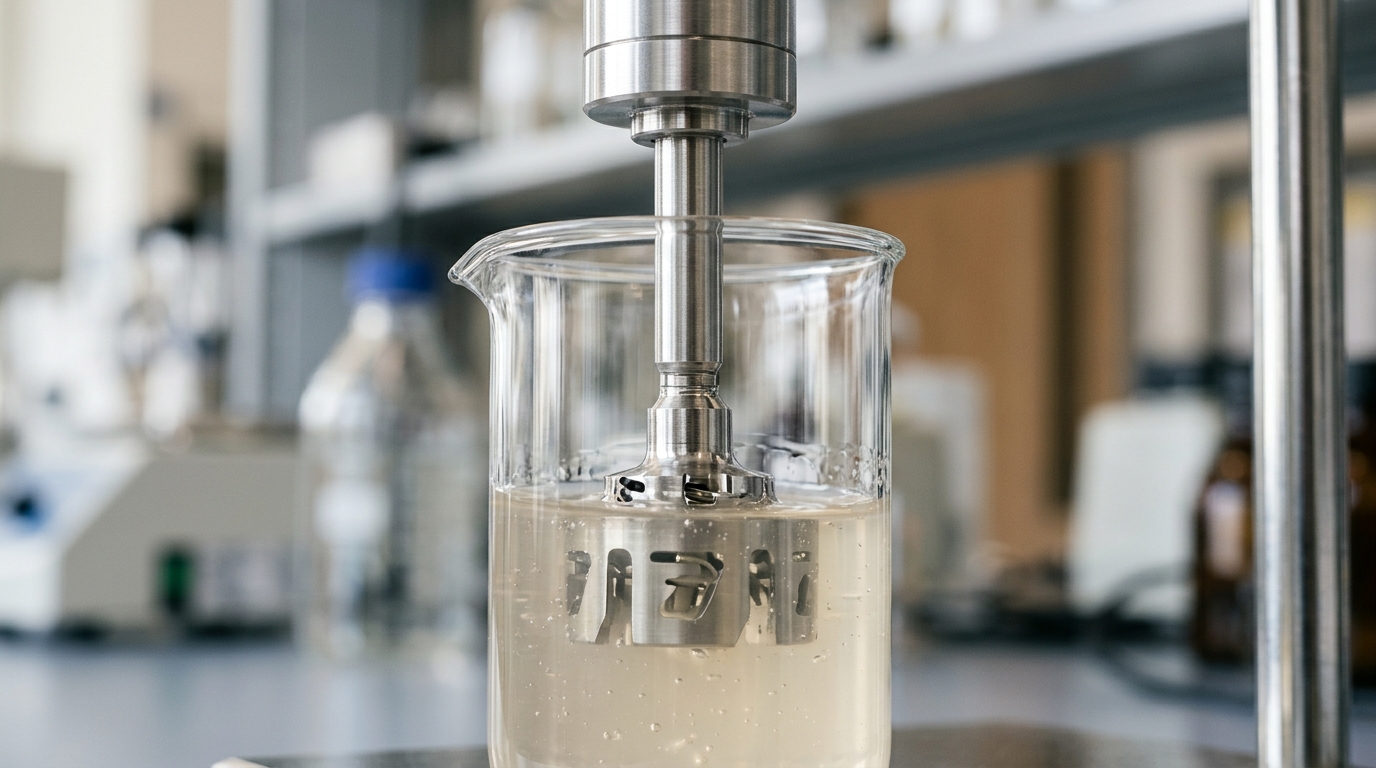
To evaluate these parameters under strictly controlled conditions, the researchers conducted systematic optimization experiments utilizing pork muscle tissue procured as fresh slices from a local supermarket and stored at minus 30 degrees Celsius. Prior to sectioning, individual tissue slabs were thawed, rinsed thoroughly with cold phosphate-buffered saline to eliminate residual surface blood and processing contaminants, and blotted dry with lint-free wipes. Tissue samples were then sectioned into target weight cohorts of 25, 50, 100, 200, and 400 milligrams, with actual weights recorded on an analytical balance to determine precise experimental variations before snap-freezing in liquid nitrogen for 10 to 20 seconds. Homogenization was performed in 2-milliliter screw-cap tubes fitted with reinforced caps using an Omni-International Bead Ruptor-4 mechanical homogenizer operating at speed level 4 for 5 minutes. Mechanical lysis was facilitated by five 3-millimeter tungsten carbide beads per tube, using chilled 1:1 phosphate-buffered saline and methanol as the homogenization solution. Temperature control during mechanical disruption was rigorously maintained by packing crushed ice directly into a sealed bag positioned under the homogenizer lid, followed by immediate transfer to crushed ice to limit thermal degradation.
Following mechanical tissue homogenization, polar metabolites and lipophilic lipid species were isolated using a specialized two-step liquid-liquid extraction procedure applied directly to aliquots of the whole homogenate slurry without prior centrifugation. Previous studies demonstrated that utilizing the entire tissue homogenate, including insoluble cell debris, yields broader metabolome coverage and improved sample-to-sample reproducibility compared to isolating only the clear supernatant. In the standardized extraction sequence, aliquots of 10, 25, or 50 microliters of homogenate were transferred without pipette tip pre-wetting directly into 450 microliters of pure methanol containing isotopic internal standards, mixing thoroughly via twenty repeated aspirate-dispense cycles to generate a uniform precipitate of cellular debris and denatured protein. Following a 20-minute incubation at 4 degrees Celsius and brief centrifugation, the polar supernatant was separated, while the remaining solid pellet was resuspended in 50 microliters of water and subjected to a secondary extraction using 450 microliters of 75 percent methyl tert-butyl ether in methanol. Combining these complementary extracts produced a unified sample fraction; half was dried and reconstituted in 10 percent water in methanol for polar metabolite analysis, while the organic ether phase was retained for comprehensive lipid profiling.
Quantitative instrumental analysis was conducted across distinct high-performance liquid chromatography and flow-injection tandem mass spectrometry platforms designed to measure diverse chemical classes with high analytical selectivity. Analysis of 20 proteinogenic amino acids, ornithine, and citrulline was performed on an Agilent 1100 liquid chromatography system coupled to an AB SCIEX API 2000 triple quadrupole mass spectrometer operating with an electrospray ionization source, utilizing an XBridge C18 column for chromatographic separation. Organic acids and tricarboxylic acid cycle intermediates, along with taurine and alpha-aminoadipic acid, were resolved using a Phenomenex Kinetex F5 column on an Agilent 1260 HPLC linked to an AB SCIEX QTRAP 4000 hybrid mass spectrometer. The same QTRAP 4000 system was employed to quantify 60 distinct acylcarnitine species separated on a Phenomenex Kinetex EVO C18 stationary phase. Additionally, 329 intact phospholipid species, including lyso-phosphatidylcholines, diacyl-phosphatidylcholines, alkyl-acyl phosphatidylcholines, and sphingomyelins, were quantified directly using flow injection analysis without column separation. Across all validated target panels, 24 amino acids, 13 organic acids, 60 acylcarnitines, and 329 phospholipids were quantified against matrix-matched human control plasma samples and multi-point calibration curves to confirm limits of detection and limits of quantitation.
By systematically pairing tissue weights of 25, 50, 100, and 200 milligrams with 300 microliters of homogenization solution, the investigators established theoretical tissue-to-solvent ratios of 1:12, 1:6, 1:3, and 1:1.5 to assess how tissue load alters extraction efficiency. When evaluating the aliquoted homogenate extract volume taken for downstream processing, 10, 25, and 50 microliter volumes were directly compared across all ratios. Although the smallest aliquot volume of 10 microliters occasionally yielded marginally higher calculated concentrations per milligram of tissue, it introduced significant experimental variability and elevated relative standard deviations across triplicate replicates. This inconsistency was traced directly to technical pipetting failures, as particulate debris within the crude homogenate frequently blocked the narrow orifices of 10-microliter pipette tips. Conversely, pipetting 25 microliters of homogenate with standard 200-microliter tips eliminated tip clogging while delivering robust, highly reproducible quantitative recoveries. Across all tested combinations, the 1:12 ratio with a 25-microliter extract volume consistently outperformed higher tissue loads, demonstrating that minimizing sample mass relative to solvent volume creates an optimal environment for thorough cell lysis and compound dissolution.
The experimental data demonstrated that the influence of tissue-to-solvent ratios is strongly governed by the underlying physicochemical properties and polarity of individual chemical classes. Highly polar compounds, such as malic acid, succinic acid, and glutamic acid, exhibited relatively stable extraction yields regardless of whether the homogenization ratio was set at 1:12 or increased to 1:1.5, showing minimal susceptibility to changes in tissue density. In marked contrast, semi-polar compounds including serine, 3-methyl-2-oxovaleric acid, and short-chain acylcarnitines displayed notable reductions in yield as tissue concentration increased. The most dramatic drop in recovery occurred among increasingly lipophilic lipids, spanning medium- and long-chain acylcarnitines such as decanoylcarnitine and octadecanoylcarnitine, as well as complex phospholipids including lyso-phosphatidylcholines and phosphatidylcholines. As tissue mass increased from 25 milligrams to 200 milligrams within a static 300-microliter solvent volume, lipid yields dropped sharply per milligram of tissue. This quantitative decline indicates a severe extraction saturation threshold, where high concentrations of hydrophobic cellular material saturate the available organic solvent volume, impeding the complete solubilization of lipophilic compounds and causing substantial underestimation of lipid concentrations in dense homogenates.
Crucially, the study proved that reporting a simple ratio such as 1:6 or 1:3 is fundamentally inadequate for describing tissue processing without also specifying the absolute total homogenate volume. By assuming that 1 milligram of dense animal muscle equals 1 microliter of slurry volume, the researchers calculated total homogenate volume as the sum of weighed tissue and added solvent volume. When comparing identical 1:6 ratios prepared either as 50 milligrams in 300 microliters of solvent with a total volume of 350 microliters, or as 100 milligrams in 600 microliters of solvent with a total volume of 700 microliters, the resulting extraction yields differed markedly. For the majority of evaluated metabolites, the smaller total volume of 350 microliters yielded significantly higher metabolite concentrations than the larger 700-microliter preparation, despite identical chemical proportions. Conversely, at an overloaded ratio of 1:1.5, expanding total volume from 500 microliters to 1000 microliters improved extraction yields, likely because the larger physical volume provided sufficient fluid dynamics to partially alleviate severe tissue clumping. These divergent responses confirm that total homogenate volume directly influences mechanical shearing forces, bead collision dynamics, and extraction kinetics within the homogenization vial.
To evaluate the global behavior of all 350 quantified compounds simultaneously without relying solely on representative examples, the researchers constructed multi-condition UpSet intersection plots applying a strict 75 percent concentration threshold relative to the top-performing condition. Across 15 evaluated experimental configurations, the 1:12 ratio at a total homogenate volume of 325 microliters using 25 microliters of extract captured 334 metabolites above the 75 percent threshold, confirming comprehensive metabolome coverage. In contrast, the high-density 1:1.5 condition at a 500-microliter total volume yielded only 16 metabolites meeting this benchmark. Supplementary precipitation tests confirmed that the methanol content in the 1:12 and 1:6 conditions, which produced sample-to-methanol ratios of 1:6 and 1:3 respectively, was fully sufficient to precipitate soluble cellular proteins during initial homogenization. Centrifuged extracts from these conditions remained completely clear upon subsequent addition of excess methanol, verifying complete protein precipitation and rapid enzyme quenching within 5 minutes on ice. In contrast, the concentrated 1:1.5 condition remained turbid, exhibiting persistent protein in solution and failing to guarantee immediate enzymatic inactivation during homogenization.
To overcome inter-laboratory discrepancy and resolve published literature ambiguities where researchers historically reported ratios in mutually incompatible units such as milligrams per milliliter, milliliters per gram, or unspecified volume multiples, the authors introduced a concise, standardized nomenclature. Under this framework, homogenization protocols are unambiguously denoted as tissue weight to homogenization solution ratio followed by calculated total homogenate volume in parentheses, expressed specifically as milligrams per microliter and microliters, exemplified by 1:12 (325) or 1:6 (350). The authors emphasize that while the 1:12 (325) condition with a 25-microliter extract represents the optimal protocol for muscle tissue, any reproducible ratio can be effectively employed provided that identical ratios and total homogenate volumes are strictly maintained across all analytical batches. For clinical cohorts where tissue samples inevitably vary by up to 5 milligrams during gross dissection, applying a fixed solvent volume introduces negligible deviation, whereas wider weight discrepancies require proportional solvent adjustments. The authors note that their findings were established specifically in porcine muscle and that optimal extraction ratios may vary in other biological matrices with differing water, protein, or lipid compositions. Nonetheless, this validated standardized workflow provides an immediate, robust methodological foundation for high-accuracy tissue metabolomics, particularly in clinical oncology and translational biopsy research where sample availability is severely restricted.
Subject of Research: Standardization of tissue homogenization parameters and reporting conventions in tissue metabolomics
Article Title: An approach towards standardized tissue homogenization in metabolomics for improved reproducibility, accuracy and comparability
Article References: Madan, S., Hao, Y., Horak, J., & Koletzko, B. (2026). An approach towards standardized tissue homogenization in metabolomics for improved reproducibility, accuracy and comparability. Metabolomics, 22(6), Article 183. https://doi.org/10.1007/s11306-026-02562-x
Image Credits: AI Generated
DOI: 10.1007/s11306-026-02562-x
Keywords: tissue metabolomics, homogenization standardization, metabolite extraction, lipidomics, sample preparation, mass spectrometry, liquid chromatography, bead-based homogenization, total homogenate volume, muscle tissue, reproducibility, acylcarnitines, phospholipids, organic acids, amino acids, protein precipitation, saturation effects
News Source: Alexandra Wallace. (November 17, 2026). Standardized Tissue Homogenization Ratios Improve Metabolomics Reproducibility and Extraction Yields. Scienmag.