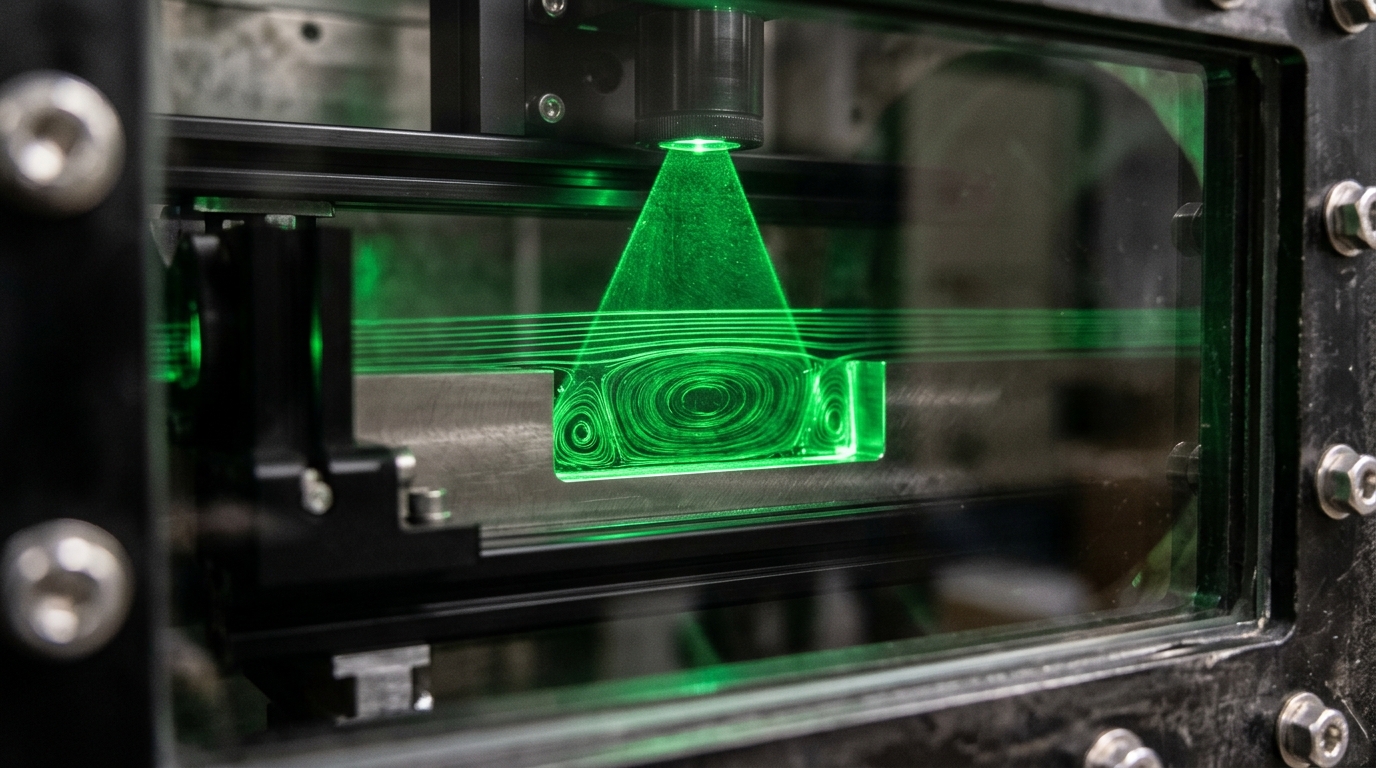
A comprehensive computational study has demonstrated that the intricate vortex systems within lid-driven cavity flows are primarily dictated by the Reynolds number, while gas compressibility and rarefaction introduce decisive structural modifications. Using the conserved discrete unified gas kinetic scheme, researchers systematically evaluated how rarefied conditions and high-speed compressibility alter canonical shear-driven flow fields within an enclosed square cavity. The simulations reveal that whereas the balance of inertial and viscous forces encapsulated by the Reynolds number establishes the overarching vortex topology, gas rarefaction and compressibility exert distinct, localized mechanical controls. Specifically, rarefaction increases the molecular mean free path and reduces collision frequencies, inducing macroscopic slip velocities along solid walls that alter primary vortex core locations and suppress secondary corner eddies. Conversely, gas compressibility triggers sharp spatial variations in density and temperature, channeling fluid mass into corner regions and substantially enhancing angular momentum transfer from the primary circulation, which causes corner vortices to expand.
The lid-driven cavity configuration has long served as a classic benchmark problem in computational fluid dynamics due to its geometrically straightforward square enclosure and unambiguous shear boundary conditions. In this standard flow problem, fluid within a two-dimensional square chamber is set into motion exclusively by a top wall translating at constant velocity, while the lateral and bottom surfaces remain completely stationary. This fundamental shearing mechanism generates a multifaceted internal flow structure dominated by a large central primary vortex and accompanied by smaller secondary eddies in the enclosure corners. Beyond serving as a rigorous validation testbed for advanced numerical methods, cavity flows have direct technological significance in micro-electro-mechanical systems, where micro-scale corners and confined geometries strongly dictate device operating performance. In high-speed flow environments, related cavity geometries are extensively evaluated for aerospace applications, including surface drag reduction, thermal protection structures, and active flow control systems, underscoring the necessity of understanding multiscale gas behavior under extreme conditions.
Investigating these flow regimes requires numerical methodologies that remain robust across disparate continuum and rarefied states without generating prohibitive integration errors. To resolve these challenges, the investigators utilized the conserved discrete unified gas kinetic scheme, known as CDUGKS, which builds upon the foundational discrete unified gas kinetic framework. While classical kinetic approaches often incur substantial numerical drift in enclosed systems where particles cannot be replenished through open boundaries, the CDUGKS formulation simultaneously updates microscopic distribution functions and macroscopic conservation variables at each time step. The algorithm solves the Boltzmann equation governed by the Bhatnagar-Gross-Krook-Shakhov collision model, which accurately captures user-specified Prandtl numbers by replacing the complex full Boltzmann collision integral with an effective relaxation operator. By integrating macroscopic flux reconstruction across cell interfaces alongside an explicit error compensation procedure, this computational approach maintains exact mass, momentum, and total energy conservation, preventing spurious velocity deviations within low-speed recirculating regions.
The computational geometry consisted of a two-dimensional square cavity containing pure argon gas modeled using the hard-sphere intermolecular interaction potential, where the molecular interaction exponent was fixed at zero point five. The working medium was initialized in a stationary state at a uniform temperature of two hundred seventy-three Kelvin and a reference density of one kilogram per cubic meter, corresponding to a baseline sonic velocity of three hundred seven point six four meters per second. Calculations were executed on a medium-resolution Cartesian spatial grid comprising eighty by eighty computational cells, a configuration verified through systematic grid independence testing across coarse, medium, and fine meshes. In velocity space, the researchers implemented discrete quadratures tailored to specific flow regimes, employing seventh-order and ninth-order symmetric velocity lattices for continuum cases, while applying refined unstructured velocity meshes containing up to thirty-six hundred cells to resolve high-speed rarefied conditions and eliminate discrete ray effects.
By mapping ninety-one distinct operating conditions across Mach numbers ranging from zero point three to three and Knudsen numbers between zero point zero zero one and one, the investigation confirmed that overall vortex patterns depend decisively on the Reynolds number. Across this logarithmic parameter space, directional cosine similarity analyses comparing local velocity vectors against benchmark reference solutions demonstrated that flow fields sharing identical Reynolds numbers retain nearly identical primary vortex streamlines despite possessing different compressibility or rarefaction levels. For example, test cases sharing matched Reynolds numbers exhibited tight streamline correlation even when Mach and Knudsen numbers varied by orders of magnitude. Lower Reynolds numbers promoted pronounced spatial symmetry and shifted the primary vortex core, whereas higher Reynolds numbers intensified flow asymmetry, destabilized symmetrical circulation patterns, and accelerated the emergence of downstream and upstream secondary corner eddies alongside upper upstream corner recirculation zones.
The pivotal role of the Reynolds number was further illuminated by evaluating the spatial distribution and mathematical skewness of macroscopic density contours across the square enclosure. Evaluating density skewness along the cavity height demonstrated that structural asymmetry concentrates heavily near the two top corner singularities, where the rapidly translating lid directly abuts the stationary vertical sidewalls. Under extremely low Reynolds numbers, viscous diffusion dominates, preserving a high degree of symmetry throughout the interior density distribution and keeping skewness coefficients near zero across central regions. As the Reynolds number rises, inertial transport increasingly disrupts this balance, distorting density contours into highly skewed, asymmetrical profiles that become especially pronounced at elevated Mach numbers. These macroscopic evaluations demonstrate that while kinematic singularities establish localized disturbances, the overall propagation of structural asymmetry throughout the cavity interior remains fundamentally governed by the prevailing Reynolds number.
Under low-speed conditions where Mach numbers remained below zero point three and the flow behaved incompressibly, the researchers isolated the direct physical consequences of gas rarefaction by varying the Knudsen number between zero point zero zero one and zero point zero three at a constant Reynolds number of sixteen point four eight one. When diffuse reflection wall boundary conditions were imposed, increasing rarefaction noticeably widened the molecular mean free path and triggered substantial macroscopic slip velocities along all solid boundaries. Along the translating lid, boundary slip weakened mechanical shear transfer, reducing the driving energy imparted into the gas and diminishing primary vortex rotation. Conversely, slip along the three stationary walls reduced viscous drag, partially relieving flow resistance. This competitive interaction between diminished driving input and lessened wall resistance caused peak vertical velocity magnitudes to initially rise before gradually decaying, while the primary vortex center shifted monotonically downward.
Rarefaction also exerted a decisive inhibitory influence on the emergence and physical dimensions of secondary corner vortices within the lower section of the enclosure. Examining vertical velocity profiles along a vertical sampling line located near the bottom-right corner revealed that corner eddies were entirely suppressed at Knudsen numbers of zero point zero three and zero point zero four. In these highly rarefied regimes, intense velocity slip along the right vertical wall prevented the descending gas stream from decelerating sufficiently, sustaining high downward momentum that swept past the corner and prevented local recirculating separation. As the Knudsen number was progressively reduced toward near-continuum levels, the restored no-slip wall constraint imposed greater flow confinement, forcing the descending gas to decelerate rapidly near the bottom wall. This localized kinematic deceleration created the favorable adverse pressure and shear conditions necessary for secondary corner eddies to nucleate, stabilize, and expand.
The investigation further assessed thermal non-equilibrium by comparing diagonal entropy generation rates computed via Navier-Stokes continuum constitutive relations against direct integrations of the discrete gas kinetic distribution function. In near-continuum conditions at a Knudsen number of zero point zero zero zero two, viscous dissipation dominated total entropy production, yielding excellent numerical agreement between macroscopic continuum formulations and kinetic distribution predictions. In the slip regime at a Knudsen number of zero point zero two, kinetic non-equilibrium induced noticeable deviations between the two formulations, although their spatial profiles remained within the same order of magnitude. However, in the transitional flow regime at a Knudsen number of two, continuum assumptions broke down entirely, causing Navier-Stokes entropy generation estimates at lid singularities to diverge from kinetic values by multiple orders of magnitude while generating non-Fourier heat transport where thermal energy flowed against macroscopic temperature gradients.
Finally, the isolated impact of gas compressibility was evaluated at a fixed Reynolds number of one thousand with no-slip boundary conditions, testing lid-driven Mach numbers from zero point five up to two point zero. Higher Mach numbers injected substantial kinetic energy that dissipated into thermal energy, establishing strong temperature gradients alongside dramatic density variations that concentrated mass within lower corner regions while depleting the primary vortex core. Because fluid density accumulated heavily within corner recirculation zones, the local dimensionless momentum increased markedly with rising Mach numbers. This localized density accumulation enhanced the efficiency of angular momentum transfer from the primary circulation into the downstream and upstream secondary eddies, providing these corner vortices with a decisive dynamic advantage. Consequently, both downstream and upstream secondary eddies expanded steadily in height and width as compressibility increased, demonstrating that compressibility directly drives corner vortex enlargement.
Subject of Research: Numerical analysis of rarefaction and compressibility effects on lid-driven cavity gas flows
Article Title: Study on the influence of rarefaction and compressibility on lid-driven cavity flow
Article References: Kuang, F., Zhong, C., Zhuo, C., & Liu, S. (2026). Study on the influence of rarefaction and compressibility on lid-driven cavity flow. Advances in Aerodynamics, 8(1), Article 34. https://doi.org/10.1186/s42774-025-00235-2
Image Credits: AI Generated
DOI: 10.1186/s42774-025-00235-2
Keywords: Lid-driven cavity flow, Rarefaction effects, Compressibility, Reynolds number, Knudsen number, Mach number, CDUGKS, Vortex structures, Corner eddies, Boundary slip velocity, BGK-Shakhov model, Entropy generation rate, Viscous dissipation, Non-equilibrium gas dynamics, Non-Fourier heat transfer, Angular momentum transfer, Micro-electro-mechanical systems, Argon gas simulation
News Source: Denise Maddox. (November 17, 2026). Compressibility Expands Cavity Corner Eddies While Rarefaction Suppresses Vortex Formation. Scienmag.