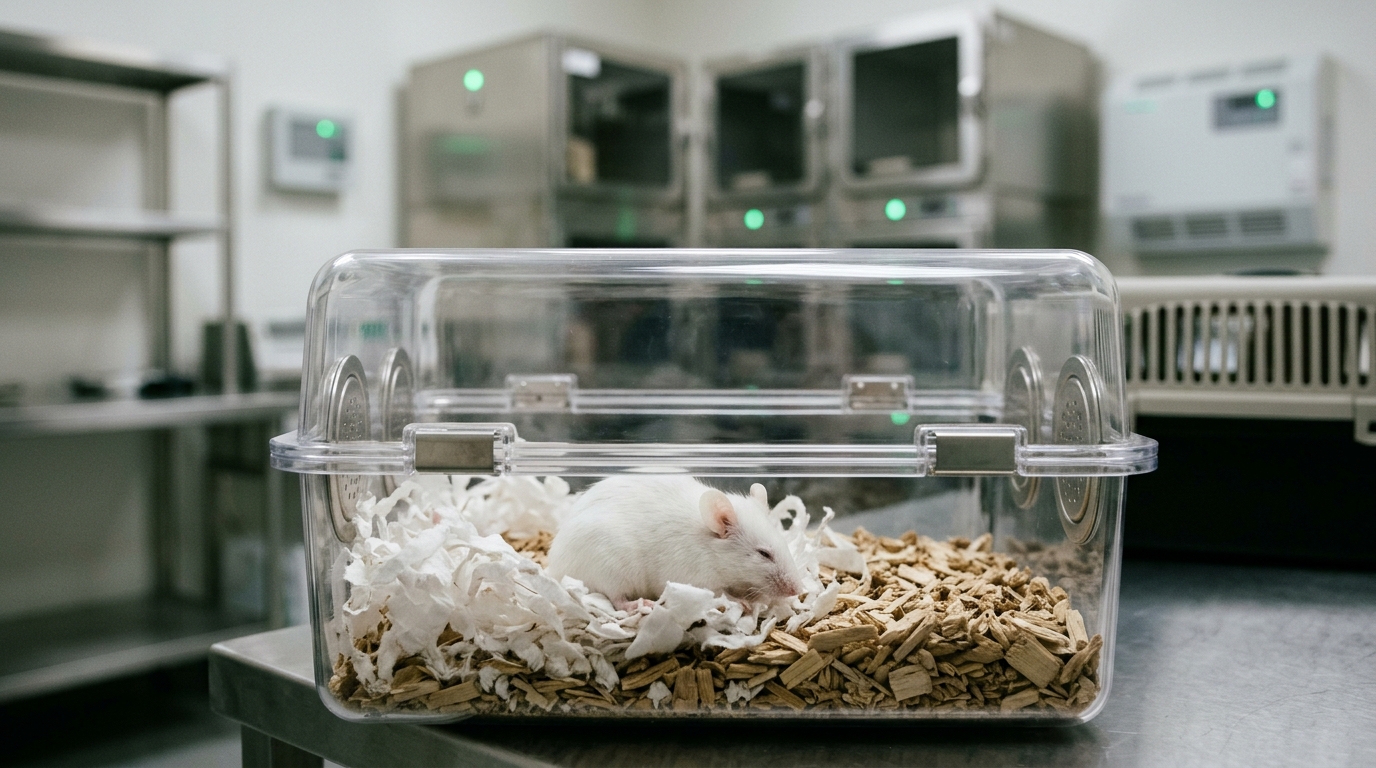
A comparative analysis of laboratory animal emergency regulations across four major jurisdictions reveals that institutional disaster planning must expand beyond basic infrastructure survival to systematically incorporate animal welfare priorities into crisis decision-making. Natural disasters, critical infrastructure breakdowns, prolonged utility interruptions, and severe staffing shortages caused by infectious disease outbreaks consistently threaten the continuity of animal care and scientific operations. Animals housed within research facilities reside inside tightly controlled cages and barrier systems, rendering them entirely dependent on continuous human intervention and mechanical environmental control for their immediate survival and baseline health. When essential building services such as electrical power, municipal water supply, or heating, ventilation, and air conditioning systems fail, environmental conditions can deteriorate rapidly, creating substantial risks to animal well-being. Consequently, emergency planners and facility directors are urged to treat animal welfare disruptions not as rare or unexpected occurrences, but as predictable institutional risks that demand advance structural planning, standardized procedures, and ethical crisis governance.
Historical disasters provide clear evidence of the profound vulnerability of captive laboratory animal populations when major facility disruptions occur, even in institutions that maintain written emergency plans. During Tropical Storm Allison in 2001, catastrophic flooding overwhelmed research institutions and resulted in the loss of approximately 35,000 laboratory animals despite the formal presence of institutional emergency procedures. A decade later, the Great East Japan Earthquake of 2011 caused extensive physical and structural destruction at a major commercial breeding facility, which ultimately necessitated the humane euthanasia of approximately 14,000 animals because essential life-support systems could not be maintained. Conversely, documented institutional experiences demonstrate that proactive physical mitigation and tailored procedural planning can substantially reduce animal mortality during severe regional disruptions. Fukushima Medical University succeeded in limiting animal losses and avoiding large-scale emergency euthanasia through targeted structural precautions, including anti-tipping equipment design, alongside predefined protocols for managing acute room cooling and animal hypothermia, illustrating that pre-disaster planning directly determines animal welfare outcomes.
Regulatory frameworks governing laboratory facilities increasingly treat disaster preparedness as an institutional duty, although the statutory mechanisms, legal enforceability, and operational specificity vary considerably between nations. In the United States, research facilities are legally mandated to draft, implement, and maintain emergency contingency plans under the Animal Welfare Regulations enforced by the federal government. Furthermore, the Public Health Service Policy on Humane Care and Use of Laboratory Animals reinforces these contingency expectations through mandatory compliance with the Guide for the Care and Use of Laboratory Animals. The Guide explicitly establishes that research institutions must develop operational disaster plans tailored to their specific animal programs, with sustained emphasis placed on maintaining essential animal care during infrastructure failures and operational disruptions.
Across the European Union, emergency preparedness has recently transitioned into an explicit statutory mandate through Commission Delegated Directive 2024/1262, which enacted binding amendments to Directive 2010/63/EU on the protection of animals used for scientific purposes. This delegated measure introduced explicit emergency planning requirements directly into Annex III of the Directive, requiring member state facilities to maintain functional contingency measures capable of protecting animal health and welfare during failures of vital husbandry systems. These binding requirements become formally applicable in December 2026, establishing a standardized legal benchmark across European biomedical institutions. To complement these governmental rules, the Federation of European Laboratory Animal Science Associations provides non-statutory technical guidance and professional recommendations. These publications detail the practical execution of contingency planning, institutional risk management, the defined scope of veterinary clinical oversight, and role-specific personnel training necessary to maintain operational readiness across diverse European research environments.
In Canada, institutional disaster management is structured through national guidance documents published by the Canadian Council on Animal Care, which directs certified institutions to integrate comprehensive crisis management procedures into their overarching animal care and use programs. The Canadian framework outlines operational mechanisms for evaluating institutional vulnerabilities, conducting program reviews, and sustaining animal welfare during crisis events. Conversely, in South Korea, emergency preparedness provisions for laboratory facilities remain distributed across several distinct pieces of legislation and administrative guidelines rather than being consolidated within a unified contingency planning framework. Current Korean guidance addresses technical backup systems and protocols for unexpected disruptions during official facility inspections, while relevant legislative mandates concentrate primarily on preventing laboratory disasters linked to toxic chemicals, hazardous materials, or infectious pathogens. Consequently, explicit Korean regulatory guidance addressing the routine continuity of animal care and welfare during broad environmental crises remains comparatively limited.
Despite substantial jurisdictional divergences in legislative format and regulatory enforcement, a systematic comparative analysis identified multiple recurring operational components shared across the United States, Europe, Canada, and Korea. Core shared elements consistently include structured contingency planning, formalized emergency communication chains, role-specific staff training, and technical response procedures designed to sustain routine animal care during utility failures. Veterinary oversight emerged as one of the most consistently supported organizational pillars across every reviewed framework. Attending veterinarians are routinely tasked with leading animal welfare assessments, guiding clinical triage, directing medical care, and drafting or reviewing emergency standard operating procedures. By contrast, programmatic components such as comprehensive risk assessment methodologies, physical resource stockpiling, and periodic simulated exercises exhibited notable variation among jurisdictions, highlighting differences in regulatory emphasis and institutional resources.
To synthesize these recurring international elements into an actionable model, the researchers developed an Integrated Emergency Preparedness Framework structured around three functional domains: facility operational continuity, animal care and welfare, and institutional response capacity. The operational continuity domain encompasses mechanical backup mechanisms, physical facility security, access control, and engineering responses designed to maintain critical heating, ventilation, and power systems. The animal care and welfare domain centers on clinical veterinary intervention, systematic welfare scoring, and ethical disposition pathways for resident animals. The institutional response capacity domain consolidates crisis governance, inter-departmental coordination among researchers, facility management, and external emergency services, alongside robust communication pathways and iterative program validation. These functional domains were subsequently integrated into a practical four-step workflow designed to guide institutional preparation before disasters happen and support welfare-informed decision-making during active disruptions.
The first step of this integrated operational framework expands the institutional definition of an emergency to encompass all foreseeable scenarios capable of disrupting animal care, facility operations, personnel safety, or scientific activities, excluding specific biological containment breaches that require independent biosecurity protocols. Step two establishes proactive risk identification and assessment protocols to evaluate institutional vulnerabilities, facility hazards, and their potential severity on animal welfare and facility functionality. Step three organizes preparedness activities into four practical domains covering Animal Welfare and Protection, System Loss Response, Governance, and Preparedness. This structural organization coordinates emergency resource stockpiling, role-specific workforce education, communication pathways, and scheduled drills. Step four outlines a disciplined operational decision-making model for managing animals during active emergencies, evaluating critical resource availability and the feasibility of maintaining acceptable refinement standards before authorizing animals to remain on site, relocate to partner facilities, or undergo humane euthanasia.
A central conceptual insight of the framework is that the ethical principles of Replacement, Reduction, and Refinement, traditionally applied only to routine experimental design, should guide emergency planning and disaster response. Under crisis conditions marked by extreme uncertainty and damaged infrastructure, the 3Rs provide an objective ethical structure for balancing animal welfare with institutional and scientific priorities. Similarly, Refinement principles guide the formulation of predefined, objective criteria for veterinary clinical care, environmental monitoring, animal relocation thresholds, and timely humane euthanasia, preventing unnecessary animal suffering when required environmental standards and physiological support systems can no longer be sustained.
To assist facilities in translating these conceptual guidelines into daily standard operating procedures, the investigators compiled a practical, two-tiered emergency preparedness checklist organized into six functional areas. These areas include governance and responsibility structures, animal care and veterinary oversight, infrastructure and resource management, training and program validation, communication and coordination, and security and personnel safety. Checklist items are systematically categorized into core requirements and recommended practices based on the strength and consistency of their support across the international frameworks. Core items represent essential baseline functions that every laboratory facility should maintain regardless of size or budget, such as emergency power systems, veterinary oversight channels, and written contingency protocols.
The authors acknowledge several inherent limitations in their comparative study, noting that analyzing published statutes and institutional guidance documents cannot fully capture how emergency protocols are executed during actual disasters. Furthermore, because the comparative scope was restricted to four distinct regulatory systems, the findings do not encompass the full breadth of global emergency preparedness strategies across non-reviewed jurisdictions. In addition, regulatory frameworks undergo periodic revisions, meaning the observations reflect the legislative landscape present at the time of the review. Future investigative efforts would benefit from empirical surveys of facility managers, post-incident case analyses of real-world disaster responses, and targeted evaluations assessing how welfare-focused frameworks apply to diverse animal species and specialized research environments. Nonetheless, establishing structured, welfare-oriented emergency frameworks provides institutions with a practical mechanism to promote consistent, transparent, and ethically sound decisions whenever severe crises disrupt normal research operations.
Subject of Research: Emergency preparedness and animal welfare frameworks in laboratory animal facilities
Article Title: Reframing emergency preparedness from facility survival to laboratory animal welfare
Article References: Kim, S. Y., Lee, J. M., & Seok, S. H. (2026). Reframing emergency preparedness from facility survival to laboratory animal welfare. Laboratory Animal Research, 42(1), Article 35. https://doi.org/10.1186/s42826-026-00295-5
Image Credits: AI Generated
DOI: 10.1186/s42826-026-00295-5
Keywords: emergency preparedness, laboratory animal welfare, disaster planning, animal welfare regulations, Directive 2010/63/EU, Public Health Service Policy, CCAC guidelines, FELASA recommendations, veterinary oversight, contingency planning, operational continuity, system loss response, animal disposition, risk assessment, 3Rs principles, facility infrastructure, humane euthanasia
News Source: William Thompson. (November 17, 2026). Study Outlines Framework Shifting Laboratory Emergency Planning Toward Animal Welfare. Scienmag.