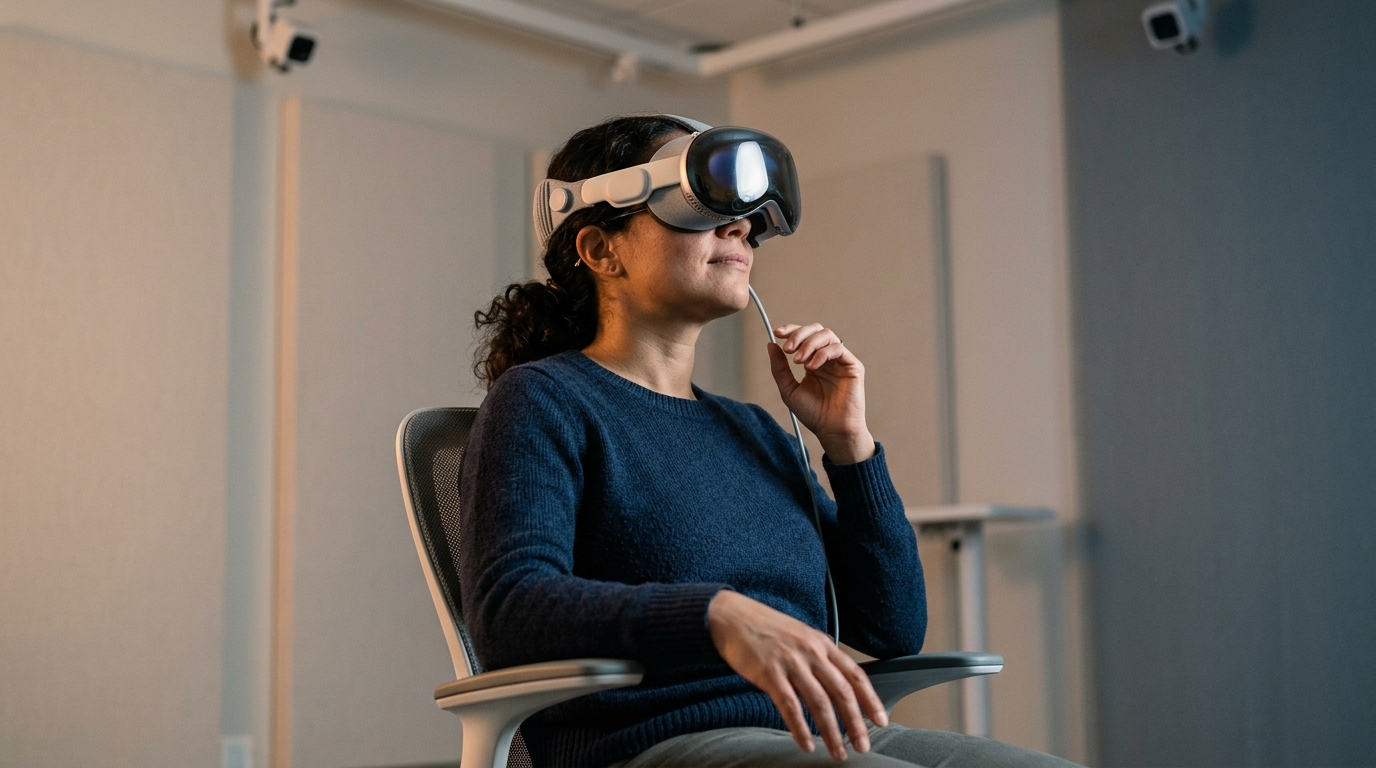
A new theoretical framework, termed presence dynamics, offers researchers and content creators a precise way to evaluate how human immersion evolves across sequential, multi-stage digital media experiences. Traditionally, media researchers have treated presence—the psychological state in which a virtual environment is experienced as real—as a fixed outcome, usually studied within the confines of a single medium or session. In this dominant view, moments when presence fades or breaks have been categorized as failures, either of the technology or the design, that ought to be eliminated. However, researchers Chang Hoon Lee and Kwan Min Lee propose that as semiconductors increasingly allow objects and environments to function as interactive media, modern experiences are becoming inherently multi-stage and cross-platform. Drawing on a practice-led interactive installation that integrated a projected film, a navigable three-dimensional virtual space, and a text-based social chatbot, the authors propose presence dynamics: a framework describing how presence evolves across an extended experience rather than holding constant.
This framework is grounded in a variable-based approach to media research, which distinguishes between the content of an experience and the medium through which it is delivered. As pioneered by researchers like Paisley, this approach posits that media studies are most productive when content is analyzed as a set of shared variables—such as attention, memory, and affect—rather than as a fixed whole tied to a single platform. This perspective becomes indispensable as large language models and virtual production tools allow digital content to detach from its original form, a condition Negroponte defined as being digital. Building on this, the authors utilize the concept of remediation, argued by Bolter and Grusin, to explain how newer digital formats refashion older media like film and painting. Because the fluidity of digital content makes it difficult to rely on past forms to predict user reactions, the authors argue that understanding the shared variables that endure across transformations is essential for creating systematic and predictable media designs in an era of rapid technological change.
The study specifically revisits a 2025 installation showcased by the Korea Creative Content Agency (KOCCA), where a single narrative was unfolded through three sequential media stages. The experience opened with a 6-minute, 30-second single-channel video depicting a couple in an alley in Seoul, followed by an interactive transition where participants navigated the same alley in a computer-rendered 3D space, and concluded with a real-time text-based conversation with a social chatbot designed to mimic the protagonists. Participants rotated through these stages, navigating the environment with a mouse and keyboard and experiencing minimal bodily cues through their featureless avatar. This design allowed the researchers to examine the path of presence as it traced through each medium. Because the article draws on qualitative observations and institution-led showcase evaluation data from 90 participants rather than a controlled study, its propositions are advanced as hypotheses for subsequent empirical work.
Central to this experience is the human predisposition toward presence, which researchers suggest is an evolved product of biological mechanisms. Drawing on the Media Equation theory, the authors note that humans naturally and automatically respond to mediated stimuli—such as social actors in a chatbot—as if they were real, rather than consciously suspending disbelief. This response is rooted in domain-specific modules, such as folk-physics and folk-psychology, which evolved to support survival and reproduction in the physical world. Because these modules are insulated from general reasoning, they respond to virtual actors and environments on their own terms. By integrating these evolutionary insights, the study proposes that the design of new media succeeds by conforming to rules that the human mind already applies to people and the environment, regardless of the technology’s sophistication or the fidelity of its reproduction.
To formalize this, the authors introduce three propositions. The first, Sequence, posits that the trajectory of presence is determined by the order of stages encountered; the researchers predict that the climax of interactive urgency provided by the chatbot would produce a significantly different presence trajectory if it were presented first, compared to its current position at the end of the narrative sequence. The second proposition, Configuration, addresses the shifting salience of the three dimensions of presence: physical, social, and self. In their installation, the spatial rendering of the alley served primarily to induce physical presence, whereas the social chatbot aimed to elicit social presence. Finally, the third proposition, Invariant Elements, suggests that recurring features, such as a persistent ambient soundscape, act as buffers that mitigate the break in presence occurring at the transition between media. When these perceptual features persist through transitions, they can help participants maintain engagement across different technical modes of delivery.
The installation also utilized a personalized attachment style analysis as a narrative heuristic, inferred through a large language model based on the participant’s brief, five-exchange interaction with the chatbot. This analysis served to deepen the participant’s self-presence by linking their conversational input to a portrait of their own relational tendencies, measured across axes of anxiety and avoidance. While the authors caution that this is not a validated psychological instrument, it illustrates how generative AI can be used to personalize media experiences. The ethical considerations of such interactions are significant, especially concerning the potential for dark patterns and the handling of sensitive disclosures. The authors emphasize that the study used participant input only for this immediate, self-reflective heuristic and that no personal identifying data was retained, highlighting a critical area for ethical oversight in future deployments of persuasive conversational agents.
Technical execution presented another set of challenges, revealing the practical limits of personalizing such experiences. Initially planned as a fully integrated environment within Unreal Engine, the conversational interface had to be adapted into an HTML page due to engine constraints, which created concrete, albeit useful, boundaries between the media stages. The researchers noted that scaling this personalized experience from ten participants to larger crowds introduces significant infrastructural costs, including hardware requirements and the logistical challenges of managing wait times. These operational factors are central to the future of media production; while a large projection room can accommodate hundreds, the complexities of individualised, hardware-intensive interactions currently restrict the ability of creators to deploy such sophisticated experiences at scale without compromising the quality of immersion.
The study acknowledges significant methodological limitations. Because the data was collected for a public showcase rather than a research project, the evaluation items—which included metrics on engagement, enjoyment, and willingness to pay—were not specifically designed to measure presence. Consequently, the findings regarding participant reactions are descriptive rather than indicative of cause-and-effect relationships. Furthermore, the absence of a controlled environment means that external factors, such as the sequence in which participants experienced different works at the showcase, potential fatigue from the 12-item questionnaire, and variable crowd densities, could not be fully isolated. These results are therefore advanced as evidence-backed hypotheses for future empirical research, which would benefit from using validated instruments like the Multimodal Presence Scale to track presence through transitions.
Reflecting on the future of media, the authors situate this installation within a broader transition toward a modular ecology of digital experiences. Drawing on the forecasts of Weiser and the cyborg theories of Biocca, they argue that media is moving away from the single-device, headset-based model of immersion. Instead, the future of content appears to be a situational assembly of many technologies, where participants continually align themselves with whichever medium best suits the moment. This modularity means that presence will increasingly be required to unfold across heterogeneous platforms rather than within a single black box. As affective computing matures, researchers may be able to project a user’s emotional state onto their virtual self more precisely, potentially turning self-presence into as significant a variable as the physical or social dimensions have historically been.
Ultimately, this work concludes that while media technologies will continue to evolve at a breakneck pace, the fundamental human responses that presence channel—attention, memory, and affect—remain bound by an evolutionary history that changes far more slowly. By isolating presence as a common variable, researchers and creators can navigate the transition between rapidly shifting media tools and the stable aspects of human cognition. This approach provides a necessary point of reference for anticipating what future multi-stage experiences will demand, suggesting that if presence is managed strategically, the breaks traditionally viewed as flaws can instead be harnessed to create more coherent, meaningful, and enduring media experiences that span across multiple forms and environments.
Subject of Research: Presence dynamics in multi-stage media experiences
Article Title: Presence dynamics across film, virtual space, and social chatbot in an interactive installation
Article References: Lee, C. H., & Lee, K. M. (2026). Presence dynamics across film, virtual space, and social chatbot in an interactive installation. Frontiers in Virtual Reality, 7, Article 1925936. https://doi.org/10.3389/frvir.2026.1925936
Image Credits: AI Generated
DOI: 10.3389/frvir.2026.1925936
Keywords: presence dynamics, media research, human-computer interaction, virtual reality, social presence, self-presence, physical presence, interactive installation, media equation, evolutionary psychology, large language models, digital media, user experience design, variable-based approach, affective computing, multi-stage experience, presence theory, conversational agents, remediation, modular ecology
News Source: Gavin Prescott. (November 17, 2026). Presence Dynamics Framework Proposes How Multi-Stage Media Experiences Reconfigure Immersion. Scienmag.