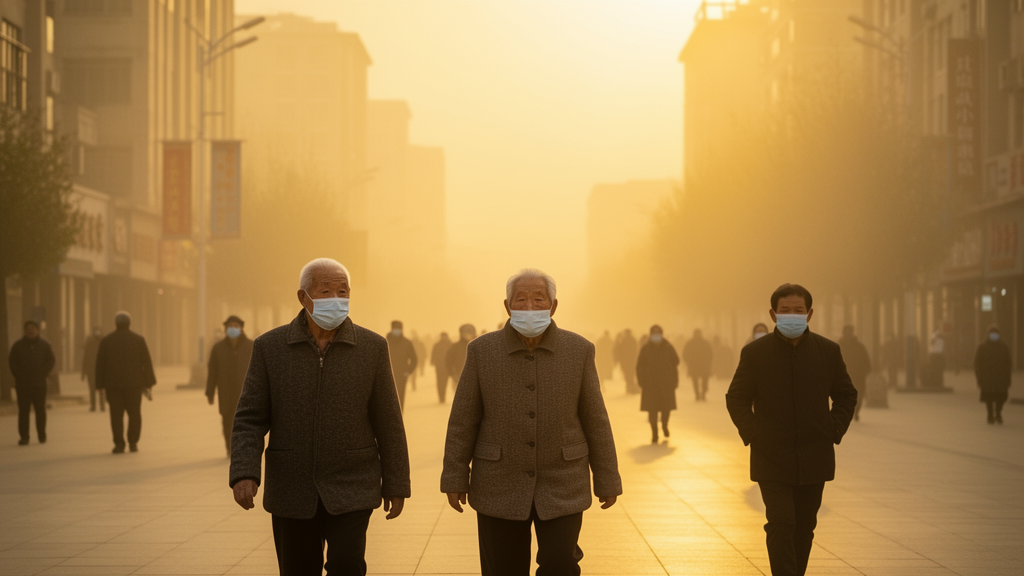
A time-stratified case-crossover study conducted in Gansu Province, northwestern China, has quantified the modeled avoidable burden of chronic obstructive pulmonary disease (COPD) associated with short-term exposure to ambient air pollutants. The research, published in Frontiers in Public Health, analyzed data from 2019 to estimate how much of the regional COPD healthcare burden could be prevented if air quality met World Health Organization (WHO) guideline levels. The study found that reducing pollutant concentrations to these standards could have avoided approximately 9.19% of hospital admissions and 8.40% of outpatient visits for COPD patients in the province.
The study utilized a comprehensive dataset from the Gansu Healthcare Security Administration, encompassing 37,868 COPD-related hospital admissions and 26,473 outpatient visits recorded between January 1 and December 31, 2019. To ensure the validity of the case-crossover design, where each participant serves as their own control, the researchers retained only the first inpatient episode and the first outpatient visit per patient during the study period. This approach prevented within-subject correlation due to repeated events, allowing for a more accurate assessment of the link between daily air pollutant levels and acute health outcomes.
Ambient air pollution data were extracted from the ChinaHighAirPollutants (CHAP) dataset, a high-resolution source providing ground-level concentrations of PM2.5, PM10, SO2, NO2, CO, and O3 at a 1 km × 1 km spatial resolution. Each participant’s residential address was geocoded and linked to the corresponding CHAP grid cell to assign exposure values. Meteorological data, including hourly near-surface temperature and relative humidity, were obtained from ECMWF Reanalysis v5 (ERA5) to control for potential confounding effects of weather on both air quality and health outcomes.
The statistical analysis employed conditional logistic regression models to estimate the association between ambient air pollutants and COPD admissions or visits. The researchers examined various lag structures, including single-day lags from lag0 to lag7 and moving averages of multi-day lags. For each pollutant, the exposure window with the largest point estimate that remained statistically significant after false discovery rate correction was selected. This data-driven approach allowed the team to identify the specific time periods during which exposure to pollutants most strongly influenced the risk of healthcare utilization.
Results indicated that short-term exposure to PM2.5, NO2, CO, and O3 was associated with increased risks of COPD hospitalization, while SO2, NO2, CO, and O3 were associated with increased outpatient visits. For hospital admissions, the odds ratios increased by 7.95% per interquartile range increase in PM2.5 and by 15.47% for NO2. For outpatient visits, the associations were even stronger, with odds ratios increasing by 39.06% for CO and 45.38% for O3 per interquartile range increase.
In counterfactual modeling analyses, the researchers estimated the avoidable burden assuming pollutant concentrations were reduced to WHO guideline levels. Under this scenario, the modeled avoidable burden included 3,481 hospital admissions, 25,899 in-hospital days, and 12.07 million Chinese Yuan in hospitalization costs. For outpatient care, the avoidable burden was estimated at 2,224 visits and 0.25 million Chinese Yuan in costs. PM2.5 accounted for the largest proportion of the modeled avoidable inpatient burden, whereas ozone (O3) accounted for the largest proportion of the modeled avoidable outpatient burden.
The study also examined a theoretical minimum exposure scenario, where pollutant concentrations were reduced to levels considered to have minimal risk. Under this more stringent scenario, the total excess fraction for inpatient admissions rose to 23.42%, and for outpatient visits, it reached 35.14%. In this context, PM2.5 and O3 contributed comparably to the inpatient burden, while O3 remained the dominant contributor to the outpatient burden. This suggests that current WHO guidelines for ozone may not fully protect against the COPD burden, and that more stringent control of O3 could yield additional health benefits.
The researchers noted that the total attributable burden was calculated as the sum of pollutant-specific estimates from single-pollutant models. Because ambient pollutants are often correlated, particularly PM2.5 and PM10, this sum represents the potential benefit of controlling each pollutant independently rather than the joint benefit of simultaneous control. Consequently, the total burden should be interpreted as an upper-bound estimate rather than an exact joint attributable burden. The authors emphasized that some double-counting of overlapping exposures is possible, although the overestimation is likely limited because PM10 contributed a relatively small share of the total burden.
Subgroup analyses stratified by age and sex were conducted to identify potentially susceptible populations. The findings showed that the overall excess fraction was higher in women compared to men, with more outpatient visits among women. However, hospitalization health expenditures were higher for males, while outpatient health expenditures were greater for females. Participants aged 65 and older had more visits, higher health expenditures, and longer lengths of stay, although formal interaction tests showed no consistent effect modification by age or sex. These subgroup findings were interpreted as exploratory and did not materially change the main conclusions of the study.
The study has several limitations that should be considered when interpreting the results. Exposure was assessed using residential ambient concentrations as a proxy for personal exposure, and individual-level confounders such as smoking, occupation, and indoor air pollution were unavailable. This may lead to exposure misclassification and residual confounding. Additionally, the main exposure window was selected data-drivenly, which could potentially inflate the attributable burden, especially for outpatient PM10 and O3. Sensitivity analyses using pre-specified lag windows showed that these outpatient effects were short-term and became negative at longer cumulative lags.
The study was restricted to a single calendar year, 2019, which may limit the assessment of year-to-year variability in pollution levels and COPD burden. Only the first inpatient admission and first outpatient visit per patient were retained, which may underestimate the total healthcare burden, although the proportion of patients with multiple visits was relatively low. Secondary diagnoses were unavailable, so patients with asthma-COPD overlap could not be excluded, and post-discharge costs such as medication and readmission costs were not captured. The generalizability of the findings may also be limited by the characteristics of the regional population in Gansu Province.
Despite these limitations, the study provides valuable insights into the relationship between short-term air pollution exposure and COPD healthcare utilization in northwestern China. The findings highlight the substantial clinical and economic burden of COPD attributable to air pollution and underscore the importance of targeted air quality interventions. By quantifying the avoidable burden under different counterfactual scenarios, the study offers evidence to inform policy decisions aimed at reducing the medical and financial strain of COPD on healthcare systems and families.
The research contributes to the growing body of evidence linking ambient air pollution to respiratory health outcomes. It expands the scope of previous studies by investigating both COPD hospital admissions and outpatient visits due to short-term exposure to multiple air pollutants. The comprehensive approach, incorporating a broader range of health outcomes and burden metrics, provides a more nuanced understanding of the acute health impacts of air pollution on COPD patients. This multi-faceted evidence is essential for policymakers to design targeted and effective air quality interventions.
Future research should explore combined pollutant effects and long-term health impacts to further refine the understanding of air pollution’s role in COPD exacerbations. The study’s findings suggest that improving air quality to meet WHO guidelines could significantly reduce COPD-related hospital admissions and outpatient visits, along with their associated healthcare expenditure. This is particularly relevant for regions with high levels of industrial and vehicular emissions, where COPD prevalence and air pollution levels are often both pronounced. Continued monitoring and control of air pollutants are crucial to mitigate the burden of COPD and improve public health outcomes.
Subject of Research: Quantification of avoidable COPD healthcare burden attributable to short-term ambient air pollution exposure in Gansu Province, China.
Article Title: Burden of chronic obstructive pulmonary disease attributed to short-term exposure to ambient air pollutants: a time-stratified case-crossover study in Gansu Province, northwestern China
Article References: Wu, D., Liu, Y., Ding, S., Liu, Z., Cheng, Z., Wang, L., & Liu, X. (2026). Burden of chronic obstructive pulmonary disease attributed to short-term exposure to ambient air pollutants: a time-stratified case-crossover study in Gansu Province, northwestern China. Frontiers in Public Health, 14, Article 1836036. https://doi.org/10.3389/fpubh.2026.1836036
Image Credits: AI Generated
DOI: 10.3389/fpubh.2026.1836036
Keywords: COPD, air pollution, Gansu Province, case-crossover study, PM2.5, ozone, healthcare burden, WHO guidelines, hospital admissions, outpatient visits, ambient air quality, respiratory health, epidemiology, public health policy, China, medical costs, excess fraction, counterfactual modeling, short-term exposure, chronic disease
News Source: Russell Cooper. (November 17, 2026). Air Pollution Linked to 3,481 Avoidable COPD Admissions in Gansu. Scienmag.