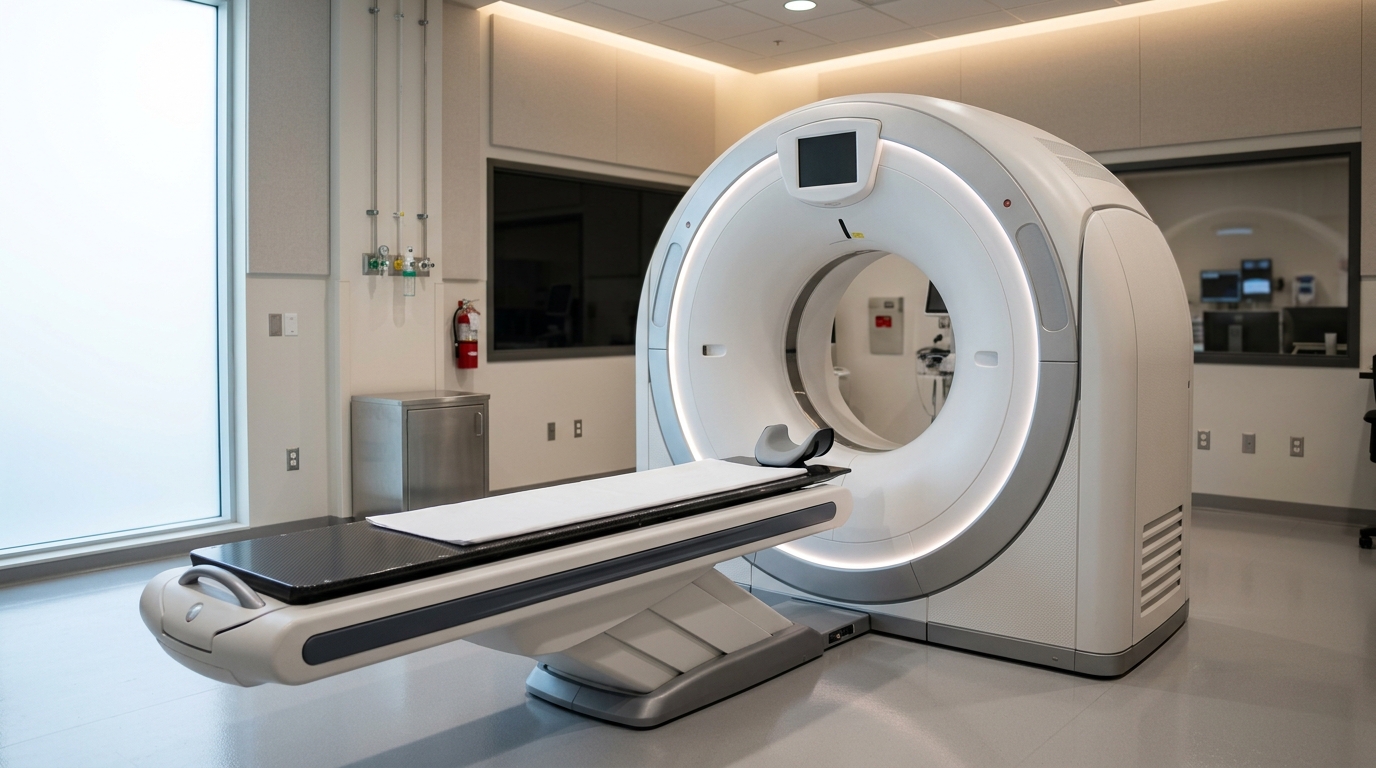
Incremental weightings of a new deep learning image reconstruction (DLIR) algorithm, known as ClearInfinity, significantly improve image quality in high-resolution coronary CT angiography (CCTA). Researchers conducted a prospective study of 44 patients to compare this novel algorithm, tested at weights ranging from 20% to 80%, against standard and high-resolution iterative reconstruction methods.
The investigation evaluated various reconstruction settings, specifically comparing standard-resolution iterative reconstruction (CV40%) and high-resolution iterative reconstruction (CV40%) with high-resolution DLIR at 20%, 40%, 60%, and 80% weightings. The objective was to assess both quantitative metrics—such as Hounsfield units, image noise, signal-to-noise ratio, and contrast-to-noise ratio—and subjective image quality parameters including vascular edge sharpness and artifact reduction.
Quantitative image quality was found to improve progressively as DLIR weightings increased. Image noise at the aortic root decreased from 42.4 ± 6.6 HU in the 20% DLIR group to 18.8 ± 3.3 HU in the 80% group, with corresponding increases in signal-to-noise ratio and contrast-to-noise ratio. Statistical analysis confirmed these improvements, showing significant differences across the reconstruction settings.
When evaluating the 40% DLIR weighting, researchers observed that objective image quality was comparable to standard-resolution iterative reconstruction. Noise levels were measured at 34.3 ± 5.3 HU for the 40% DLIR group versus 34.8 ± 5.6 HU for the standard-resolution iterative reconstruction group. However, the 60% and 80% DLIR settings yielded significantly superior quantitative metrics compared to the traditional iterative reconstruction methods used in the study.
Two attending radiologists independently evaluated the images, focusing on uniformity, edge sharpness, overall quality, and artifact reduction. Subjective scores consistently increased with higher DLIR weights across all four measured parameters.
While contrast-to-noise ratio values showed strong positive correlations across all reconstruction methods, Bland-Altman analysis revealed small systematic differences in Hounsfield unit measurements. Researchers noted that interobserver agreement was moderate, with an overall intraclass correlation coefficient of 0.593. Proportional bias was statistically significant for the DLIR comparisons at the aortic root, although the investigators observed that the absolute differences remained small.
The study concluded that higher DLIR weightings enhance the measured performance of high-resolution CCTA. While the 80% weighting achieved the best measured results, the 60% setting provides a reasonable intermediate option with substantial denoising. The investigators noted that the potential for over-smoothing at higher DLIR strengths remains a hypothesis for future research to address.
In this prospective study, the research team analyzed image characteristics across four specific anatomical locations: the aortic root, the proximal right coronary artery, the proximal left main coronary artery, and the anterior chest wall muscle.
Subject of Research: Prospective evaluation of ClearInfinity deep learning image reconstruction for coronary CT angiography.
Article Title: Deep learning image reconstruction at incremental weightings (20–80%) for high–resolution coronary CT angiography: a prospective image quality study
Article References: Ren, G., An, P., Su, T., Xia, X., Ren, Q., He, L., Meng, X., & Li, H. (2026). Deep learning image reconstruction at incremental weightings (20–80%) for high–resolution coronary CT angiography: a prospective image quality study. BMC Medical Imaging. https://doi.org/10.1186/s12880-026-03010-x
Image Credits: AI Generated
DOI: 10.1186/s12880-026-03010-x
Keywords: ClearInfinity, Deep Learning Image Reconstruction, Coronary CT Angiography, CCTA, Medical Imaging, Computed Tomography, Image Noise, Signal-to-Noise Ratio, Contrast-to-Noise Ratio, Iterative Reconstruction, Radiology, Diagnostic Imaging, Image Quality, Prospective Study, Coronary Arteries, Cardiovascular Imaging, Artificial Intelligence, Denoising
News Source: Blake Davidson. (November 17, 2026). Incremental Deep Learning Reconstruction Improves High-Resolution Coronary CT Angiography Image Quality. Scienmag.