A 7T magnetic resonance imaging feasibility study demonstrates that transient nuclear Overhauser effect imaging can detect lipid-mediated pathological alterations in multiple sclerosis. In this investigation, researchers utilized the specialized lipid-sensitive scanning technique to evaluate and map myelin-related tissue changes. The high-field imaging protocol successfully differentiated multiple sclerosis patients from healthy study controls, establishing preliminary feasibility for microstructural assessment.
Lipid dysregulation and progressive myelin breakdown are recognized hallmark features of multiple sclerosis pathology. However, current noninvasive biomarkers demonstrate limited sensitivity for simultaneously detecting focal demyelinating lesions and diffuse microstructural injury. Evaluating transient nuclear Overhauser effect magnetic resonance imaging provides a noninvasive pathway to visualize these lipid-dependent microstructural alterations directly.
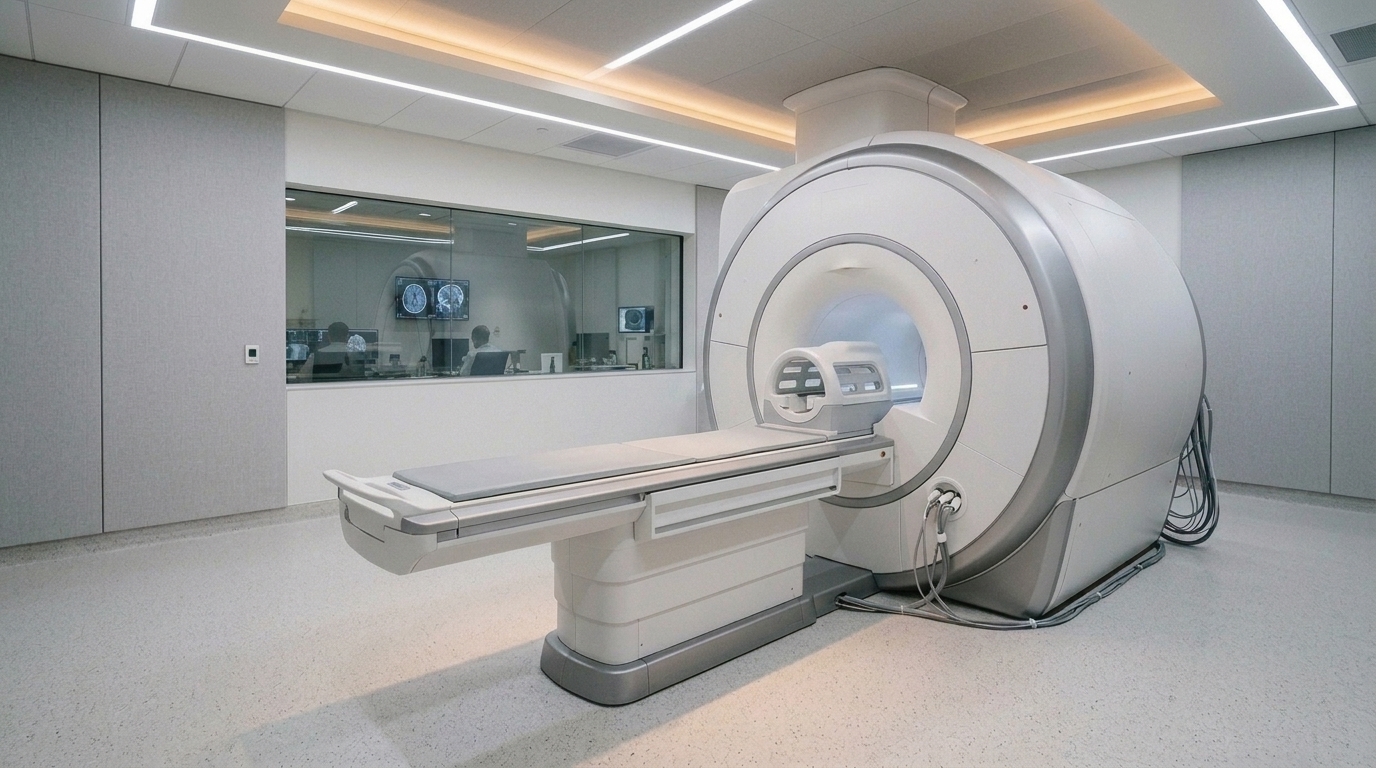
To investigate the practical feasibility of this imaging approach, the research team performed transient nuclear Overhauser effect scans in four multiple sclerosis patients and five healthy control subjects. The imaging sessions were conducted using an ultra-high-field 7T magnetic resonance scanner equipped with a 32-channel receive phased-array coil. Researchers analyzed resulting signal patterns across prominent white matter structures, including the corpus callosum and internal capsule.
The scanning protocol exhibited strong contrast and high measurement reliability during clinical testing. Resulting transient nuclear Overhauser effect maps displayed pronounced contrast within heavily myelinated anatomical regions, particularly the internal capsule and the splenium of the corpus callosum. Across repeated scanning sessions, evaluations of scan reproducibility established inter-day and intra-day coefficients of variation at or below 5.1 percent, reflecting high measurement consistency.
Quantitative evaluations revealed significant differences in tissue contrast levels between the two study groups. Multiple sclerosis patients exhibited significantly lower transient nuclear Overhauser effect contrast across both white matter and gray matter compartments compared with healthy controls. Specifically, white matter contrast measured 12.6 percent in patients versus 16.1 percent in controls, while gray matter contrast reached 5.9 percent versus 7.2 percent.
Detailed regional comparisons revealed distinct vulnerabilities across white matter tracts, with the splenium of the corpus callosum exhibiting the most substantial reduction. In multiple sclerosis patients, this region demonstrated a 38 percent relative decrease in contrast, achieving statistical significance at p < 0.001. These observed signal reductions aligned with established regional differences in myelin density, confirming the technique’s sensitivity to myelin integrity.
Reduced contrast across both white matter and gray matter suggests the presence of diffuse tissue pathology extending beyond focal demyelinating lesions. Furthermore, the imaging sequence demonstrated practical efficiency, achieving an acquisition time of approximately three minutes. Based on these findings, investigators concluded that transient nuclear Overhauser effect magnetic resonance imaging warrants further evaluation in larger patient cohorts as a rapid, lipid-sensitive marker.
Subject of Research: 7T transient nuclear Overhauser effect MRI for detecting lipid and myelin changes in multiple sclerosis
Article Title: Detection of lipid-mediated diffuse pathological changes in multiple sclerosis: 7T feasibility study
Article References: Benyard, B., Kumar, D., Wilson, N. E., Swain, A., Khokhar, S. K., Jacobs, P., Soni, N. D., Schindler, M. K., Haris, M., & Reddy, R. (2026). Detection of lipid-mediated diffuse pathological changes in multiple sclerosis: 7T feasibility study. Journal of Translational Medicine. https://doi.org/10.1186/s12967-026-09209-4
Image Credits: AI Generated
DOI: 10.1186/s12967-026-09209-4
Keywords: multiple sclerosis, 7T MRI, transient nuclear Overhauser effect, tNOE-MRI, myelin breakdown, lipid dysregulation, white matter, gray matter, corpus callosum, splenium, internal capsule, diffuse microstructural injury, focal demyelination, phased-array coil, scan reproducibility, imaging biomarkers, neuroimaging feasibility
News Source: Ophelia Keating. (November 17, 2026). 7T MRI Feasibility Study Maps Diffuse Lipid Alterations in Multiple Sclerosis. Scienmag.