Bedside indocyanine green lymphography provides a rapid and safe method for visually and quantitatively evaluating peripheral lymphatic drainage in critically ill adults, demonstrating that markedly reduced lymphatic flow velocity correlates with poor clinical prognosis in sepsis. Reporting in a prospective observational cohort study, researchers assessed lymphatic dynamics directly at the bedside to clarify physiological drainage patterns in patients meeting international diagnostic criteria for sepsis alongside non-septic critically ill control individuals.
The investigation addresses a critical gap in intensive care pathophysiology, as earlier medical literature indicated that lymphatic dysfunction plays an active role in promoting organ injury during septic episodes. Despite these earlier suggestions of lymphatic involvement in organ damage, the specific bedside clinical features and quantitative metrics of peripheral lymphatic drainage had remained largely uncharacterized in living adult patients diagnosed with sepsis, prompting the need for objective bedside visualization.
The prospective observational investigation enrolled a total of 47 adult participants who were admitted for critical care management. Within this study population, the investigators identified and followed 34 adult patients who fulfilled standard Sepsis-3 consensus diagnostic criteria, alongside a reference cohort comprising 13 non-septic critically ill control patients. Across the entire cohort of 34 patients with sepsis, the investigators recorded an overall 28-day all-cause mortality rate of 35.3 percent.
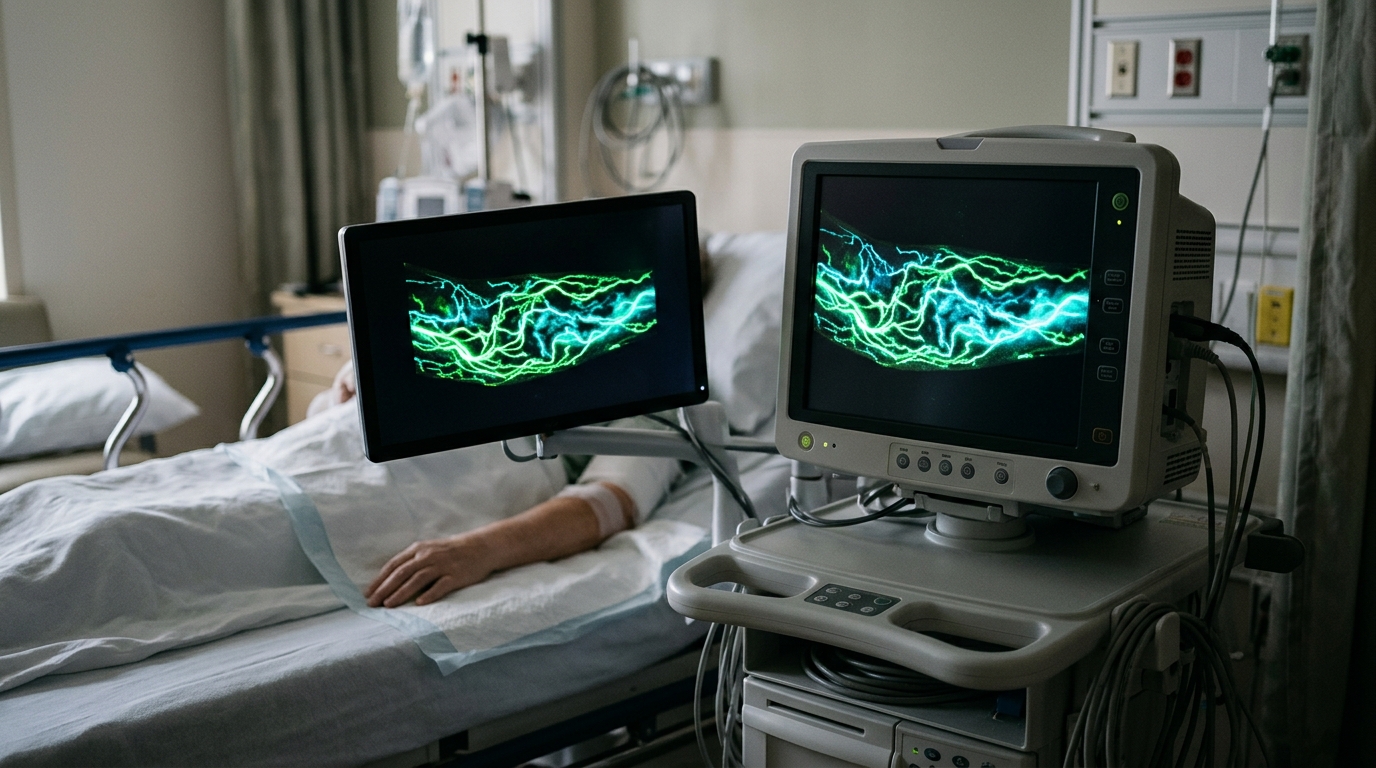
To conduct the diagnostic evaluations, clinical researchers delivered a subcutaneous injection of indocyanine green dye into intact upper extremities of participants within 24 hours of their diagnosis. Immediately following the tracer administration, the medical team utilized a portable laser lymphatic imager to capture fluorescence image data and calculate real-time lymphatic flow velocity. Comprehensive clinical profiles and 28-day patient survival outcomes were systematically recorded for all enrolled individuals.
Quantitative velocity calculations demonstrated distinct differences in fluid drainage across the study groups. The 13 non-septic control patients exhibited a median lymphatic flow velocity of 0.24 centimeters per second, with an interquartile range spanning from 0.14 to 0.36 centimeters per second. In comparison, surviving septic patients demonstrated a markedly reduced median velocity of 0.08 centimeters per second, with an interquartile range of 0.01 to 0.25 centimeters per second.
Lymphatic drainage was impaired most severely among patients who did not survive sepsis, showing a median flow velocity of 0.02 centimeters per second and an interquartile range of 0.00 to 0.14 centimeters per second, yielding a statistically significant overall between-group difference with a P value of 0.014. Furthermore, complete circulatory arrest of lymphatic drainage with zero measurable velocity occurred in 9 septic participants, of whom 55.6 percent died within 28 days.
In addition to quantitative hemodynamic measurements, the prospective evaluation confirmed the practical bedside feasibility and clinical safety of the optical imaging protocol. The entire diagnostic examination was completed within 10 minutes per participant at the patient bedside. Furthermore, clinical monitoring documented zero adverse events across the cohort, with no reported occurrences of systemic hypersensitivity reactions, cutaneous complications, or localized injection-site infections among any of the enrolled individuals.
The authors concluded that portable bedside indocyanine green lymphography facilitates direct visual and numerical assessment of impaired peripheral lymphatic clearance in adults with sepsis, suggesting that suppressed lymphatic flow velocity may serve as a functional prognostic biomarker. However, the investigators noted that because these quantitative observations originate from a preliminary prospective cohort of 47 participants, comprehensive validation within larger-sample patient populations remains necessary before clinical translation.
Subject of Research: Bedside indocyanine green lymphography for evaluating peripheral lymphatic dysfunction in sepsis
Article Title: Feasibility and bedside visual evaluation of lymphatic dysfunction in sepsis using indocyanine green lymphography
Article References: Jiang, Y., Xu, Y., & Jin, S. (2026). Feasibility and bedside visual evaluation of lymphatic dysfunction in sepsis using indocyanine green lymphography. Critical Care. https://doi.org/10.1186/s13054-026-06386-y
Image Credits: AI Generated
DOI: 10.1186/s13054-026-06386-y
Keywords: indocyanine green, lymphography, sepsis, Sepsis-3, lymphatic dysfunction, peripheral lymphatic drainage, lymphatic flow velocity, bedside imaging, portable laser lymphatic imager, critical care, critically ill patients, 28-day mortality, prognostic biomarker, subcutaneous injection, upper extremity imaging, prospective cohort study
News Source: Ophelia Keating. (November 16, 2026). Bedside Lymphatic Imaging Links Slower Fluid Flow to Sepsis Mortality. Scienmag.