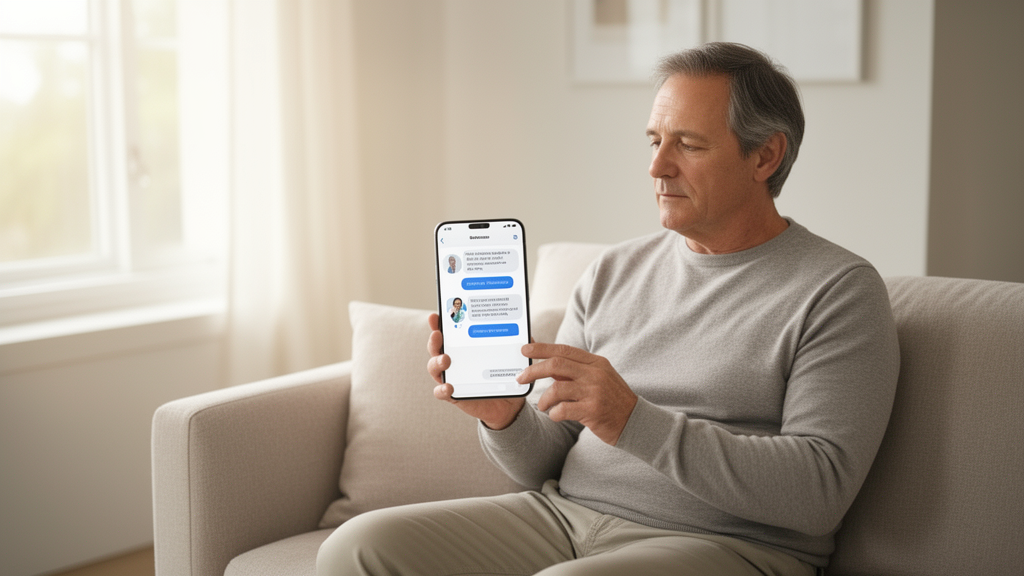
A cross-sectional survey of 500 active users of health maintenance organization digital applications in Israel suggests that patients generally view asynchronous messaging with their primary-care physicians as a useful and convenient tool.
The study aimed to understand how patients experience digital health communication, specifically addressing variations in request urgency and clinical complexity. Researchers measured satisfaction through Likert-scale items. Among the findings, intention to continue using the platform received the highest rating with a mean of 4.52. Conversely, perceived quality of care-related communication and response time were rated lowest, both scoring 3.90.
Data analysis revealed notable demographic and request-related patterns. The study identified that female respondents reported higher communication-clarity ratings compared to males. Furthermore, respondents reporting good health status and those from high-income households indicated more favorable overall experiences than those in the not-good health or low-income groups. Trust ratings, in particular, were significantly higher among the high-income cohort.
Respondents rated administrative requests significantly higher than clinical requests regarding convenience, usability, and intention for continued use. Specifically, multi-adjusted models showed administrative requests achieved higher odds for positive ratings across these categories compared to clinical inquiries.
The authors suggest that these findings highlight specific areas for potential service-design interventions, such as clearer request categorization, improved response-time information, and more differentiated routing protocols for different communication types. However, they emphasize that these candidate interventions were not tested within the current study and that observed patterns primarily serve to generate hypotheses for future research.
Important limitations constrain the interpretation of these findings. Because the study was restricted to existing users and relied on self-reported outcomes, the results do not establish population-wide access or clinical effectiveness. Furthermore, the survey could not demonstrate whether specific workflow changes would improve clinical outcomes, safety, or overall system performance. The findings indicate that while asynchronous messaging is viewed favorably, it may not be equally suitable for all request types.
The investigation, conducted by Ido Morag, sampled Hebrew-speaking members recruited through an opt-in panel. Across all nine survey measures, participant ratings showed a standard deviation of 0.58. In the mutually adjusted secondary analysis, the nine-item mean was higher for administrative inquiries over clinical requests by an adjusted difference of 0.185, while female respondents exceeded males by 0.129.
Multiplicity-adjusted ordinal models also identified specific odds ratios for administrative messaging, reaching 2.33 for convenience, 5.06 for usability, and 3.15 for continued use. In addition to differentiated routing, researchers proposed untried guidance concerning appropriate use and escalation.
Subject of Research: User experience and service design of primary-care messaging applications.
Article Title: Asynchronous primary-care messaging in health maintenance organization digital applications: User experience, workflow, and service design priorities
Article References: Morag, I. (2026). Asynchronous primary-care messaging in health maintenance organization digital applications: User experience, workflow, and service design priorities. PLOS Digital Health, 5(11), e0001841. https://doi.org/10.1371/journal.pdig.0001841
Image Credits: AI Generated
DOI: 10.1371/journal.pdig.0001841
Keywords: Digital Health, Primary Care, Asynchronous Communication, Health Maintenance Organizations, Patient Experience, User Satisfaction, Telemedicine, Health Informatics, Administrative Efficiency, Healthcare Workflow, Service Design, Patient Demographics, Socioeconomic Factors, Health Communication, Clinical Messaging
News Source: Ophelia Keating. (November 16, 2026). Patients Report Positive Experiences With Asynchronous Primary Care Messaging Apps. Scienmag.