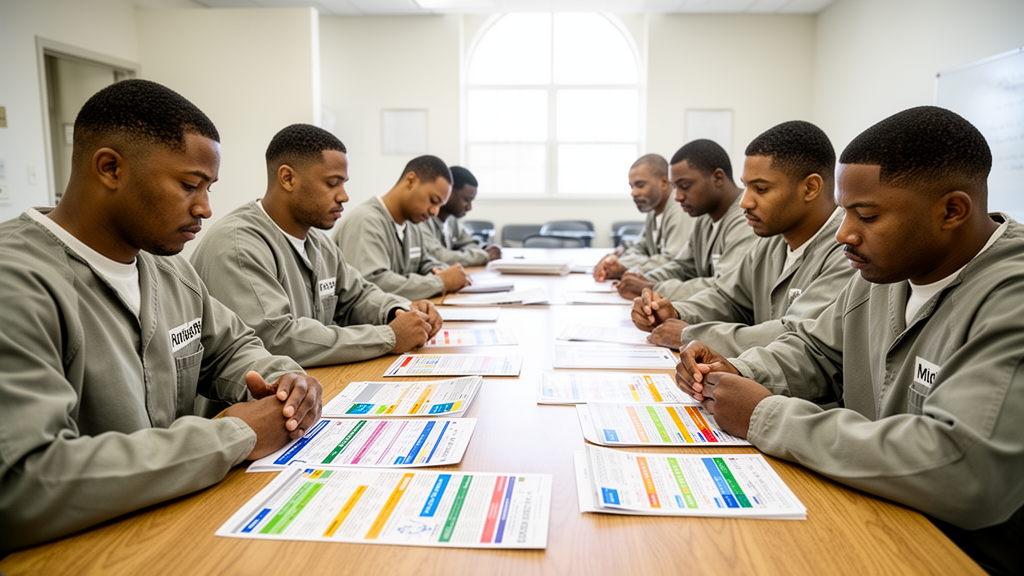
Participation in prison-based money management programs is associated with lower levels of reported despair among incarcerated individuals, according to a recent study published in the journal Health & Justice. This observational research, which utilized data from the Bureau of Justice Statistics’ Survey of Prison Inmates, addresses a notable gap in correctional literature regarding the emotional benefits of financial education for those preparing for community reentry.
The research team employed propensity score matching, a statistical technique designed to balance the characteristics of participants and non-participants, to investigate the relationship between financial education and mental health outcomes. To ensure the robustness of their findings, the investigators conducted sensitivity tests using a variety of matching methods and outcome specifications. This approach was intended to confirm the quality of the matching process and strengthen the internal validity of the study’s conclusions.
The study found that individuals who engaged in money management education while incarcerated reported fewer feelings of despair compared to their counterparts who did not participate in such programs. Specifically, the data indicated that these educational interventions were linked to significant reductions in key psychological markers, including feelings of hopelessness and worthlessness. These findings suggest that addressing the practical, financial concerns of prisoners may have a measurable impact on their emotional well-being.
A granular subgroup analysis revealed that the emotional benefits of these programs were not uniform across the entire incarcerated population. The most significant reductions in despair were observed among individuals who were within one to two years of their projected release date. This cohort may benefit most from the programs due to the imminent nature of their transition back to society, where financial management skills become a pressing reality.
Conversely, the study did not observe statistically significant effects on despair for participants who were three or more years away from release. These findings highlight the potential importance of timing when implementing rehabilitation and educational policies within carceral settings. The researchers suggested that financial education programs might be most effective when targeted at individuals as they approach their reentry into the community.
The transition from prison to community life is often characterized by significant financial and emotional stress, which can exacerbate feelings of despair and self-doubt. While existing prison-based interventions typically focus on general behavioral health, this study highlights the unique role that financial education may play in mitigating the mental health challenges associated with the reentry process. By addressing these practical concerns, such initiatives may provide a necessary layer of support for individuals navigating the complexities of post-prison life.
Subject of Research: Impact of prison-based financial education on the mental health of incarcerated individuals
Article Title: Addressing mental health among incarcerated individuals through financial education: evidence from prison-based programs
Article References: Amoako, E. O., Zufelt, M., Shapley, M. B., Ansong, D., & Pollack, H. (2026). Addressing mental health among incarcerated individuals through financial education: evidence from prison-based programs. Health & Justice. https://doi.org/10.1186/s40352-026-00468-3
Image Credits: AI Generated
DOI: 10.1186/s40352-026-00468-3
Keywords: Financial Literacy, Incarceration, Mental Health, Despair, Reentry, Prison Reform, Propensity Score Matching, Behavioral Health, Economics, Hopelessness, Worthlessness, Rehabilitation, Survey of Prison Inmates, Bureau of Justice Statistics, Community Reentry
News Source: Courtney Benton. (November 16, 2026). Prison Financial Education Programs Linked to Reduced Incarceration-Related Despair. Scienmag.