Carbon-based architectures are emerging as critical components in the transition to sustainable energy, offering unique electronic, structural, and chemical properties that enhance the efficiency of fuel production and energy conversion. A recent review article underscores the pivotal role these materials play in bridging fundamental science with large-scale industrial applications. By leveraging structural variations ranging from zero-dimensional quantum dots to three-dimensional aerogels, researchers are utilizing graphene, carbon nanotubes, and biomass-derived activated carbons to act as conductive scaffolds, catalysts, and adsorbents. This versatility allows for the precise tuning of energy storage systems, biofuel processing, and solar-driven fuel synthesis, providing a robust framework for overcoming the technical barriers of intermittency and poor reaction kinetics that have traditionally hindered renewable energy systems.
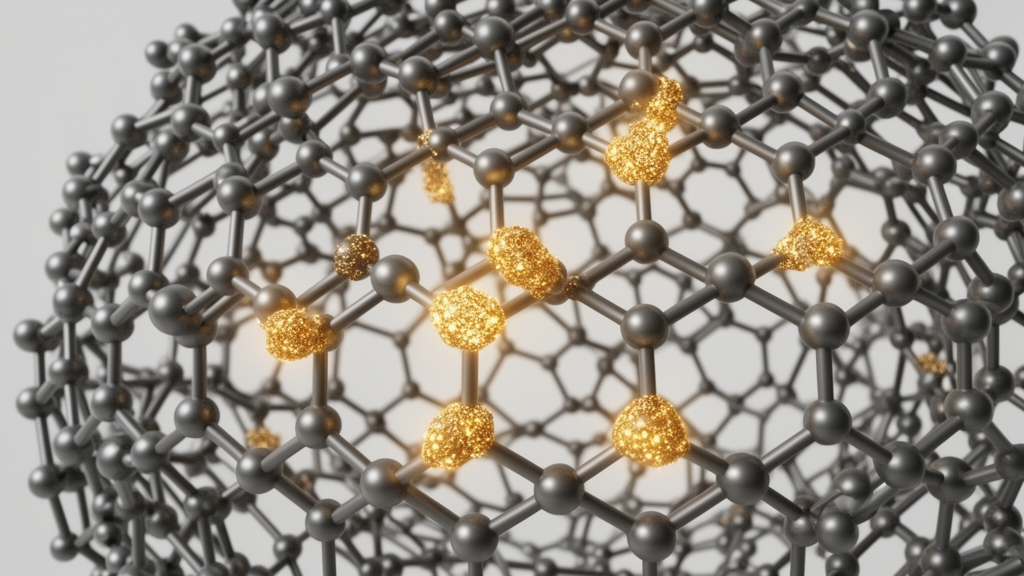
The atomic versatility of carbon is rooted in its ability to undergo sp, sp2, and sp3 hybridization, forming diverse structures with tunable electronic properties. Delocalized pi-electrons in graphitic systems enable high electrical conductivity, which is essential for power-intensive devices, while the degree of graphitization dictates electronic performance. Engineered nanostructures such as graphene provide exceptional mechanical strength and thermal conductivity, whereas carbon nanotubes offer superior charge transport capabilities. Additionally, biomass-derived activated carbons exhibit hierarchical porosity and large internal surface areas, which are critical for catalyst support and charge accumulation in devices like supercapacitors. The ability to modify these materials through heteroatom doping with elements such as nitrogen, boron, or phosphorus further allows for the fine-tuning of local electronic structures, creating active sites for complex chemical reactions.
In the domain of biofuel production, carbon materials address the persistent challenges associated with lignocellulosic biomass recalcitrance. Pretreatment processes often generate inhibitory compounds, such as phenolics and furaldehydes, which can significantly impair subsequent fermentation. Activated carbons function as efficient detoxification agents, selectively adsorbing these inhibitors to preserve sugar content and enzymatic integrity. Studies have demonstrated that coconut shell-derived activated carbons can increase enzymatic hydrolysis efficiency by 30% and improve fermentation performance by up to 14-fold. By preventing non-productive enzyme binding to lignin fragments, these carbon auxiliaries preserve cellulase activity, and their potential for thermal or solvent-based regeneration offers a cost-effective solution for large-scale biorefining.
Graphene and carbon nanotube composites have also revolutionized sugar fermentation pathways by stabilizing the microbial environment. The incorporation of graphene oxide into membranes used for ethanol extraction has been shown to mitigate end-product inhibition, boosting bioethanol productivity by as much as 115% compared to conventional reactor designs. These materials facilitate faster charge transfer processes and enhance microbial viability under stress, positioning themselves as multifunctional nanomodulators in fermentation broths. Furthermore, solid acid catalysts derived from agro-residues—such as seed cakes and rice husks—are providing sustainable alternatives to corrosive homogeneous catalysts for biodiesel production.
The integration of enzymes into energy production has been significantly improved through the use of carbon supports for immobilization. Free lipases, while effective, often suffer from high costs and limited operational stability under industrial conditions. Carbon-based materials protect these biocatalysts from denaturing factors like ethanol and methanol, while their high thermal conductivity dissipates heat, preventing local degradation. Carbon supports allow for the orientation-controlled immobilization of lipases, leading to substantial gains in catalytic activity and reusability. In batch systems, lipases supported on carbon frameworks have demonstrated the ability to maintain 80% activity across 20 reuse cycles, achieving biodiesel conversion rates exceeding 93% within four hours, which is vital for the economic feasibility of enzyme-based fuel synthesis.
Thermochemical upgrading of heavy hydrocarbons—including vacuum residues, waste plastics, and pyrolysis oils—remains a major operational bottleneck due to coke formation and catalyst poisoning. Porous carbon materials provide high surface area and intrinsic functionalities that offer superior resistance to these deactivation processes. The presence of oxygen-containing functional groups and defect sites in biochars imparts weak Brønsted and Lewis acidity, which initiates carbon-carbon bond cleavage in asphaltenes and resins. When these materials are used as supports for transition metal nanoparticles, they enhance metal dispersion and promote secondary cracking pathways. This synergy has resulted in tar conversion efficiencies reaching 94.8% and improved light oil yields in coal pyrolysis applications, demonstrating the necessity of hierarchical porosity for mass transport in heavy feedstocks.
Carbon-based systems are also essential for the selective valorization of CO2, a key requirement for reducing greenhouse gas emissions. While CO2 is thermodynamically stable and requires significant activation energy, carbon-based catalysts—both stand-alone and as supports for metals—facilitate electrochemical and photocatalytic reduction pathways. The high conductivity and tunable morphology of graphene and carbon nanotubes enable charge transfer rates that allow for Faradaic efficiencies greater than 80% in electrochemical reduction.
Hydrogen production via photoelectrochemical water splitting and biomass gasification has seen comparable performance gains through the integration of carbon architectures. PEC water splitting requires semiconductors with high stability and efficient charge transport, areas where carbon-based materials offer clear advantages over noble metals like platinum. For instance, carbon nanotube-zinc oxide heterostructures have shown a 33-fold increase in photocurrent density compared to bare zinc oxide materials. In biomass gasification, carbon-supported catalysts have enabled hydrogen evolution rates of nearly 24 mL per milligram of platinum. By enhancing gas yields and promoting crucial reforming and water-gas shift reactions, these catalytic frameworks allow for more efficient conversion of renewable feedstocks into high-purity hydrogen gas.
Solar energy conversion technologies, including photovoltaic and solar-thermal systems, have reached near-commercial performance levels through the inclusion of carbon-based derivatives. In dye-sensitized and perovskite solar cells, graphene-based films and nanotubes act as transparent electrodes, interfacial layers, and additives that suppress ion migration and prevent device degradation. These components increase power conversion efficiencies by improving charge collection and exciton dissociation pathways. Beyond electrical power generation, carbon-based nanofluids are being deployed in solar-thermal systems to optimize thermal management.
Despite these successes, the path toward widespread industrial commercialization faces challenges related to scalability, production costs, and performance consistency. The synthesis of high-performance carbon catalysts, particularly those involving high-temperature activation and doping, remains energy-intensive and difficult to replicate across large batches. Moreover, the integration of these materials into continuous bioprocessing schemes requires careful balancing of adsorption, catalysis, and regeneration steps to ensure environmental and economic sustainability. Life cycle assessments indicate that while biomass-derived carbons offer a sustainable path forward, future efforts must focus on developing low-energy, environmentally benign synthesis methods that reduce the use of resource-intensive precursors like certain metal-organic frameworks.
The future of carbon-based energy technology lies in the convergence of material science with artificial intelligence and machine learning. AI-guided design and optimization are already enabling researchers to predict optimal dopant configurations and hierarchical pore architectures that lead to unprecedented catalytic performance. By simulating these complex structural interactions, investigators can streamline the development of single-atom catalysts and multifunctional hybrid architectures that operate with lower overpotentials and higher selectivity. This precision engineering will be essential for creating integrated systems that combine adsorption and catalysis in single-step operations, thereby maximizing the efficiency of energy conversion while minimizing total energy consumption throughout the supply chain.
Ultimately, the versatility of carbon materials makes them a foundational element for the global transition toward renewable energy. Their ability to bridge fundamental scientific research with the rigorous demands of industrial application is unique among available materials. As the field moves beyond individual laboratory-scale demonstrations, the focus on sustainable synthesis, process intensification, and scalable fabrication will be paramount. By leveraging their exceptional structural adaptability, these carbon architectures are not merely alternatives to existing technologies but are rapidly becoming the preferred solutions for overcoming the critical bottlenecks in renewable energy production, biofuel synthesis, and carbon valorization, driving progress toward a more sustainable and circular energy future.
Subject of Research: Carbon-based nanomaterial applications in sustainable energy storage and fuel production.
Article Title: Cutting-edge carbon-based architectures for energy production and conversion
Article References: Adeola, A. O., Adedipe, D. T., Adenuga, D. O., Kyesmen, P. I., Olaremu, A. G., Ijagbuji, A. A., & Oloye, F. F. (2025). Cutting-edge carbon-based architectures for energy production and conversion. Frontiers in Carbon, 4, Article 1697193. https://doi.org/10.3389/frcrb.2025.1697193
Image Credits: AI Generated
DOI: 10.3389/frcrb.2025.1697193
Keywords: carbon materials, renewable energy, biofuel production, carbon catalysts, energy storage, graphene, carbon nanotubes, CO2 valorization, biomass gasification, photoelectrochemical water splitting, biodiesel synthesis, nanomaterials, catalytic supports, sustainable technology, energy conversion, porous carbons, heteroatom doping, energy efficiency, net-zero emissions, green chemistry
News Source: Faith Mcneil. (November 16, 2026). Advanced Carbon Architectures Drive Efficiency in Renewable Energy Technologies. Scienmag.