The invasion of Spodoptera frugiperda, commonly known as the fall armyworm, has transformed maize production into a persistent struggle against one of agriculture’s most formidable pests. Native to the tropical and subtropical Americas, this highly adaptive lepidopteran species has achieved a global distribution, causing severe economic damage through its voracious feeding on maize and over 350 other plant species. Its rapid expansion is fueled by an extraordinary migratory capacity, high reproductive potential, and a documented ability to evolve resistance to multiple insecticide classes. The reliance on continuous chemical control has accelerated this evolutionary process, leading researchers to conclude that no single intervention strategy can provide lasting suppression. Instead, a multidisciplinary Integrated Resistance Management framework is required to mitigate the spread of resistant populations while preserving the efficacy of available chemical and biological control tools.
The biological mechanisms underpinning this pest’s resilience are complex and multifaceted. The fall armyworm exhibits significant adaptive plasticity, including two genetically distinct host-associated strains, the corn and rice strains, which display different plant preferences. During its life cycle, which spans 30 to 90 days depending on environmental conditions, the larval stage causes the most severe economic damage, including leaf shredding, whorl destruction, and direct feeding on tassels and ears. This biological versatility is matched by an evolving arsenal of resistance mechanisms, including target-site insensitivity and enhanced metabolic detoxification. Target-site resistance often arises from mutations in the voltage-gated sodium channel, acetylcholinesterase, and ryanodine receptor genes, which alter the molecular structures that insecticides are designed to bind or disrupt, thereby diminishing their toxicological effect.
Metabolic resistance represents an even more pervasive challenge, involving the upregulation of specialized enzyme systems that neutralize insecticides before they reach their physiological targets. Cytochrome P450 monooxygenases, glutathione S-transferases, and carboxylesterases play critical roles in this process. These enzymes, particularly when constitutively overexpressed, enable the pest to rapidly degrade a wide range of chemical compounds, including organophosphates, carbamates, pyrethroids, and diamides. This sophisticated chemical defense is often further bolstered by behavioral modifications, such as the avoidance of treated surfaces or changes in oviposition patterns, which limit the actual dose of insecticide individuals encounter. The combination of these genetic, biochemical, and behavioral traits necessitates robust monitoring programs to identify and respond to changes in susceptibility levels at early stages, preventing the dominance of highly resistant populations across maize-producing landscapes.
Monitoring and detection efforts currently rely on a combination of conventional bioassays, biochemical indicators, and molecular diagnostic markers. While diet-overlay and leaf-dip bioassays provide direct evidence of phenotypic resistance by measuring mortality and growth inhibition, they are labor-intensive and slow. To address these limitations, researchers have developed rapid diagnostic kits, such as discriminating-dose glass-vial assays, which provide essential field-level screening results within hours. Molecular techniques, including quantitative PCR and DNA sequencing, have significantly improved the ability to track known target-site resistance alleles across different geographic populations. However, these tools cannot yet identify all resistance-associated traits or unknown mutations. Therefore, comprehensive surveillance must integrate these molecular diagnostics with standardized phenotypic monitoring to establish accurate resistance-risk maps that can effectively guide field-level insecticide management decisions.
Fundamental to resistance management is the rotational use of insecticides based on their mode of action, a practice strongly recommended by the Insecticide Resistance Action Committee. Continuous exposure to a single insecticide class exerts intense selection pressure, rapidly increasing the frequency of resistance alleles. By alternating insecticides from distinct IRAC groups, farmers can reduce selection pressure, preventing the buildup of cross-resistance and preserving the utility of existing chemical chemistries. Sequential spray programs, when managed through organized rotational windows, serve as a critical defensive barrier. In many maize-growing regions, insecticides like emamectin benzoate, spinetoram, and chlorantraniliprole are prioritized for these programs because they belong to different biochemical target sites, ensuring that populations that survive exposure to one compound are effectively controlled by the next, provided the rotation is maintained with scientific rigor.
In addition to rotational strategies, the application of insecticide mixtures and synergistic combinations provides an alternative approach to managing resistance. By pairing different active ingredients, researchers have demonstrated improved pest control and decreased larval survival, even when using reduced dosage rates. For instance, specific mixtures of diamides and pyrethroids or carbamates have shown synergistic toxicological effects against fall armyworm, often leading to enhanced protection of the crop throughout critical growth stages. When supplemented with effective adjuvants or formulated as seed treatments, these mixtures not only provide sustained defense for up to 39 days after emergence but also help in lowering the total amount of insecticide required, thereby reducing environmental residues and overall management costs. However, it is essential that these mixtures are validated through field trials to ensure they do not exhibit antagonistic effects that could compromise control efficacy.
Biological control agents represent a critical, sustainable component of an integrated approach, offering environmentally safe alternatives to synthetic chemical usage. Natural enemies, including parasitoid species like Trichogramma, Telenomus, and Chelonus, play a significant role in limiting fall armyworm populations during the egg and larval stages. Augmentative biocontrol releases have shown considerable success, with studies reporting substantial reductions in both egg mass densities and larval populations across different growing seasons. Furthermore, entomopathogenic fungi such as Metarhizium rileyi, Beauveria bassiana, and various strains of Bacillus thuringiensis have emerged as highly effective biopesticides. When formulated as suspension concentrates or integrated with other management tactics, these biological agents offer multi-modal pathways for pest suppression, reducing the overall reliance on broad-spectrum chemical insecticides and promoting the conservation of diverse natural enemy communities within the agricultural ecosystem.
Cultural and mechanical practices provide additional, accessible tools for long-term population management. Timely and uniform planting across large agricultural areas minimizes the window of vulnerability for maize crops, while the use of early-maturing cultivars helps reduce the cumulative exposure period for the crop. The push-pull strategy, involving the intercropping of maize with pest-repellent crops like Desmodium and border rows of attractant crops such as Napier grass, has proven effective in disrupting female moth oviposition and encouraging natural enemy activity. These techniques, coupled with practices like zero-tillage, hand-picking of egg masses, and the destruction of crop residues, directly address the pest’s environment and reduce its survival rate in the field.
Researchers have screened thousands of maize germplasm lines to identify varieties that exhibit antixenosis, antibiosis, and tolerance mechanisms. Traits such as greater leaf toughness, increased trichome density, thicker epidermal cell walls, and specific biochemical profiles—including high concentrations of benzoxazinoids and phenols—are significantly associated with reduced pest feeding and slower larval development. Breeding programs utilizing resistant genotypes such as DMRE 63 or CML 71 have demonstrated that incorporating these traits into hybrid maize can significantly decrease the economic damage caused by fall armyworm, even under high pest pressure. By providing a baseline of defense, host plant resistance reduces the frequency and intensity of necessary interventions, enhancing the efficacy of the overall management system.
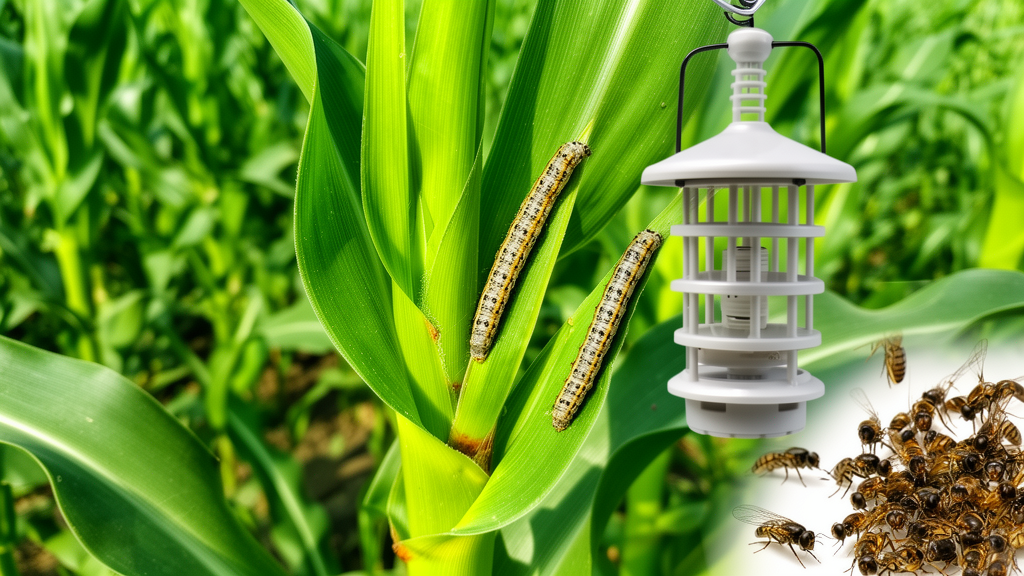
Recent advancements in precision technology are further revolutionizing fall armyworm management through the integration of artificial intelligence, machine learning, and real-time monitoring systems. IoT-enabled pheromone traps and smart sensors can now automate the detection and counting of moths, providing immediate data on population dynamics and migratory trends. Deep learning models, including those based on Convolutional Neural Networks and MobileNetV2, allow for the identification of pest infestations from imagery of leaves and cobs with high precision. These tools support the development of decision-support systems that enable farmers to apply control interventions only when and where they are truly needed. By linking these high-tech monitoring capabilities to targeted diagnostic bioassays, management systems can transition from reactive, calendar-based spraying to proactive, data-driven precision application, thereby significantly extending the useful life of existing control options.
Despite the promise of these integrated tactics, the translational barrier remains significant, as current AI and remote sensing technologies mainly quantify presence rather than resistance status. Effective management requires the integration of spatial decision-support systems that map resistance risks based on phenotypic and molecular data. Sustained institutional capacity for extension services is also essential to bridge the knowledge gap identified in many major maize-growing regions, where high levels of insecticide use often fail to meet economic threshold standards. Future research must prioritize both short-term, field-ready strategies and long-term innovations, such as genomic selection and RNAi technologies, while carefully assessing non-target effects and regulatory acceptance. Only through a holistic, multidisciplinary commitment can agricultural systems successfully overcome the challenge of fall armyworm resistance, ensuring durable protection for maize and long-term food security on a global scale.
Subject of Research: Integrated resistance management strategies for Spodoptera frugiperda in maize cultivation.
Article Title: Strategies for breaking insecticide resistance in Spodoptera frugiperda infesting maize
Article References: Rajashekhar, M., Priyanka, N., Asritha, C., Keerthana, B., P., D., Vanisree, K., Sudharshanam, U., & Rajinikanth, P. (2026). Strategies for breaking insecticide resistance in Spodoptera frugiperda infesting maize. Frontiers in Insect Science, 6, Article 1975603. https://doi.org/10.3389/finsc.2026.1975603
Image Credits: AI Generated
DOI: 10.3389/finsc.2026.1975603
Keywords: Spodoptera frugiperda, maize, insecticide resistance, integrated pest management, metabolic detoxification, target-site resistance, biocontrol, botanical pesticides, mode-of-action rotation, precision agriculture, artificial intelligence, host plant resistance, refugia, biopesticides, agricultural sustainability, crop protection, resistance surveillance, genomic selection, lepidopteran pest
News Source: Alan Morgan. (November 16, 2026). Integrated Management Strategies Combat Escalating Fall Armyworm Insecticide Resistance. Scienmag.