Researchers at the University of Málaga and collaborating institutions have developed a computational framework that identifies biologically coherent molecular modules associated with clinical severity in a rare genetic disorder. Published in Frontiers in Bioinformatics, the study demonstrates how deep network embedding and robust statistical inference can extract meaningful disease mechanisms from small patient cohorts. The work focuses on phosphomannomutase two congenital disorder of glycosylation, or PMM2-CDG, an ultra-rare multisystemic condition caused by mutations in the PMM2 gene. By integrating transcriptomic, microRNA, and phenotypic data from ten patient-derived fibroblast lines, the team identified molecular programs that distinguish severe from mild clinical presentations.
The primary challenge in rare disease research is the inherent constraint of small sample sizes, which often limits the statistical power of conventional analytical methods. PMM2-CDG affects a small number of individuals worldwide, and the clinical manifestations range from mild neurological impairments to severe multisystemic failure involving profound motor dysfunction and cardiac complications. This pronounced heterogeneity makes it difficult to establish robust genotype-phenotype correlations using traditional approaches. The study addresses this bottleneck by combining multiple omic layers with network representation learning to prioritize informative molecular signals while minimizing the risk of overfitting.
The study analyzed a cohort of 27 patients with genetically confirmed PMM2 deficiency, from which a subset of ten patients was selected for detailed multiomic profiling. These ten patients represented the extremes of the clinical severity spectrum, with five classified as mild and five as severe based on the Nijmegen Pediatric CDG Rating Scale. Skin fibroblast lines were derived from these patients to ensure a representative yet feasible sample size for high-throughput analysis. The selection process was designed to maximize biological relevance while maintaining methodological rigor, allowing the researchers to compare molecular profiles across the full range of disease severity.
To characterize the clinical variability, the team annotated clinical features using the Human Phenotype Ontology, a structured vocabulary that enables consistent patient descriptions. Disease severity was further quantified using the International Cooperative Ataxia Rating Scale and the Nijmegen Pediatric CDG Rating Scale, along with MRI-derived measures of cerebellar atrophy. Phenotypic profiling revealed a clear stratification of patients, with the first principal component showing strong correlations with clinical severity scales. This phenotypic architecture provided a robust clinical ground truth for the subsequent molecular analyses, confirming that the selected fibroblast lines accurately recapitulated the divergent clinical phenotypes observed in the clinic.
The integrative framework employed Multiple Factor Analysis to combine transcriptomic, microRNA, and phenotypic data into a unified low-dimensional representation. Feature selection was applied to the mRNA expression dataset to reduce dimensionality while preserving biologically informative signals. Stability selection based on repeated elastic-net logistic regression was used to identify genes that consistently discriminated between low- and high-severity phenotypes. This approach enabled the detection of robust transcriptional signals while reducing the influence of sampling variability inherent to small cohorts. The metabolomic layer was initially included but was subsequently excluded from the severity-focused integration after sensitivity analyses indicated its contribution to severity-associated variation was comparatively limited.
After removing the metabolomic layer, the Multiple Factor Analysis showed improved alignment between sample distribution and clinical severity. The first principal component emerged as a global clinical severity axis, primarily driven by phenotypic variables and correlated with severity scales. This component was associated with severe motor and developmental impairment, including intention tremor, limb dysmetria, and inability to walk. At the molecular level, this axis was driven by transcriptomic and microRNA features involved in RNA processing, lipid metabolism, and circadian control. The second principal component captured a distinct axis of variation associated mainly with structural and craniofacial traits, reflecting molecular variation linked to morphological features rather than overall disease severity.
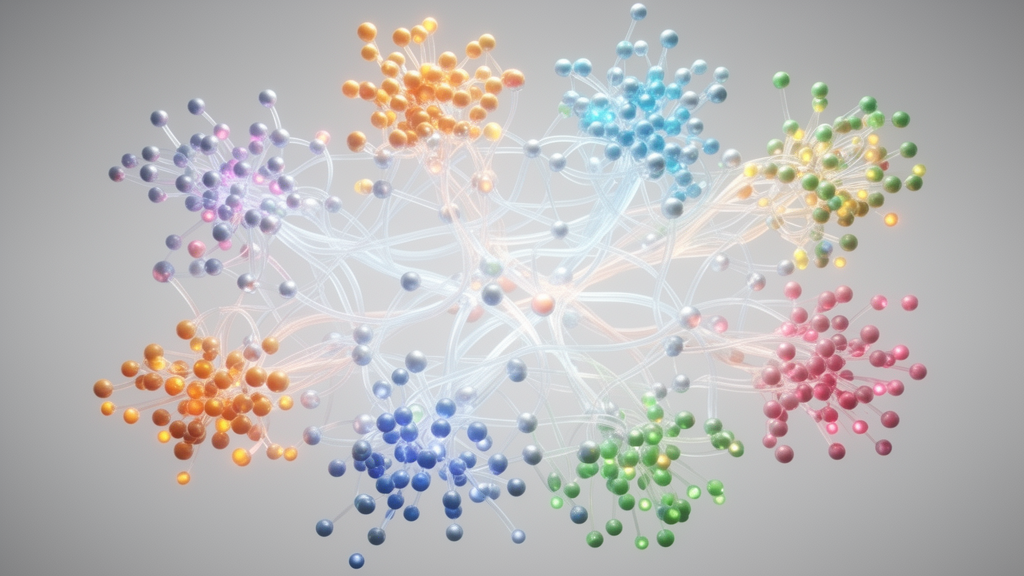
To provide biological context to the molecular signatures, the selected features were projected onto the human interactome using deep network representation learning. Protein-protein interaction information was embedded through node2vec, and functional modules were identified using HDBSCAN clustering. This network-centric approach enabled the identification of biologically interpretable molecular programs associated with disease severity. The resulting network modules showed significant separation between severe and mild phenotypes, revealing biological processes related to proteostasis, neurodevelopmental signaling, and extracellular matrix organization. These findings suggest that combining multiomic integration with network embedding can help address the key challenges of rare disease research.
Statistical validation of the network-derived modules was performed using Permutational Multivariate Analysis of Variance, with significance assessed by exhaustive enumeration of all possible balanced group assignments. For the severity-associated dimension, several clusters showed significant differences in multivariate variation between high- and low-severity patients. Functional enrichment analysis identified specific biological processes associated with these modules, including protein deubiquitination, tRNA and rRNA processing, and phosphatidylcholine biosynthesis. These processes are implicated in cellular resilience and disease pathophysiology, providing a mechanistic bridge between fibroblast-derived molecular signatures and the hallmark neurological manifestations of the disease.
The study also examined the regulatory layer of these modules by integrating microRNA expression data with the identified gene clusters. Significant microRNA associations were identified for most functional modules, characterized by a high overlap with cluster-associated genes and robust statistical significance. Differential expression analysis of these microRNAs across severity groups confirmed their potential role in the disease. This regulatory layer highlights the complex interplay between transcriptional and post-transcriptional mechanisms in determining clinical outcomes. The identification of these regulatory drivers provides a rationale for future studies focused on adaptive cellular responses and therapeutic resilience.
Sensitivity analyses were performed to assess the robustness of the main results to the choice of data layers, individual patients, and stochastic initialization of the network embedding. Leave-one-layer-out analyses indicated that the metabolomic layer contributed to the overall multivariate organization but had a limited impact on the severity-associated component. Leave-one-sample-out analyses showed that the stability-selected gene set was consistently preserved after removal of individual patients, suggesting that the results are robust despite the small cohort size. The network-module assignments were also robust to stochasticity, with high global partition agreement across repeated embedding and clustering runs. These complementary analyses support the reliability of the identified molecular programs.
The authors acknowledge several limitations of the study, including the modest sample size for high-dimensional machine learning and network analysis. The biological modules identified should be interpreted as candidates for further validation in larger, independent cohorts. The cross-sectional nature of the study also limits the ability to determine the temporal dynamics of the identified molecular shifts. It remains unclear whether the dysregulation in specific pathways precedes or follows the establishment of severe clinical symptoms. Future longitudinal studies tracking these multiomic signatures alongside clinical progression would be necessary to establish definitive causal links.
In conclusion, the study presents a computationally scalable systems biology framework for the discovery of clinically relevant disease mechanisms in small and heterogeneous cohorts. By integrating deep phenotyping, multiomic profiling, and network representation learning, the workflow identified biologically coherent modules associated with disease progression. These findings support the use of integrative network-based strategies for molecular discovery and biomarker prioritization in rare diseases where conventional analytical methods are often constrained by sample size. The complete workflow has been made available as an open-source bioinformatics pipeline to promote reproducibility and facilitate adoption by the research community.
The computational pipeline developed for this study is publicly accessible through a GitHub repository, accompanied by the R package ExpHunterSuite available via Bioconductor. This open-source release is intended to promote reproducibility and facilitate the adoption of the workflow by the broader research community. The analysis was conducted using Python 3.14 and R 4.5.1, with specific software versions and package dependencies documented in the supplementary materials. Random seeds and execution parameters for stochastic steps are also provided in the public repository to ensure that the results can be independently verified and reproduced by other investigators.
Within the identified molecular modules, specific biological processes were linked to distinct functional clusters. Cluster 0 was associated with protein deubiquitination, while Cluster 1 involved tRNA and rRNA processing. Cluster 2 was linked to phosphatidylcholine biosynthesis, and Cluster 6 showed enrichment for glycosphingolipid and ceramide catabolism. Cluster 4 was associated with vesicular transport, and Cluster 5 with mannose-linked glycosylation. Although Cluster 7 did not reach statistical significance in the primary analysis, it displayed functional enrichment related to extracellular matrix organization and axon regeneration. These exploratory findings were retained for further biological interpretation, as they may contribute to understanding differences in motor outcomes between ambulatory and non-ambulatory patients.
The study utilized a cohort of 27 patients with genetically confirmed PMM2 deficiency, originally characterized in previous research. Ethical approval for the original study and patient recruitment was granted by the Research Ethics Committee of the Autonomous University of Madrid. Participant data and biological samples were collected between February 15, 2023, and June 30, 2023. The current analysis relied on previously collected clinical data and patient-derived fibroblast cell lines, meaning no additional patients were recruited or new biological samples were collected for this specific computational study. This approach allowed the researchers to leverage existing validated models to relate molecular alterations to clinical severity.
The framework was designed to address the specific constraints of ultra-rare disease research, where conventional statistical methods often lack the power to detect robust signals in small cohorts. By prioritizing informative omic layers and using stability selection, the method aims to minimize overfitting and ensure that identified molecular signatures are reproducible. This systems biology approach provides a structured way to prioritize candidate mechanisms for further investigation in other rare genetic disorders with similar clinical heterogeneity.
Subject of Research: A deep network embedding and robust statistical framework for multi-omics integration in rare diseases: a case study in PMM2-CDG
Article Title: A deep network embedding and robust statistical framework for multi-omics integration in rare diseases: a case study in PMM2-CDG
Article References: García-Criado, F., Córdoba-Caballero, J., Esteban-Martos, A., Epifani, F., Gallego, D., Andreotti, G., Paris, D., Rojano, E., Serrano, M., Pérez, B., Seoane-Zonjic, P., & Ranea, J. A. G. (2026). A deep network embedding and robust statistical framework for multi-omics integration in rare diseases: a case study in PMM2-CDG. Frontiers in Bioinformatics, 6, Article 1926307. https://doi.org/10.3389/fbinf.2026.1926307
Image Credits: AI Generated
DOI: 10.3389/fbinf.2026.1926307
Keywords: deep, network, embedding, robust, statistical, framework, multi-omics, integration, rare, diseases, case, PMM2-CDG
News Source: Gregory Coleman. (November 16, 2026). Network Embedding Reveals Severity Modules in Rare PMM2-CDG Cohort. Scienmag.