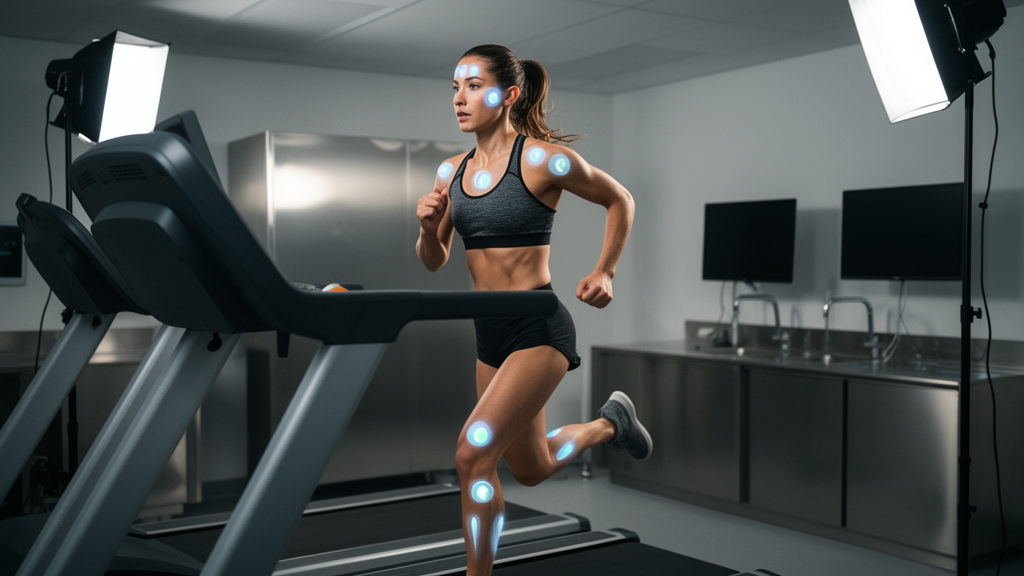
Conventional exercise monitoring strategies often fail to capture the physiological complexity of human athletic health and performance, treating the exercising body through reductionist models that assess individual organs in isolation. In a perspective article published in Frontiers in Network Physiology, an international research team led by Lluc Montull, Sergi Garcia-Retortillo, Óscar Abenza, Yaopeng J. X. Ma, Robert Hristovski, Plamen Ch. Ivanov, and Natàlia Balagué outlined how the multidisciplinary field of Network Physiology provides a comprehensive conceptual and analytical framework to investigate dynamic interactions, coordination, and network integration among diverse physiological systems during physical exertion. Rather than conceiving athletes as machine-like assemblies of weakly interacting modules with linear responses, this approach conceptualizes the human organism as a complex adaptive system characterized by self-organization, synergies, context-dependency, and non-stationarity, opening novel avenues for monitoring performance, fatigue, and recovery through network-based physiological biomarkers.
Historically, sports science and exercise physiology methodologies have relied heavily on mechanistic models that oversimplify biological dynamics by recording physiological, psychological, and biomechanical parameters as discrete, decoupled variables. Standard commercial testing devices frequently compute isolated maximal values, threshold boundaries, or static time-averaged distributions, omitting the non-stationary dynamics and multiscale temporal organization inherent in physiological signal streams. While recent trends have introduced large-scale data sources such as molecular omics alongside artificial intelligence tools, predictive models that lack dynamic temporal structures can yield limited accuracy due to the stochastic and indeterministic nonlinear dynamics characteristic of living systems. Decades of physiological variability research, particularly within cardiac regulation, demonstrate that fluctuations in biological signals exhibit state-dependent scaling, multifractal organization, and long-range correlations that reorganize during transitions from resting baseline states to active physical exercise.
Network Physiology addresses these analytical limitations by redefining biological systems as adaptive networks of dynamical systems where individual nodes represent active, nonlinear biological units and links represent time-varying functional interactions. Unlike classical complex network models from graph theory, in which nodes remain static and edges maintain constant mathematical weights uniquely tied to structural topology, physiological networks operate through transient functional forms where identical structural configurations can generate diverse organismic behaviors. Network links reflect coordination, coupling strength, and temporal synchronization across subsystems, creating hierarchically organized functional structures. Under healthy, adaptive conditions, these inter-system connections remain flexible, rich, and moderately expressed, whereas systems that collapse into persistently weak linkages or rigidly overexpressed coupling lose functional flexibility and exhibit compromised physiological adaptability during physical exertion.
The evaluation of cardio-respiratory networks represents one of the foundational domains of dynamic organ interaction during exercise testing, moving analytical focus beyond static measurements of ventilation and maximal oxygen consumption. Cardio-respiratory coupling is modulated by neural and mechanical mechanisms, including respiratory sinus arrhythmia, cardioventilatory coupling, and respiratory stroke volume synchronization, displaying alternating on-and-off communication cycles where distinct coupling modalities coexist simultaneously. Experimental investigations using bivariate coherence analysis have demonstrated that athletes exhibit higher resting cardio-respiratory coupling strength compared to non-athletes, which correlates with higher peak exercise capacity, and maintain elevated coupling under hypoxic stress. Furthermore, multivariate dimensionality reduction analyses using principal component analysis across expired respiratory gas fractions, blood pressure, and heart rate have revealed that cardio-respiratory coordination detects fatigue effects and differentiates recovery capacities between individuals more sensitively than traditional threshold metrics.
Inter-muscular network monitoring offers another critical application by examining coordination and synchronization across distinct skeletal muscle groups during motor performance. Traditional biomechanical approaches have predominantly utilized muscle synergy factorizations or iso-frequency intermuscular coherence, which inherently treat the entire anatomical muscle as a single analytical unit and assume uniform neural input across an entire motor neuron pool. To overcome the inability of conventional coherence metrics to assess nonlinear interactions across distinct frequency bands, researchers have implemented Amplitude-Amplitude Cross-Frequency Coupling. This method captures how distinct myoelectric frequency bands representing specific motor unit recruitment patterns interact across muscles over time. Studies evaluating cross-frequency coupling have demonstrated its utility in tracking neuromuscular adaptations to muscular fatigue, identifying stability shifts across healthy cohorts, detecting subtle sex-specific differences during physical exertion, and assessing motor coordination patterns in aging populations.
Cardio-muscular networks uncover the dynamic regulatory coupling between cardiac performance and peripheral skeletal muscle contractions required to support metabolic energy pathways during physical work. While earlier locomotion research demonstrated that heart rate and stepping cadence naturally synchronize into consistent ratios to enhance hemodynamic efficiency, especially when foot strikes align with the diastolic phase of the cardiac cycle, direct cardio-muscular interaction dynamics require continuous time-series evaluations. Recent investigations utilizing electrocardiography and electromyography spectral power have shown that cardio-muscular coordination displays significant degradation during progressive fatigue, transitioning from synchronized inter-system alignment to asynchronous behavior. Additionally, bivariate transfer entropy studies tracking intervals between cardiac R-peaks and localized muscle deoxygenation reveal directional shifts across workloads, where muscle deoxygenation drives coupling at low exercise intensities before baroreceptor and mechanoreceptor feedback reverses the dominant informational flow under high-intensity exercise.
Cortico-muscular networks track bidirectional communication between the central nervous system and peripheral musculature, traditionally investigated through cortico-muscular coherence between electroencephalography and electromyography signals within the beta frequency band. Contemporary findings indicate that motor cortical connectivity involves transient bursts of frequency-specific synchronization rather than continuous static inputs, demanding nonlinear and multivariate analytical tools such as dynamic causal modeling, mutual information, and time-delay stability. Empirical investigations demonstrate that cortico-muscular coherence increases across motor cortical areas and contracting muscle groups during active exercise, while acute physical fatigue causes notable communication disintegration between sensorimotor cortical pathways and peripheral effectors. Furthermore, directional analyses during sleep-wake states and active exercise indicate that neuro-autonomic regulation organizes brain rhythms and muscle activity into state-dependent synchronization patterns, establishing potential diagnostic markers for neuromuscular impairment, motor task learning, and systemic recovery monitoring.
Cortico-cardiac interactions form a complex regulatory axis mediated through neural, mechanical, and biochemical pathways that control autonomic tone, baroreceptor reflexes, and neuroimmune responses during physiological challenges. While research on dynamic brain-heart coupling during physical exertion remains emerging, analytical techniques including maximal information coefficients, Granger causality, and time-delay stability have successfully mapped directional shifts across stress conditions, such as cold exposure causing time-delayed reversals in coupling directionality between brain rhythms and heart rate variability. During physical exertion, fatigue conditions induce measurable alterations in beta-band cortico-cardiac coherence, reflecting a progressive loss of inter-organ connectivity as workload accumulates. Comparative investigations using partial directed coherence demonstrate that physically active individuals preserve greater connectivity across the frontal cortex, heart, and skeletal musculature during fatiguing protocols than sedentary counterparts, indicating superior autonomic self-regulatory coordination in response to progressive physical stress.
Despite the analytical advantages of dynamic network monitoring, substantial technological and methodological limitations currently constrain its routine implementation in real-world sports and clinical settings. A primary operational challenge lies in the simultaneous acquisition of clean, high-resolution physiological signals across diverse biological scales without introducing measurement artifacts, sensor noise, or alignment errors that distort inferred network topologies. Non-stationary biological time series are particularly vulnerable to signal contamination, where intrinsic physiological fluctuations interact with environmental noise and variable sensor contact. Furthermore, while high-frequency biopotential measurements such as electrocardiography and electroencephalography allow millisecond-level tracking of horizontal inter-organ networks, microscopic molecular technologies, including genomics, proteomics, and metabolomics, remain largely restricted to static, low-frequency biological snapshots that cannot yet capture real-time vertical interactions across cellular, tissue, and systemic levels.
Methodological standardization and biological validation represent additional barriers that must be resolved to transition Network Physiology from experimental paradigms into validated monitoring platforms. Disparate mathematical algorithms and network inference frameworks can yield conflicting representations of physiological connectivity when applied to identical raw time series, emphasizing the necessity of establishing harmonized analytical pipelines. Machine learning and artificial intelligence architectures present promising opportunities for identifying complex multiscale patterns and intra-individual network stability profiles within high-dimensional physiological datasets, yet these computational tools remain exploratory and require rigorous empirical validation to confirm that identified statistical features correspond to genuine regulatory mechanisms rather than data artifacts. Consequently, future research must systematically investigate how fundamental complex systems properties, including hysteresis, degeneracy, and critical fluctuations, manifest across nested horizontal and vertical networks to deliver sensitive, reproducible, and non-redundant monitoring markers for athletic health and performance.
Subject of Research: Network physiology applications and dynamic inter-organ coordination in athletic exercise monitoring
Article Title: Exercise monitoring from a Network Physiology approach
Article References: Montull, L., Garcia-Retortillo, S., Abenza, Ó., Ma, Y. J. X., Hristovski, R., Ivanov, P. C., & Balagué, N. (2026). Exercise monitoring from a Network Physiology approach. Frontiers in Network Physiology, 6, Article 1745246. https://doi.org/10.3389/fnetp.2026.1745246
Image Credits: AI Generated
DOI: 10.3389/fnetp.2026.1745246
Keywords: network physiology, exercise monitoring, cardio-respiratory coupling, inter-muscular networks, cardio-muscular coordination, cortico-muscular coherence, cortico-cardiac networks, cross-frequency coupling, complex adaptive systems, time-delay stability, electromyography, electroencephalography, transfer entropy, physiological variability, athletic fatigue, exercise recovery, near-infrared spectroscopy
News Source: Denise Maddox. (November 16, 2026). Network Physiology Framework Tracks Dynamic Inter-Organ Coordination Across Athletic Exercise States. Scienmag.