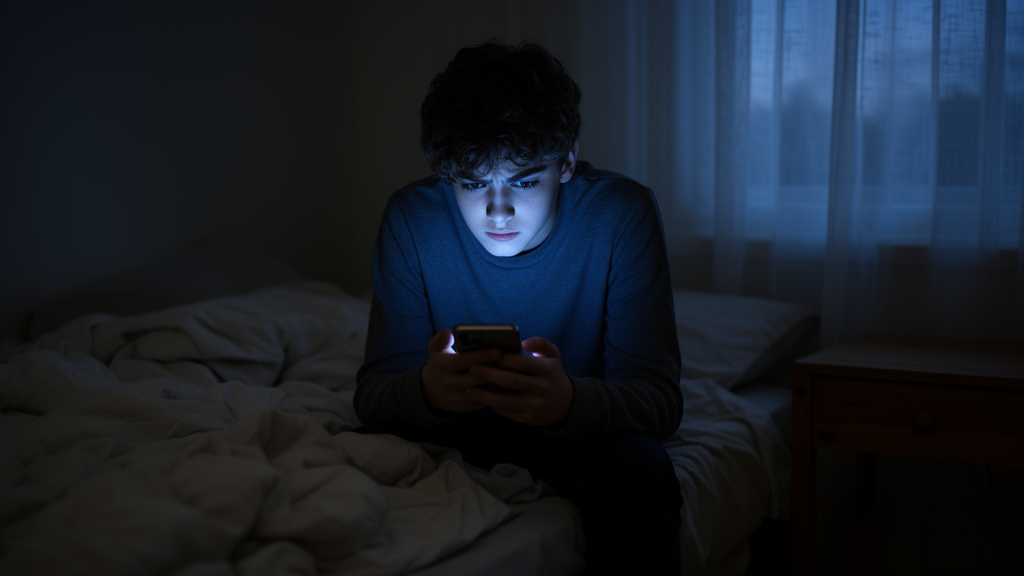
Greater problematic smartphone use symptom severity is associated with higher psychological distress among children and adolescents, according to a comparative study published in the Journal of Activity, Sedentary and Sleep Behaviors. Researchers observed that increased severity of problematic smartphone use corresponded with elevated symptoms of depression, anxiety, and stress across surveyed youth in Canada and Algeria. The findings indicate that problematic mobile device engagement tracks with adverse mental health indicators during youth development.
The investigation, conducted by Brahim Zeroual, Emma Cristini, Robin Chaverot, Michael Pereira da Silva, Noémie Carbonneau, Évelyne Touchette, Marie-Eve Mathieu, Caroline Fitzpatrick, and Roseane de Fátima Guimarães, addressed questions surrounding youth digital habits. While problematic smartphone use is increasingly linked to poorer mental health, the roles of movement behaviors and family sociodemographic factors remain unclear. The team therefore examined whether physical activity, sleep duration, total screen time, study location, or parental education moderated associations between smartphone use and distress symptoms.
To evaluate these relationships, the authors analyzed cross-sectional baseline data from the SMARTKids Québec study and its extension in Algeria. The combined cohort included 283 participants aged 6 to 17 years, with a mean age of 11.5 years and a standard deviation of 2.9 years. The sample comprised 153 participants recruited from Québec and 130 participants recruited from Algeria, enabling the researchers to examine whether observed behavioral and emotional associations differed across two distinct geographic settings.
Participants completed a sociodemographic questionnaire alongside standardized assessment instruments measuring device engagement and mental health. Problematic smartphone use was assessed with the Smartphone Addiction Scale–Short Version, or SAS-SV. Symptoms of depression, anxiety, and stress were measured using the 21-item Depression, Anxiety and Stress Scale, known as the DASS-21. The researchers also gathered participant data on movement behaviors, specifically tracking daily physical activity levels, nightly sleep duration, and overall daily screen time.
Descriptive results showed that nearly one in five participants scored above the SAS-SV threshold for problematic smartphone use. Linear regression models confirmed that greater problematic smartphone use symptom severity was significantly associated with greater psychological distress. This primary association yielded an unstandardized regression coefficient of 0.57 with a 95% confidence interval of 0.46 to 0.68, a standardized coefficient of .52, and a significance level of p < .001, reflecting higher depression, anxiety, and stress.
Moderation analyses indicated that physical activity moderated this relationship, showing a weaker association between smartphone use severity and psychological distress among active youth than inactive youth. The interaction model demonstrated a coefficient of 0.28, with a 95% confidence interval of 0.03 to 0.52 and p = .026. However, this interaction was attenuated and was no longer statistically significant after researchers adjusted for participant age, sex, and study location, resulting in an adjusted p-value of .126.
The team found no evidence of moderation by sleep duration, total screen time, study location, or parental education. The association between problematic smartphone use and mental health symptoms did not differ significantly between participants in Québec and Algeria, nor did it vary by parental educational attainment. However, the authors noted that these specific moderation analyses may have been statistically underpowered due to the overall sample size.
In their conclusions, the authors noted that greater problematic smartphone use severity is linked to poorer mental health, and this relationship may be weaker among physically active youth. Because these cross-sectional findings were sensitive to covariate adjustment, they do not establish causal relationships. The authors emphasized that these preliminary results warrant confirmation through larger longitudinal studies tracking youth movement behaviors and psychological outcomes over time.
Subject of Research: Associations between problematic smartphone use, movement behaviors, and youth mental health
Article Title: Associations between problematic smartphone use and mental health in children and adolescents: a comparative study in Québec (Canada) and Algeria
Article References: Zeroual, B., Cristini, E., Chaverot, R., Pereira da Silva, M., Carbonneau, N., Touchette, É., Mathieu, M.-E., Fitzpatrick, C., & Guimarães, R. D. F. (2026). Associations between problematic smartphone use and mental health in children and adolescents: a comparative study in Québec (Canada) and Algeria. Journal of Activity, Sedentary and Sleep Behaviors. https://doi.org/10.1186/s44167-026-00123-0
Image Credits: AI Generated
DOI: 10.1186/s44167-026-00123-0
Keywords: problematic smartphone use, youth mental health, psychological distress, depressive symptoms, anxiety symptoms, stress symptoms, physical activity, sleep duration, screen time, Smartphone Addiction Scale–Short Version, Depression Anxiety and Stress Scale, SMARTKids Québec study, Algeria, cross-sectional study, moderation analysis, parental education, adolescent health, movement behaviors
News Source: Glenn Wilkins. (November 16, 2026). Problematic Smartphone Use Linked to Youth Distress in Comparative Study. Scienmag.