• HOME
  • NEWS
  • EXPLORE
    • CAREER
      • Companies
      • Jobs
    • EVENTS
    • iGEM
      • News
      • Team
    • PHOTOS
    • VIDEO
    • WIKI
  • BLOG
  • COMMUNITY
    • FACEBOOK
    • INSTAGRAM
    • TWITTER
Monday, November 16, 2026
BIOENGINEER.ORG
No Result
View All Result
  • Login
  • HOME
  • NEWS
  • EXPLORE
    • CAREER
      • Companies
      • Jobs
        • Lecturer
        • PhD Studentship
        • Postdoc
        • Research Assistant
    • EVENTS
    • iGEM
      • News
      • Team
    • PHOTOS
    • VIDEO
    • WIKI
  • BLOG
  • COMMUNITY
    • FACEBOOK
    • INSTAGRAM
    • TWITTER
No Result
View All Result
Bioengineer.org
No Result
View All Result
Home NEWS Science News Chemistry

Bowl-Shaped Nanocarbon Successfully Integrates Aromatic Cyclopentadienide Ring into Geodesic Framework

by
November 16, 2026
in Chemistry
Reading Time: 2 mins read
0
Bowl-Shaped Nanocarbon Successfully Integrates Aromatic Cyclopentadienide Ring into Geodesic Framework

Bowl-Shaped Nanocarbon Successfully Integrates Aromatic Cyclopentadienide Ring into Geodesic Framework

Share on FacebookShare on TwitterShare on LinkedinShare on RedditShare on Telegram

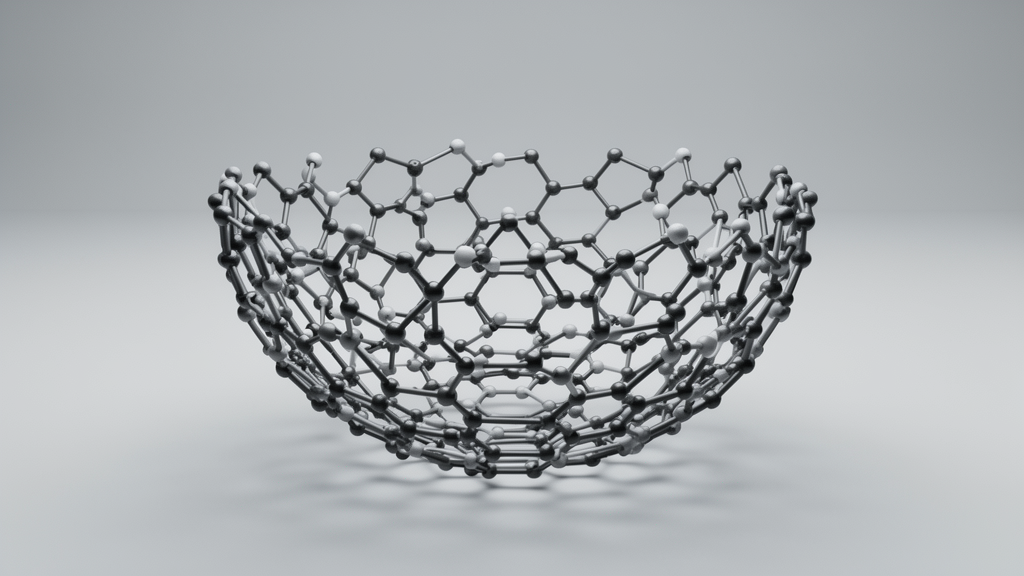
A research team has reported the synthesis and characterization of pentabenzocorannulenide (PBC−), a bowl-shaped nanocarbon that incorporates an anionic, aromatic cyclopentadienide (Cp−) ring. Within curved and non-planar π systems, five-membered carbon rings are ubiquitous structural elements, yet they typically remain neutral, non-aromatic, or anti-aromatic. The creation of PBC− successfully integrates an iconic, negatively charged cyclopentadienide ring directly into an extended, fully conjugated sp2 carbon network, establishing a distinct molecular architecture that expands current understanding of geodesic aromatic systems.

The synthetic pathway achieves the quantitative generation of the five-membered cyclopentadienide ring via aromatization-driven nucleophilic dealkylation, which proceeds through selective carbon–carbon (C–C) bond cleavage. Starting from a functionalized pentabenzocorannulene derivative (PBCR), this defunctionalization reaction drives the formation of the aromatic five-membered core by utilizing aromatization as a primary energetic driving force. The clean conversion demonstrates an effective approach for releasing alkyl substituents and generating anionic rings embedded inside strained, bowl-shaped polycyclic frameworks.

To establish the molecular geometry and electronic structure of PBC−, the investigators carried out single crystal X-ray diffraction experiments paired with quantum chemical analyses. These investigations detailed the compound’s electrostatic potential (ESP) maps and highest occupied molecular orbitals (HOMOs), providing insight into charge distribution and orbital localization across the bowl-shaped nanocarbon. The resulting empirical and theoretical data revealed an uncommon bonding pattern and electronic characteristics that distinctly differentiate PBC− from traditional geodesic polyarenes, including corannulene, fullerenes, and the end caps of carbon nanotubes.

In addition to its distinctive geometry, pentabenzocorannulenide displays exceptional physicochemical properties and chemical reactivity. Measurements and theoretical evaluations demonstrated that PBC− possesses an exceptionally strong conjugate acid. Furthermore, the compound participates in reversible covalent functionalization, allowing controlled chemical transformation and subsequent defunctionalization of the bowl-shaped core without disrupting its overarching conjugated framework.

The chemical versatility of the system is further illustrated by its coordination chemistry. The anionic five-membered ring of PBC− engages in η5-type metal complexation, directly coordinating transition metals through its aromatic cyclopentadienide center. By embedding the classic cyclopentadienide ligand into a rigid, non-planar sp2 carbon framework, the researchers demonstrated that bowl-shaped nanocarbons can serve as unconventional ligands and functional platforms, opening new avenues for exploring non-conventional π systems and curved carbon materials.

Subject of Research: Synthesis and characterization of pentabenzocorannulenide incorporating an aromatic cyclopentadienide ring

Article Title: A bowl-shaped nanocarbon incorporating an aromatic cyclopentadienide ring

Article References: Luo, N., Ye, C., Zhou, Z., Ou, Y., Zhu, Y., Jiang, L., Gu, J., Fan, C., Zhu, X., Hirose, T., & Wang, J. (2026). A bowl-shaped nanocarbon incorporating an aromatic cyclopentadienide ring. Nature Chemistry. https://doi.org/10.1038/s41557-026-02293-5

Image Credits: AI Generated

DOI: 10.1038/s41557-026-02293-5

Keywords: pentabenzocorannulenide, cyclopentadienide ring, bowl-shaped nanocarbons, non-planar pi systems, nucleophilic dealkylation, carbon-carbon bond cleavage, single crystal X-ray diffraction, quantum chemical analysis, corannulene, fullerenes, carbon nanotubes, geodesic polyarenes, covalent functionalization, metal complexation, sp2 carbon network, electrostatic potential maps, highest occupied molecular orbitals

News Source: Bethany Barker. (November 16, 2026). Bowl-Shaped Nanocarbon Successfully Integrates Aromatic Cyclopentadienide Ring into Geodesic Framework. Scienmag.


Tags: bowl-shaped nanocarbonscarbon nanotubescarbon-carbon bond cleavagecorannulenecovalent functionalizationcyclopentadienide ringelectrostatic potential mapsFullerenesgeodesic polyareneshighest occupied molecular orbitalsmetal complexationnon-planar pi systemsnucleophilic dealkylationpentabenzocorannulenidequantum chemical analysissingle-crystal X-ray diffractionsp2 carbon network
Share12Tweet7Share2ShareShareShare1

Related Posts

Black Shales Drive Trace Element Health Risks in Hanjiang Basin Fissure Water

Black Shales Drive Trace Element Health Risks in Hanjiang Basin Fissure Water

November 16, 2026
Molecular Simulations Reveal Minimal Stiffness Impact on Confined Polymer Interactions

Molecular Simulations Reveal Minimal Stiffness Impact on Confined Polymer Interactions

November 16, 2026

Spectrophotometric Methods Accurately Quantify Chlorpheniramine Maleate in Formulations Using Bromocresol Green

November 16, 2026

Phenazine Mediators Enable Selective Hydrogenation of Nitro Compounds at Biphasic Interfaces

November 16, 2026

POPULAR NEWS

  • Taxonomic Study Restores Tenumembrana fallax and Names Two Cockroach Species

    Taxonomic Study Restores Tenumembrana fallax and Names Two Cockroach Species

    29 shares
    Share 12 Tweet 7
  • Vertebrobasilar Dolichoectasia Linked to Cognitive Impairment After Acute Ischemic Stroke

    29 shares
    Share 12 Tweet 7
  • Healthcare Professionals Favor Hybrid Formats for Geriatric Education in Multinational Survey

    29 shares
    Share 12 Tweet 7
  • Three New Species of Wood-Decaying Fungi Identified in Chinese Forests

    29 shares
    Share 12 Tweet 7

About

We bring you the latest biotechnology news from best research centers and universities around the world. Check our website.

Follow us

Recent News

Postoperative Pulmonary Embolism After Rotator Cuff Repair Mimics Acute Coronary Syndrome

ZnO-Based Sensors Advance Hydrogen Peroxide Detection Through Material and Field Engineering

Limiting Lymph Node Dissection May Not Be Inherently Safer in Palliative Gastrectomy

Subscribe to Blog via Email

Enter your email address to subscribe to this blog and receive notifications of new posts by email.

Join 88 other subscribers
  • Contact Us

Bioengineer.org © Copyright 2023 All Rights Reserved.

Welcome Back!

Login to your account below

Forgotten Password?

Retrieve your password

Please enter your username or email address to reset your password.

Log In
No Result
View All Result
  • Homepages
    • Home Page 1
    • Home Page 2
  • News
  • National
  • Business
  • Health
  • Lifestyle
  • Science

Bioengineer.org © Copyright 2023 All Rights Reserved.