A newly published theoretical analysis in Frontiers in Ethology presents an integrative conceptual framework connecting psychological and ethological models to examine how relational processes unfold between humans and horses in therapeutic and clinical environments. Developed through a scholarly collaboration between Giulia Simonetti, Silvia Giallorenzo, and Emily Kieson, the paper places two independently formulated theories into active dialogue: Simonetti’s clinical constructivist model of interspecific interpretation and Kieson’s comparative Interspecies Relational Theory. The authors emphasize that while equine-assisted services and animal-assisted interventions have historically documented psychological benefits for human participants, research has remained predominantly anthropocentric by evaluating human outcomes while understudying the equine perspective, the animal’s subjective experience, and the underlying relational mechanisms that drive therapeutic change. By juxtaposing psychological mechanisms such as attachment, affect regulation, and symbolic mediation with species-specific ethology, learning history, and animal welfare science, the authors seek to explain human-horse interactions as an emergent, bidirectional, and intersubjective process.
The authors contextualize their framework within the broader history of human-animal interaction research, which has traditionally relied on attachment theory to explain how emotional bonds develop between humans and animals. Originating in the interdisciplinary work of John Bowlby and informed by early ethological observations, attachment theory conceptualizes an innate behavioral system that drives individuals to seek proximity to protective figures during periods of distress, vulnerability, or uncertainty. Later expansions demonstrated that meaningful bonds can extend beyond parent-child dyads into hierarchical relational networks, leading researchers to examine whether companion and therapy animals can occupy attachment-relevant roles. However, the authors caution that applying attachment constructs directly to horses without accounting for their evolutionary biology and social organization risks introducing anthropomorphic assumptions. Unlike dogs, whose evolutionary history and selective breeding fostered traits closely aligned with human caregiving systems, horses possess an evolved social architecture characterized by group living, mutual vigilance, social tolerance, and flexible affiliative networks that do not rely on hierarchical dependence.
To maintain conceptual precision, the paper incorporates interpersonal motivational systems, which differentiate attachment from other fundamental systems such as caregiving, affiliation, cooperation, competition, sexuality, and play. The authors emphasize that not every positive interaction between a human and a horse constitutes an attachment bond. In domestic environments, horses frequently experience early weaning, isolation from multi-generational family groups, and management routines centered on individual seclusion, which can disrupt natural bonding trajectories and alter developmental expectations. Furthermore, structured training and intervention environments frequently place the horse in a subordinated, low-agency position governed by task demands and behavioral shaping. In such settings, behaviors like following a handler, approaching, maintaining proximity, or accepting physical contact may reflect conditioned compliance, social tolerance, or habituation rather than genuine socioemotional bonding or attachment-like proximity seeking.
Simonetti’s contribution provides a three-level heuristic model designed to interpret increasing degrees of relational complexity in interspecific bonds without establishing a rigid hierarchy of value. Grounded in Vittorio Guidano’s cognitive constructivist perspective, relational psychotherapy, and interpersonal neurobiology, the model posits that meaning-making and affect regulation emerge within continuous relational encounters rather than in isolated individuals. At Level 1, the Basic or Relational level, interaction is anchored in a shared neurobiological substrate that supports fundamental survival needs, including care, feeding, protection, and the development of basic trust and communicative exchanges. Here, the animal is recognized as an active relational partner possessing neurobiological assets that identify humans as sources of security and sustenance, establishing the essential neurocognitive abilities required for ongoing relational engagement.
As relational capacities expand, the interaction can progress to Level 2, designated as the Affective or Attachment level. At this stage, interactions become relationship-specific and emotionally salient, characterized by bidirectional emotional regulation, reciprocal affective responsiveness, and attachment-like dynamics where the presence or absence of the partner meaningfully alters internal emotional states. Finally, Level 3 represents the Symbolic or Ethical level, wherein the interspecific bond acquires psychological, narrative, and ethical significance through processes associated with interpersonal neuroplasticity. At this advanced level, the animal becomes integrated into the human autobiographical narrative, supporting identity reorganization and fostering broader ecological awareness of interdependence. Simonetti stresses that movement between these levels does not follow a mandatory sequence but emerges through repeated relational experiences characterized by predictability, safety, and mutual attunement.
Complementing Simonetti’s conceptual structure, Kieson’s Interspecies Relational Theory details the interactional and behavioral mechanics of trust formation through a three-stage comparative framework that draws upon organizational trust models and a heuristic adaptation of motivational hierarchies. Stage 1 focuses on physical safety, initial engagement, and communication development, aligning with calculus-based and strategic trust where both partners conduct mutual threat assessments to verify that interaction carries no immediate danger. Once physical safety is confirmed, the dyad can progress to Stage 2, which involves psychological safety, transactional exchanges, and the critical processes of rupture and repair. At this stage, corresponding to knowledge-based and working trust, both human and animal refine their communication, tolerate moderate stressors, and rebuild relational stability after communicative disruptions, allowing affective states to play a greater role in guiding behavior.
In Kieson’s Stage 3, the dyad achieves a deeper relationship and friendship characterized by affect-based trust, wherein both partners accept emotional and psychological vulnerability and actively seek each other out as sources of mutual comfort, social buffering, and safety during times of stress. At this stage, transactional expectations dissolve, and economic models of exchange cease to apply. The authors note that while Simonetti’s framework articulates the psychological organization and symbolic integration of relational processes, Kieson’s model provides granular interactional specificity by identifying observable behaviors—such as voluntary approach, withdrawal, communicative calibration, and rupture resolution—through which relational depth and authentic trust are established.
The paper integrates these theoretical models into a graduated continuum of interspecies bonding governed by three primary dimensions: species-specific social architecture, the trajectory and selective history of domestication, and the degree of spatial proximity and interactional freedom permitted within the setting. The authors argue that domestication must be understood as a multi-generational evolutionary process distinct from individual taming, training, or habituation. Because equine domestication historically prioritized functional traits such as traction, transportation, warfare, and sport rather than human-directed socio-affiliative behavior, modern horses retain their species-typical behavioral repertoire, flight responses, and proximity-based social strategies. Consequently, human-horse relationships emerge at the dynamic intersection of evolved equine social biology, human selection, individual learning history, and immediate environmental constraints.
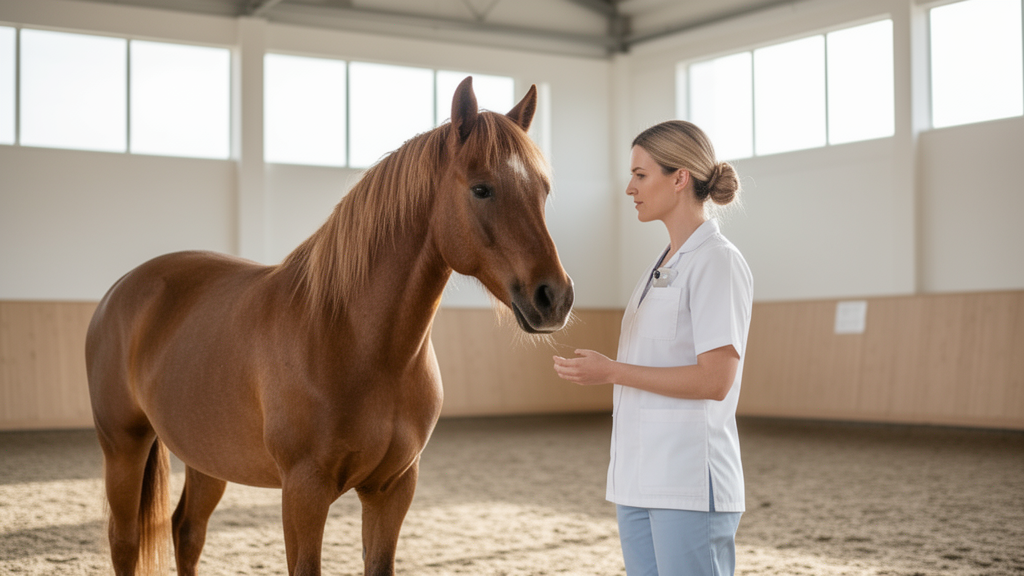
A critical focus of the authors’ synthesis is the essential role of animal agency and interactional freedom during clinical and therapeutic sessions. They argue that physical proximity serves as a primary behavioral indicator of safety and comfort for both horses and humans when both parties possess the agency to choose. When interventions rely heavily on physical restraint, halters, lead ropes, or rigid operant behavioral shaping, equine agency is restricted, forcing proximity and movement while elevating the risk of instrumentalizing the animal. Such constraints can distort authentic communicative signals, mask avoidance or stress, and restrict human participants from experiencing relational development beyond transactional compliance. Conversely, allowing opportunities for voluntary approach, unforced proximity, voluntary withdrawal, and self-directed re-engagement provides vital diagnostic information regarding the animal’s comfort while fostering intrinsic motivation, shared regulation, and authentic attunement.
The authors contextualize these agency considerations within existing professional and regulatory frameworks, referencing the Italian National Guidelines for Animal-Assisted Interventions. In this regulatory environment, interventions operate within structured multidisciplinary clinical projects that integrate veterinary assessments of animal health, behavioral suitability, and ongoing welfare safeguards. The authors observe that structured clinical designs do not inherently negate equine agency; rather, authentic relational work depends on whether the intervention provides sufficient flexibility for the animal’s behavioral communication, individual preferences, and willingness to participate to be recognized and respected by the multidisciplinary team. In Simonetti’s Symbolic-Regulatory Model, the horse functions within a therapeutic triangle comprising client, animal, and professional, acting as a living symbolic mediator whose autonomous affective states resonate with those of the human, enabling bottom-up emotional regulation that is subsequently integrated into personal meaning structures.
Scientifically, the framework shifts the investigative paradigm from asking whether equine-assisted services produce positive human outcomes to investigating the specific relational mechanisms and ecological conditions that generate those outcomes. The authors outline several falsifiable predictions to guide future empirical research: first, sessions granting horses greater freedom for voluntary approach, withdrawal, and re-engagement will yield more behavioral markers of affiliation and fewer stress indicators than constrained sessions; second, repeated interactions featuring predictable communication and successful rupture repair will longitudinally increase voluntary proximity and partner-specific recognition; third, relational co-regulation will manifest as measurable behavioral and physiological synchrony between human and horse; and fourth, compromised equine welfare or elevated animal stress will directly correlate with reduced voluntary engagement and diminished human psychosocial outcomes.
In their concluding reflections, the authors emphasize that animal welfare must be recognized as an active clinical variable rather than merely an ethical consideration in equine-assisted interventions. A horse that is chronically stressed, behaviorally restricted, or hyperadapted to human demands cannot function as an authentic relational partner, thereby compromising the therapeutic integrity of experiential interventions. To advance the field, the authors advocate for interdisciplinary research combining ethological behavioral observations, physiological monitoring of both human and equine participants, longitudinal dyadic tracking, and validated welfare indicators. By grounding clinical equine interventions in both human psychological theory and rigorous equine ethology, the authors provide a conceptual foundation that respects the subjective experiences and mutual well-being of both species within the therapeutic encounter.
Subject of Research: Integrative theoretical framework for human-horse relational dynamics in equine-assisted services
Article Title: Dialogue on combining psychological perspectives and applications of theories on interspecies relationships
Article References: Simonetti, G., Giallorenzo, S., & Kieson, E. (2026). Dialogue on combining psychological perspectives and applications of theories on interspecies relationships. Frontiers in Ethology, 5, 1865995. https://doi.org/10.3389/fetho.2026.1865995
Image Credits: AI Generated
DOI: 10.3389/fetho.2026.1865995
Keywords: Equine-assisted services, Animal-assisted interventions, Attachment theory, Interspecies communication, Horse-human relationship, Equine welfare, Cognitive constructivism, Relational neuroscience, Emotional regulation, Co-regulation, Interspecies Relational Theory, Symbolic-Regulatory Model, Animal agency, Social architecture, Ethology, Comparative psychology, Intersubjectivity, Trust development
News Source: William Thompson. (November 16, 2026). Theoretical Framework Links Interspecies Relational Dynamics to Equine Intervention Outcomes. Scienmag.