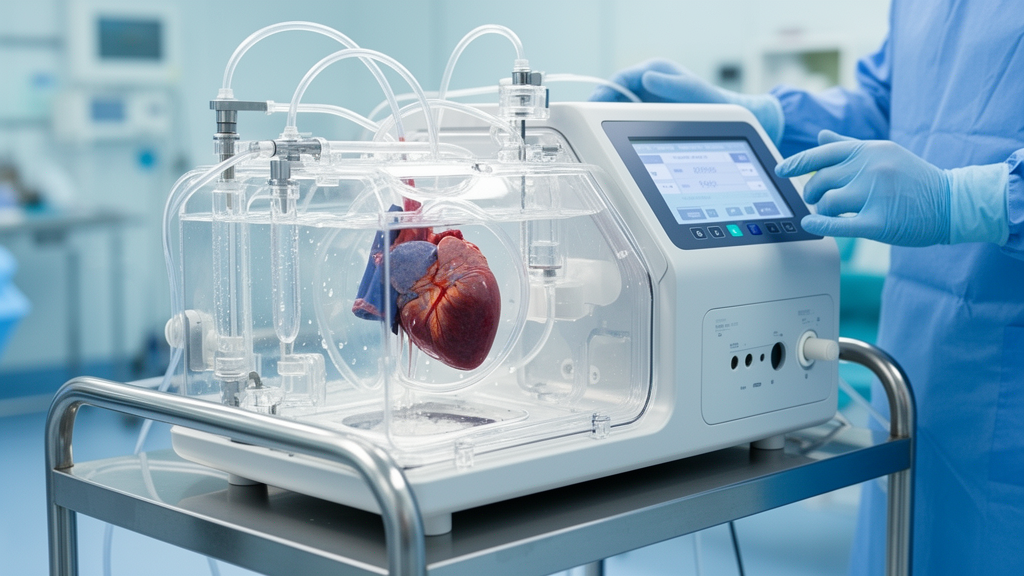
In controlled donation after circulatory death kidney transplantation, hypothermic machine perfusion significantly reduces delayed graft function compared to static cold storage, yet this early functional preservation does not confer a measurable advantage in five-year death-censored graft survival. This central finding emerges from a binational cohort study evaluating 44,552 controlled circulatory-death kidney recipients alongside an external reference population of 180,898 brain-dead donors across national registries in the United States and Switzerland. By applying propensity score matching to balance baseline donor and recipient clinical characteristics, researchers discovered that static cold storage delivers five-year graft survival rates fully equivalent to mechanical perfusion. Furthermore, both preservation strategies achieved long-term survival comparable to donation after brain death, challenging assumptions regarding mechanical perfusion requirements for ensuring durable long-term allograft longevity.
The clinical imperative driving organ preservation stems from chronic kidney disease, which affects over 800 million individuals globally and frequently progresses toward kidney failure requiring dialysis or transplantation. Although renal transplantation confers a survival benefit over long-term dialysis, a persistent donor shortage prolongs waiting times and increases waitlist mortality. To expand the donor pool, transplant programs have increasingly utilized kidneys recovered from controlled donation after circulatory death. Unlike conventional donation after brain death where organs remain perfused until surgical flushing, circulatory-death kidneys endure obligatory warm ischemia during circulatory arrest prior to organ procurement. This unavoidable warm ischemic insult renders circulatory-death kidneys uniquely vulnerable to severe ischemia-reperfusion injury, escalating the clinical stakes surrounding ex vivo organ preservation methodologies designed to protect graft viability.
To mitigate preservation injury, machine perfusion has established a longer clinical track record in kidney transplantation than in any other solid organ, dominated by hypothermic machine perfusion. By continuously circulating preservation fluid at cold temperatures, hypothermic perfusion aims to maintain metabolism, reduce cellular damage, and curb delayed graft function. Clinical adoption was originally driven by the paired-kidney Machine Preservation Trial, which demonstrated reduced delayed graft function and improved one-year survival versus static cold storage, with ten-year follow-up confirming persistent survival advantages in expanded-criteria grafts. However, subsequent trials evaluating end-ischemic perfusion applied after transport, including oxygenated hypothermic perfusion or brief normothermic perfusion, failed to reproduce these protective benefits in circulatory-death grafts. Consequently, whether machine perfusion confers superior long-term survival under real-world practice conditions remained unresolved.
To evaluate this question across large populations, researchers analyzed de-identified records from the United Network for Organ Sharing, spanning October 1987 to August 2023, and the Swiss Transplant Cohort Study, spanning January 2008 to January 2025. Approved by the Cantonal Ethics Committee Zurich and conducted following the Declaration of Helsinki, the investigation restricted eligibility to adult recipients receiving a first deceased-donor kidney transplant. All donors were Maastricht category III controlled circulatory-death donors, as uncontrolled circulatory donation is not routinely practiced in either country. In total, 44,552 controlled circulatory-death recipients were analyzed, including 34,739 preserved with hypothermic machine perfusion and 9,813 preserved with static cold storage. These cohorts were contextualized against 180,898 donation after brain death controls serving as a real-world clinical benchmark.
To cleanly isolate preservation effects, all cases utilizing normothermic regional perfusion were excluded from the Swiss cohort, while remaining exceptionally rare across the United States study period. Crucially, baseline data revealed significant confounding by indication, as clinicians preferentially assigned machine perfusion to higher-risk donor organs. Donors in the perfusion cohort were older on average (41 ± 14 versus 36 ± 16 years; P < 0.001) and more frequently presented with arterial hypertension (30% versus 22%; P < 0.001) and diabetes mellitus (8.5% versus 6.2%; P < 0.001). Perfused kidneys also exhibited higher mean terminal creatinine (1.03 versus 0.89 mg/dL) and longer cold ischemia times (21 versus 16 hours), while mean functional warm ischemia times remained identical at 20 minutes in both preservation arms.
To neutralize selection bias and balance baseline prognosis, researchers constructed a 1:1 nearest-neighbor propensity-score-matched cohort without replacement using a caliper of 0.2 standard deviations of the logit score. The logistic regression model matched cases across nine donor and recipient covariates: recipient age, dialysis vintage, donor age, donor terminal creatinine, donor hypertension, donor diabetes, HLA mismatch score, cold ischemia time, and functional warm ischemia time. Robust balance was achieved across all covariates, with absolute standardized mean differences remaining below 0.1. The final matched primary population encompassed 4,986 recipients, comprising 2,493 machine perfusion cases and 2,493 cold storage controls. In this matched cohort, donor age averaged exactly 34 ± 15 years in both groups, warm ischemia averaged 21 minutes, and dialysis vintage averaged 4.4 years.
Survival analysis of the primary endpoint, five-year death-censored graft survival, demonstrated that hypothermic machine perfusion provided no survival advantage over static cold storage. In unadjusted comparisons, five-year death-censored survival appeared nominally lower with machine perfusion at 86.2% (99% CI, 85.8% to 86.7%) versus 87.9% (99% CI, 87.0% to 88.7%) for cold storage, producing an unadjusted hazard ratio of 1.12 (99% CI, 1.03 to 1.22; P = 0.001). However, multivariable Cox regression adjusting for donor comorbidity confirmed that preservation modality was not independently associated with graft survival (hazard ratio 0.96; 99% CI, 0.85 to 1.08; P = 0.40). Within the balanced matched cohort, five-year death-censored survival was 84.8% (99% CI, 83.3% to 86.2%) for machine perfusion versus 87.4% (99% CI, 86.1% to 88.8%) for static cold storage, yielding a hazard ratio of 1.08 (99% CI, 0.96 to 1.21; P = 0.19).
Benchmarking circulatory-death outcomes against the 180,898 brain-dead donor controls demonstrated broader real-world clinical parity. Propensity-matched analyses confirmed that both circulatory-death preservation methods achieved five-year death-censored graft survival equivalent to brain-dead transplants. Machine-perfused circulatory-death kidneys achieved a matched five-year graft survival rate of 85.8% (99% CI, 85.3% to 86.4%) versus 85.2% (99% CI, 84.7% to 85.7%) for brain-dead controls (hazard ratio 0.99; 99% CI, 0.95 to 1.03; P = 0.72). Static cold storage kidneys achieved 87.7% (99% CI, 86.8% to 88.7%) versus 87.3% (99% CI, 86.4% to 88.1%) for brain-dead controls (hazard ratio 1.00; 99% CI, 0.92 to 1.09; P = 0.90). Additionally, matched five-year patient survival favoured machine perfusion slightly at 82.4% compared to 81.2% for cold storage (hazard ratio 0.92; 99% CI, 0.86 to 0.97; P = 0.005).
Despite equivalence in long-term graft survival, machine perfusion provided substantial protection against delayed graft function, defined as dialysis within seven days of transplantation. In the matched cohort, delayed graft function occurred in 35.7% of machine-perfused recipients compared to 44.9% under cold storage (P < 0.001), though both exceeded the 24% baseline in brain-dead controls. Primary non-function was rare and comparable between groups, recorded at 1.3% for machine perfusion and 1.2% for cold storage. One-year acute rejection requiring medical intervention occurred in 9.9% of perfused and 9.5% of cold-stored recipients, mirroring the 9.8% rate observed in brain-dead controls. At twelve months, estimated glomerular filtration rates were slightly higher in the cold storage cohort (62.7 ± 22.2 versus 60.5 ± 21.1 mL/min/1.73 m2; P = 0.002), closely aligning with the brain-dead benchmark of 60.4 ± 22.0 mL/min/1.73 m2.
Because the pooled dataset primarily reflected United States practices from UNOS, researchers conducted a dedicated subgroup evaluation of the 245 Swiss circulatory-death recipients. Reflecting European clinical patterns, Swiss donors were older, resulting in higher baseline delayed graft function rates overall. Within this subcohort, hypothermic machine perfusion retained significant early efficacy, reducing delayed graft function to 55% compared to 69% with cold storage (P = 0.0051). Crucially, five-year death-censored graft survival remained high and statistically comparable between preservation methods (89.8% with machine perfusion versus 86.3% with cold storage; hazard ratio 0.86; 99% CI, 0.36 to 2.02; P = 0.70). Five-year patient survival also demonstrated equivalence at 87.8% versus 89.5% (hazard ratio 1.23; 99% CI, 0.55 to 2.74; P = 0.60), confirming that static cold storage remains highly effective when managing older circulatory-death donor kidneys.
The divergence between early functional recovery and long-term graft survival provides notable biological insights into post-transplant physiology. Although acute injury in native kidneys frequently accelerates fibrotic remodeling and chronic disease progression, registry findings demonstrate that early delayed graft function in controlled circulatory-death allografts does not impair five-year survival trajectories. The researchers describe this recovery as functional catch-up, wherein cold-stored kidneys experience higher initial delayed graft function but subsequently recover stable excretory function, matching the long-term survival and twelve-month filtration rates observed in machine-perfused organs. Furthermore, the absence of elevated acute rejection among cold-stored grafts indicates that greater initial ischemic insult does not inevitably stimulate alloimmune activation. Nonetheless, upfront perfusion offers clinical and economic benefits, because reducing delayed graft function decreases post-transplant dialysis requirements, shortens initial hospital stays, and reduces immediate post-operative healthcare expenditures.
Several methodological limitations contextualize these findings, including retrospective registry designs, unmeasured confounding such as surgeon experience or anatomical variance, and lack of granularity regarding specific pump devices or oxygenation. Critically, registry entries could not distinguish continuous machine perfusion initiated at donor hospitals from end-ischemic perfusion applied after transport. Because five-year outcomes derived from earlier transplants, contemporary shifts toward continuous oxygenated perfusion remain underrepresented. Nonetheless, parity between controlled circulatory-death allografts and brain-dead benchmarks strongly supports expanding donor acceptance criteria to include older donors. Rather than discarding organs over ischemic concerns, transplant programs can safely expand circulatory-death utilization by optimizing allocation frameworks like the Eurotransplant Senior Program, restricting total ischemia time below 12 to 15 hours, and applying continuous hypothermic machine perfusion whenever logistically feasible to maximize graft utility and decrease waitlist mortality.
Subject of Research: Long-term graft survival and delayed graft function comparing machine perfusion with static cold storage in kidney transplantation
Article Title: Five-year outcomes of machine perfusion versus static cold storage in controlled donation after circulatory death kidney transplantation: a binational cohort study
Article References: Papageorgiou, A. K., Kalt, F., Rössler, F., Schneider, M., Jonas, J. P., Hübel, K., Dusan, H., Mesnard, B., Cvijetic, M., Branchereau, J., Abdurakhmonov, S., Ismailov, S., Matkarimov, Z., Akhmedov, A., Frick, L., Storni, F., Gloor, S., Pawlik, T. M., Hoessly, D., … Eshmuminov, D. (2026). Five-year outcomes of machine perfusion versus static cold storage in controlled donation after circulatory death kidney transplantation: a binational cohort study. Transplant International, 39, Article 17360. https://doi.org/10.3389/ti.2026.17360
Image Credits: AI Generated
Keywords: kidney transplantation, hypothermic machine perfusion, static cold storage, donation after circulatory death, delayed graft function, death-censored graft survival, donation after brain death, United Network for Organ Sharing, Swiss Transplant Cohort Study, propensity score matching, cold ischemia time, functional warm ischemia time, primary nonfunction, acute rejection, estimated glomerular filtration rate, expanded criteria donors, graft failure, organ preservation
News Source: Ophelia Keating. (November 16, 2026). Machine Perfusion Cuts Early Kidney Graft Complications Without Improving Five-Year Survival. Scienmag.