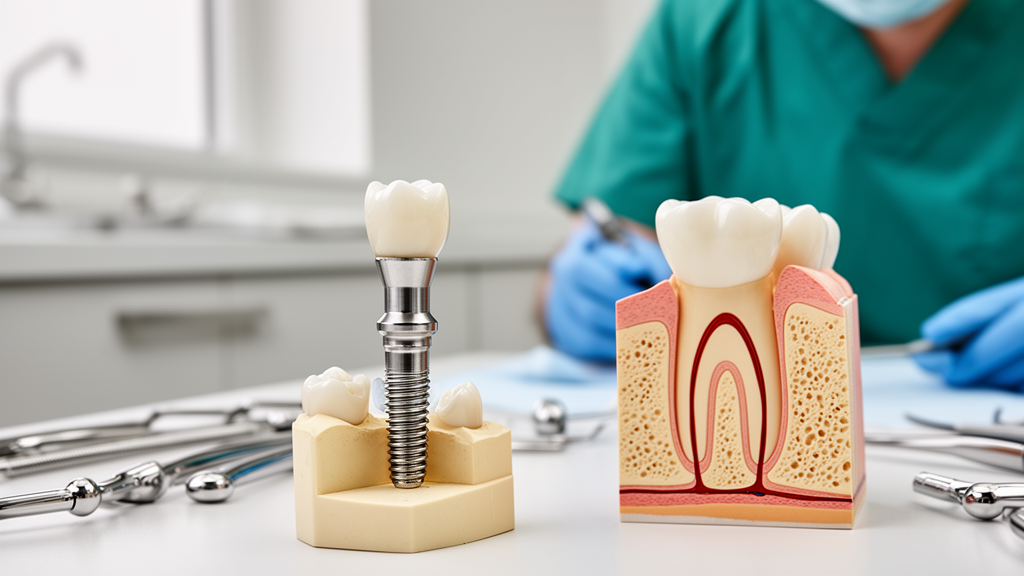
An interpretable non-linear machine learning model using the XGBoost algorithm successfully classified the cross-sectional severity of peri-implant diseases using multi-dimensional prosthodontic configurations alone, according to a retrospective study published in Frontiers in Medicine. Evaluating model performance on an internal hold-out validation set of dental implants, the researchers found that the XGBoost ensemble achieved the highest discriminative capability among tested approaches, reaching an overall accuracy of 78.9 percent and a macro-averaged area under the receiver operating characteristic curve of 0.821, with a 95 percent confidence interval spanning from 0.760 to 0.882. The investigation specifically demonstrated that structural and prosthodontic parameters can assist in objective disease stage classification without requiring input from direct inflammatory indicators.
The primary objective of the research team was to establish whether multi-dimensional prosthodontic configurations could objectively assist in determining disease severity at a single cross-sectional time point. Because the accurate prediction of peri-implant disease severity is vital for enabling timely clinical interventions and securing favorable long-term outcomes, the investigators sought to construct an automated diagnostic framework that does not rely on traditional clinical measures. To deliberately prevent label leakage and avoid tautological reasoning during algorithmic training, direct diagnostic criteria—specifically Probing Depth and Bleeding Index—were strictly excluded from the predictor matrix. By eliminating these direct signs of inflammation, the resulting predictive system relied solely on anatomical, demographic, and prosthodontic attributes.
The study cohort comprised a retrospective dataset of 300 dental implants evaluated across 285 patients. The internal training set consisted of 210 implants obtained from 200 patients, while the independent internal hold-out validation set included 90 implants from the remaining 85 patients. The multi-dimensional dataset encompassed patient demographics, baseline implant characteristics, and detailed prosthodontic features, including Margin Fit, Screw Access Space, prosthesis type, prosthesis material, and the specific anatomical position of each implant.
To rigorously evaluate machine learning architectures against conventional statistical modeling, the researchers developed and validated four distinct computational algorithms: multivariable Ordinal Logistic Regression, Support Vector Machines, Random Forest, and XGBoost. In addition to these models, the team constructed a clinical nomogram. When benchmarked against one another, the multivariable ordinal logistic regression model yielded a diagnostic area under the curve of 0.774.
To address the interpretability of the non-linear models and uncover how specific prosthodontic features influenced stage classifications, the investigators implemented SHapley Additive exPlanations, commonly known as SHAP analysis. This interpretability framework revealed that Margin Fit, Screw Access Space, and prosthesis material emerged as the most influential variables associated with peri-implant disease stage classification.
The clinical utility and practical diagnostic value of the machine learning system were formally determined through Decision Curve Analysis. This evaluation demonstrated that the model generated a positive clinical net benefit across a broad range of decision threshold probabilities spanning from 15 percent to 65 percent.
In their concluding remarks, the authors emphasized the explicit boundaries of their findings, noting that the framework should be strictly framed as an automated diagnostic aid in cross-sectional settings rather than as a longitudinal prognostic system.
Subject of Research: Machine learning classification of peri-implant disease severity using prosthodontic features
Article Title: Integrating multi-dimensional prosthodontic features into an interpretable XGBoost framework for cross-sectional diagnostic classification of peri-implant diseases
Article References: Li, G., Xu, N., Duan, Z., & Zhou, G. (2026). Integrating multi-dimensional prosthodontic features into an interpretable XGBoost framework for cross-sectional diagnostic classification of peri-implant diseases. Frontiers in Medicine, 13, Article 1883041. https://doi.org/10.3389/fmed.2026.1883041
Image Credits: AI Generated
DOI: 10.3389/fmed.2026.1883041
Keywords: peri-implant disease, peri-implantitis, prosthodontics, XGBoost, machine learning, margin fit, screw access space, prosthesis material, prosthesis type, implant position, decision curve analysis, SHAP analysis, ordinal logistic regression, random forest, support vector machines, cross-sectional classification, label leakage prevention
News Source: Ophelia Keating. (November 15, 2026). XGBoost Model Classifies Peri-Implant Disease Severity Using Prosthodontic Features Without Inflammatory Indices. Scienmag.