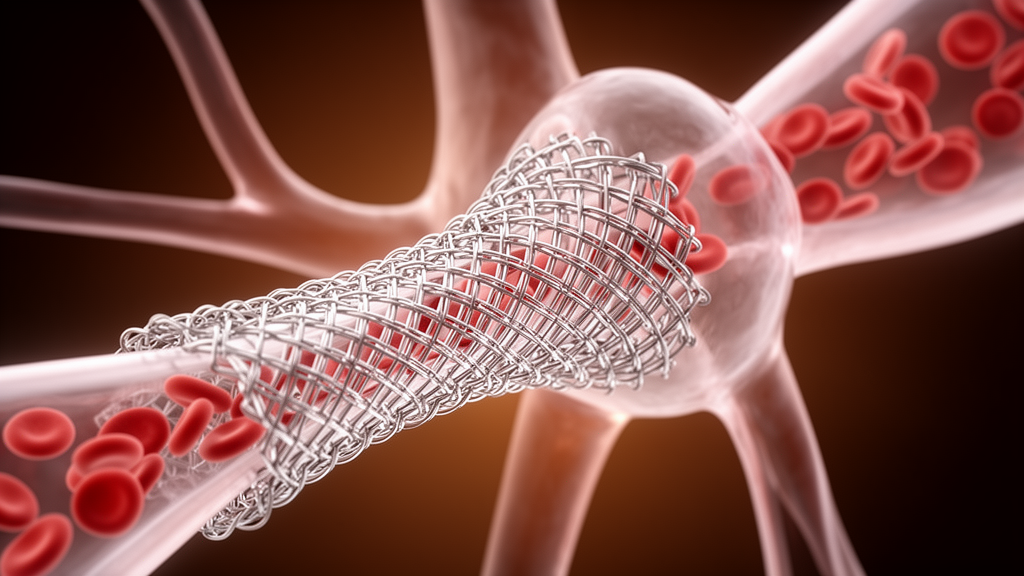
A retrospective dual-center clinical investigation evaluating endovascular flow diverters for unruptured middle cerebral artery bifurcation aneurysms demonstrated complete aneurysm obliteration in 55.2 percent of patients at six-month angiographic follow-up, while maintaining an overall procedure-related complication rate of 3.4 percent and zero mortality. The study, conducted across two hospital centers in Henan Province, China, analyzed outcomes in 29 consecutive patients treated between January 2021 and December 2024. Neurointerventional clinicians observed that all flow-diverting stents were successfully deployed without any immediate technical failures, acute in-stent thrombosis, intraoperative hemorrhages, or ischemic events, providing clinical evidence regarding the viability of flow diversion in an anatomically complex cerebrovascular location.
Intracranial aneurysms represent a relatively common form of cerebrovascular disease, with an estimated prevalence ranging between 2.3 and 3.2 percent within the general adult population. While the majority of intracranial aneurysms remain unruptured and silent throughout a patient’s lifetime, spontaneous rupture triggers subarachnoid hemorrhage, a catastrophic event associated with an estimated annual incidence of approximately 9 cases per 100,000 individuals and mortality rates reaching as high as 67 percent. The middle cerebral artery bifurcates in an area subject to intense hemodynamic stress, as the middle cerebral artery system carries roughly 80 percent of hemispheric cerebral blood flow. Because structural compromise and rupture at this bifurcation result in substantial rates of permanent neurological morbidity or death, preventive treatment strategies remain critical for lesions identified prior to rupture.
Historically, surgical clipping via open craniotomy has served as the conventional primary standard of care for middle cerebral artery bifurcation aneurysms because of its superior long-term anatomical occlusion durability and exceptionally low recurrence rates compared to traditional endovascular techniques. However, open craniotomy inevitably involves substantial mechanical trauma, prolonged inpatient hospitalization, and risks inherent to intracranial surgical exposure. The introduction of endovascular flow diverters offered a less invasive paradigm through vessel wall reconstruction rather than intrasaccular packing.
To rigorously examine this technique, the participating institutions—The Third People’s Hospital of Henan Province and The First Affiliated Hospital of Zhengzhou University—screened 55 patients presenting with middle cerebral artery bifurcation aneurysms. Patients were excluded if they had ruptured lesions, had received prior aneurysm interventions, possessed fusiform morphology, underwent adjunctive coiling alongside flow diversion, or lacked systematic follow-up imaging. The resulting final analytical cohort comprised 29 patients, consisting of 22 female patients and 7 male patients with a mean age of 57.3 years. Preoperatively, functional baseline performance remained favorable across the entire cohort, with 16 patients presenting with a modified Rankin Scale score of 0, 11 patients presenting with a score of 1, and 2 patients presenting with a score of 2.
Endovascular operations were performed through a standardized transfemoral approach utilizing three-dimensional rotational digital subtraction angiography to delineate parent vessel and aneurysm geometry. Interventional operators advanced a triaxial system across the aneurysm neck to deploy one of three specialized flow-diverting devices: the Pipeline embolization device in 17 cases, the Tubridge flow diverter in 9 cases, or the FRED device in 3 cases. Device diameters ranged from 2.5 to 4.5 millimeters, with lengths spanning 15 to 42 millimeters, and the ratio of stent diameter to mean parent artery diameter ranged between 0.76 and 1.52. All patients underwent structured perioperative dual antiplatelet therapy consisting of daily aspirin and clopidogrel initiated at least five days prior to surgery, supplemented by systemic unfractionated heparin administered during the procedure.
Immediate post-procedural digital subtraction angiography confirmed patent parent vessels and initial O’Kelly-Marotta Grade A filling, indicating persisting contrast transit into the aneurysm sac across all 29 treated patients directly following stent deployment. Importantly, no patient experienced new or worsened neurological deficits during the perioperative hospitalization interval prior to discharge. Dual antiplatelet administration was continued for six months postoperatively, after which single antiplatelet coverage with clopidogrel was continued, and clinical follow-up was systematically executed through outpatient clinical examinations and structured telephone evaluations spanning a total duration of 6 to 43.2 months, with a median follow-up of 7.2 months.
Formal six-month digital subtraction angiography evaluated long-term anatomical occlusion according to the established O’Kelly-Marotta grading scale, independently reviewed by two blinded neurointerventionalists who demonstrated high interobserver agreement. The evaluations revealed that 16 patients, representing 55.2 percent of the cohort, attained Grade D complete occlusion with zero contrast filling remaining inside the aneurysm sac. Partial residual neck filling designated as Grade C was documented in 7 patients, representing 24.1 percent. Residual partial sac filling classified as Grade B occurred in 5 patients, representing 17.3 percent, while persistent substantial filling classified as Grade A persisted in only 1 patient, representing 3.4 percent of the cohort.
Safety surveillance over the clinical follow-up window identified in-stent stenosis in 3 patients, yielding an incidence rate of 10.3 percent. Specifically, one patient developed moderate proximal stenosis, one developed moderate mid-stent narrowing, and one developed diffuse severe narrowing associated with delayed vertigo and transient left limb weakness occurring more than two months following device implantation. All three cases of in-stent stenosis were effectively managed through endovascular balloon angioplasty, resulting in full resolution of clinical symptoms. Consequently, the symptomatic procedure-related morbidity rate stood at 3.4 percent, with overall functional recovery remaining excellent at final evaluation, where 28 patients exhibited a modified Rankin Scale score of 0 and one patient maintained a score of 1.
Statistical modeling indicated that aneurysm neck width served as an influential anatomical variable governing the likelihood of complete angiographic obliteration. Nonparametric Kruskal-Wallis testing confirmed significant differences in baseline neck dimensions across resulting occlusion grades, while ordinal logistic regression indicated that each 1-millimeter increase in aneurysm neck diameter reduced the odds of achieving a higher degree of occlusion by 61.4 percent. Stratified empirical calculations showed complete Grade D occlusion rates exceeding 88.8 percent in aneurysms with neck diameters of 3.0 millimeters or less, falling to 53.3 percent in aneurysms with neck dimensions between 3.0 and 5.0 millimeters, whereas no aneurysms measuring greater than 5.0 millimeters in neck width reached complete occlusion within the six-month timeframe.
The authors underscored several crucial constraints surrounding the interpretation of these findings, noting that the single-arm, retrospective design and the modest cohort size of 29 individuals limited statistical power and generalizability. Furthermore, significant enrollment imbalance existed between the participating centers, and device heterogeneity was present across the three diverter platforms. The researchers noted that flow diversion operates via gradual biological vascular remodeling that typically progresses over extended timeframes, meaning six-month imaging represents an early assessment window. While the data indicate that smaller neck diameters are strongly associated with higher occlusion rates, the authors emphasized that this mathematical threshold represents a model-derived exploratory observation requiring broader prospective multicenter confirmation.
Beyond surgical clipping, the endovascular management of bifurcation aneurysms frequently incorporates alternative modalities such as the Woven EndoBridge device. Although intrasaccular disruption with this device avoids the prolonged dual antiplatelet therapy required by endovascular stents, making it particularly advantageous for individuals facing elevated bleeding risks, its clinical utility remains limited by strict anatomical criteria, functioning optimally in lesions with widths up to 6.1 millimeters and neck dimensions between 4.0 and 4.6 millimeters. Furthermore, intrasaccular devices remain susceptible to mechanical compaction and displacement, leading to retreatment frequencies near 10 percent. Flow diverters therefore offer a distinct endovascular mechanism for complex geometries unsuitable for intrasaccular implants. Across broader neurointerventional literature, including a pooled meta-analysis encompassing 1,036 middle cerebral artery aneurysms treated with flow diversion, investigators documented a 71 percent complete or near-complete occlusion rate alongside a 13 percent overall complication rate, establishing general benchmark expectations for endovascular reconstruction in this arterial territory.
When contrasting their results with broader literature, the authors observed that the 55.2 percent complete occlusion rate at a median follow-up of 7.2 months mirrored earlier findings by Topcuoglu and associates, who identified an identical 55.2 percent occlusion rate at 10.3 months. Because flow diversion relies on progressive endovascular remodeling and gradual thrombus formation, complete vessel obliteration increases substantially over extended observation windows, as illustrated by series documenting occlusion rates reaching 84.2 percent after one full year. The authors noted that their cohort demonstrated lower occlusion frequencies than pooled registries evaluating flow diverters outside the middle cerebral artery, such as within the internal carotid artery. They attributed this divergence to the intricate bifurcation architecture, the smaller luminal caliber of surrounding middle cerebral parent arteries, and the early timing of their primary angiographic evaluation.
The investigation also examined parent vessel morphology and stent dimensions, recording a mean arterial diameter of 2.6 millimeters. In examining vascular complications, the researchers evaluated the ratio between stent diameter and parent vessel caliber. Earlier studies by Wang and colleagues demonstrated that an oversizing ratio exceeding 1.1 significantly increased the risk of in-stent stenosis. In contrast, the current cohort exhibited an exploratory numerical difference in sizing ratios between patients with and without stenosis, which the authors cautioned against overinterpreting given the occurrence of only three stenosis events.
Subject of Research: Endovascular flow diversion treatment for middle cerebral artery bifurcation aneurysms
Article Title: Efficacy and safety of flow diverters for middle cerebral artery bifurcation aneurysms: a retrospective dual-center study
Article References: Zhang, L.-T., Yang, Y.-H., Zuo, S.-J., Zhan, P.-C., Chen, Q.-L., Li, Z.-J., Shen, M., Liang, H., Zheng, M., Li, J.-H., Fu, W.-L., Ma, J., & Li, T.-F. (2026). Efficacy and safety of flow diverters for middle cerebral artery bifurcation aneurysms: a retrospective dual-center study. Frontiers in Neurology, 17, Article 1979215. https://doi.org/10.3389/fneur.2026.1979215
Image Credits: AI Generated
DOI: 10.3389/fneur.2026.1979215
Keywords: flow diverters, middle cerebral artery, bifurcation aneurysms, intracranial aneurysms, endovascular treatment, digital subtraction angiography, O'Kelly-Marotta grading, in-stent stenosis, aneurysm occlusion, interventional neuroradiology, modified Rankin Scale, Pipeline embolization device, Tubridge, FRED device, dual antiplatelet therapy, cerebrovascular surgery
News Source: Ophelia Keating. (November 15, 2026). Study Assesses Flow Diverters for Middle Cerebral Artery Bifurcation Aneurysms. Scienmag.