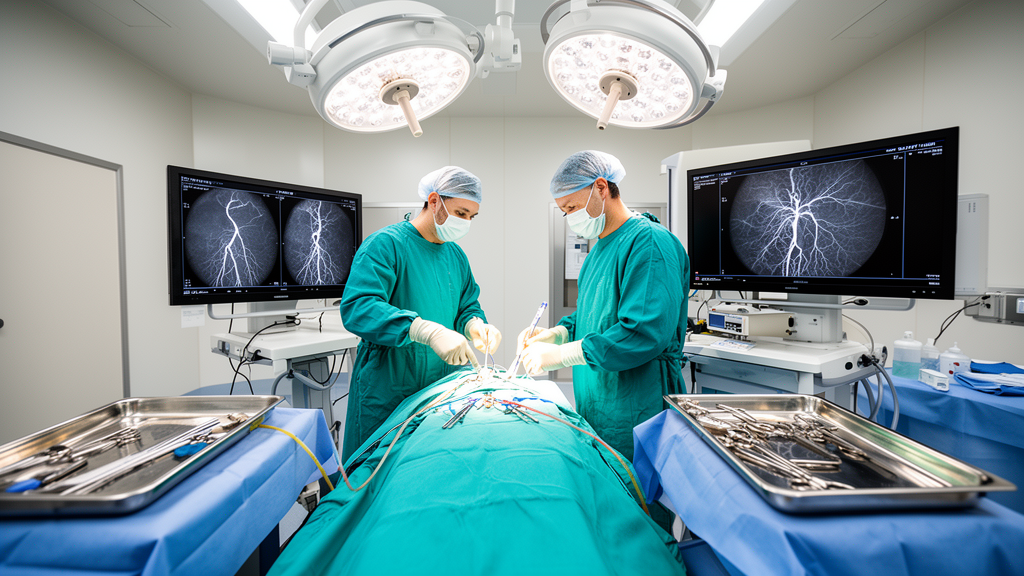
The American College of Surgeons Committee on Trauma and the Society of Interventional Radiology have issued a joint position statement reaffirming the critical role of interventional radiologists on multidisciplinary trauma teams. The statement, titled “Rapid Endovascular Hemorrhage Control in Trauma,” emphasizes the importance of establishing reliable systems for rapid endovascular hemorrhage control in trauma situations. Uncontrolled bleeding is a leading cause of trauma death. The joint statement outlines specific strategies for trauma programs to accelerate access to hemorrhage-stopping embolization through earlier consultation, shared decision-making, and the coordinated activation of the full care team.
For patients in hemorrhagic shock, the interval between recognizing bleeding and achieving definitive control is critical. Luke R. Wilkins, MD, FSIR, the statement’s lead author and an interventional radiologist at the University of Virginia Health System, noted that every step in this process matters. He emphasized that trauma centers need processes that bring trauma surgeons and interventional radiologists together early, mobilize the full team in parallel, and ensure the right patient reaches treatment without avoidable delay.
The statement clarifies the intent of ACS Standard 4.15, which requires Level I and Level II trauma centers to maintain the personnel and facilities needed to begin an endovascular or interventional radiology procedure for hemorrhage control within 60 minutes. This requirement applies when the patient’s clinical condition requires rapid intervention. The joint statement provides guidance for operationalizing this standard, focusing on how to integrate interventional radiology into existing trauma workflows.
One key recommendation is to engage interventional radiology early in the patient’s care pathway. Early involvement supports rapid, shared decisions about the most appropriate method of hemorrhage control.
The statement advises prioritizing patients who are most likely to benefit from rapid angioembolization. These include patients who are hemodynamically unstable or require transfusion.
Creating a standardized activation pathway is another crucial element of the guidance. This pathway should define who initiates consultation, who can activate the pathway, and how the various teams are mobilized. The angiography suite, anesthesia, transport, nursing, and technologist teams must be ready to respond in a coordinated manner.
For patients who require both endovascular and operative interventions, the statement recommends establishing protocols to support parallel workflows.
The guidance recommends measuring decision-to-puncture time, along with other milestones that reveal workflow bottlenecks. Continuous performance improvement tools, such as multidisciplinary debriefings, process mapping, staff education, and review of delays, are recommended to strengthen readiness and sustain reliable response times.
Saher S. Sabri, MD, FSIR, president of the Society of Interventional Radiology, stated that the joint statement provides trauma centers with a shared, practical framework for bringing surgical and endovascular expertise together. He emphasized that aligning trauma teams around early collaboration, system readiness, and continuous improvement can reduce avoidable delays. The goal is to deliver the most appropriate lifesaving care for each injured patient.
Avery Nathens, MD, PhD, FACS, medical director of the ACS Trauma Quality Programs and senior author of the statement, highlighted that rapid hemorrhage control depends on a trauma system prepared to bring the right expertise and resources to the patient without delay. He noted that the joint statement translates this shared commitment into practical guidance that can strengthen collaboration and improve readiness. The statement is designed to help trauma teams deliver timely, definitive care to patients with life-threatening bleeding.
The statement appears online in the Journal of Vascular and Interventional Radiology and the Journal of the American College of Surgeons.
In detailing the clinical rationale for interventional integration, statement co-author Jon Perlstein, MD, FACS, chair of trauma and acute care surgery at Sutter Health and Sutter Roseville Medical Center, underscored that achieving rapid hemorrhage control depends fundamentally on early communication and a shared plan. Dr. Perlstein noted that embedding interventional radiology into trauma workflows from the very beginning enables clinical care teams to match each injured individual with the most appropriate treatment modality. He observed that coordinating operative and endovascular care when both are needed reduces delays to definitive bleeding control.
The American College of Surgeons was founded in 1913 as a scientific and educational organization dedicated to raising the standards of surgical practice and improving the quality of care for all surgical patients. Committed to ethical and competent surgery, the ACS represents more than 95,000 members worldwide, making it the largest surgical organization in the world. Its achievements have significantly influenced the course of scientific surgery in America and established it as an important advocate for all surgical patients, with “FACS” designating that a surgeon is a Fellow of the ACS.
Working alongside the ACS, the Society of Interventional Radiology is a nonprofit medical society headquartered in Fairfax, Virginia, that represents more than 8,000 interventional radiology physicians, trainees, medical students, scientists, and clinical associates dedicated to advancing patient care through image-guided therapies. The society’s members practice across university academic medical centers, training residencies, and private practice environments. Officially titled “Rapid Endovascular Hemorrhage Control in Trauma: a Joint Position Statement from the American College of Surgeons Committee on Trauma and the Society of Interventional Radiology,” the document was released online with the digital object identifier 10.1016/j.jvir.2026.108978 in the Journal of Vascular and Interventional Radiology and the Journal of the American College of Surgeons. Published continuously since 1990, the monthly peer-reviewed journal serves as the official publication of SIR, publishing clinical, translational, basic science, health policy, and socioeconomic research in interventional radiology.
Subject of Research: Joint position statement on rapid endovascular hemorrhage control in trauma care
Article Title: ACS and SIR call for rapid, team-based endovascular hemorrhage control in trauma care
Article References: ACS and SIR call for rapid, team-based endovascular hemorrhage control in trauma care. Original publication (Bibliographic details unavailable.)
Image Credits: AI Generated
DOI: Not provided
Keywords: trauma care, interventional radiology, hemorrhage control, endovascular procedures, American College of Surgeons, Society of Interventional Radiology, trauma teams, medical coordination, patient safety, emergency medicine, clinical guidelines, trauma centers, hemostasis, medical standards, healthcare systems, surgical care, patient outcomes, clinical practice, medical collaboration, trauma surgery
News Source: Ophelia Keating. (November 14, 2026). ACS and SIR issue joint statement on rapid trauma hemorrhage control. Scienmag.