A large-scale genomic investigation of commercial pigs has mapped hundreds of genetic markers tied to feeding behavior and feed efficiency, demonstrating how individual eating habits causally shape animal growth while revealing unexpected genetic overlap with human dietary patterns. By tracking feeding events across tens of thousands of animals and combining genome-wide association studies with gene expression data from dozens of tissues, researchers identified critical chromosomal regions that regulate both appetite and nutrient utilization. The study establishes that specific behavioral tendencies, such as consuming larger individual meals or shifting feed intake into nighttime hours, exert measurable causal effects on carcass composition and growth rates, providing biological explanations for long-standing puzzles in agricultural genetics and offering potential comparative models for studying human metabolic conditions.
Feed expenditures represent approximately sixty-five percent of overall pork production costs, making animal feed efficiency a central economic and environmental target for livestock breeding programs worldwide. Despite the obvious importance of feed consumption, the specific genetic architecture governing daily feeding behaviors—including visit duration, feeding frequency, and meal size—and their exact biological connections to how effectively animals convert nutrition into body mass have remained difficult to decipher. Traditional investigations often encountered conflicting observations, such as disagreements over whether faster-eating animals are genuinely more efficient or simply consume more total nutrients, largely because earlier datasets were constrained by limited sample sizes and relied strictly on phenotypic or genetic correlations that could not establish directional cause and effect.
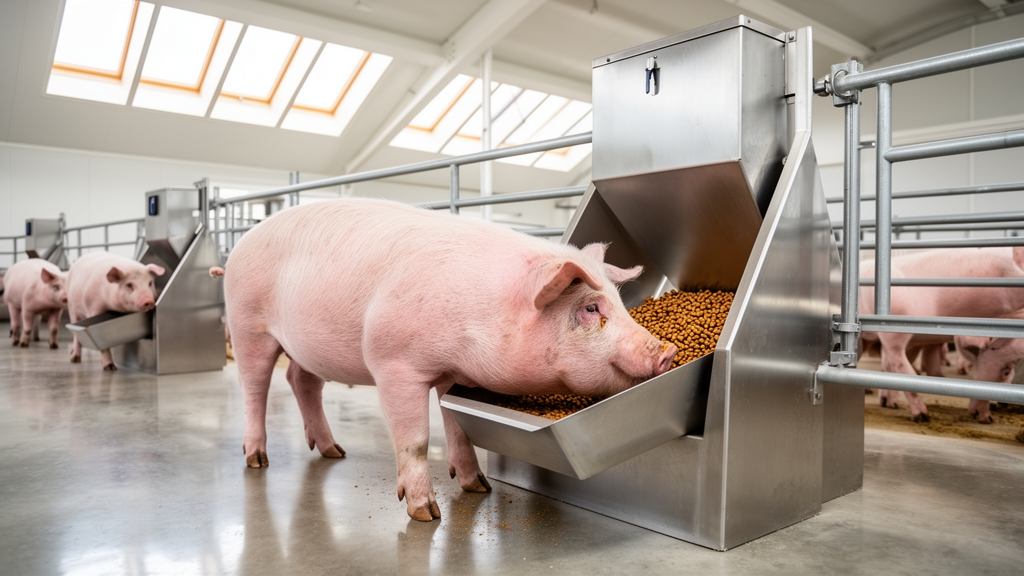
To overcome these historical limitations, the research team analyzed extensive phenotypic records collected between 2019 and 2023 from a nucleus breeding facility in Guangxi, China, covering twenty-six thousand one hundred fifteen pigs across five distinct commercial breeds. The investigated animals included Duroc, Landrace, Yorkshire, Pietrain, and a specialized Duroc line characterized by high intramuscular fat content, all housed in standardized group pens equipped with single-space automated feeding stations. The automated monitoring system recorded detailed time-stamped metrics for every feeding visit, capturing precise entry and exit times, consumed weights, and animal identifiers across more than twenty-two million validated feeding records, while independent manual weigh-ins and carcass ultrasound measurements tracked overall growth, backfat thickness, and loin muscle depth.
The scientists applied genome-wide association testing across a discovery population of five thousand seven hundred thirty-eight genotyped pigs, screening more than twelve million imputed autosomal single-nucleotide polymorphisms to uncover genomic variants linked to twenty-eight distinct feeding, efficiency, and production traits. The genome-wide scan pinpointed one thousand seven hundred forty-nine associated markers and three hundred fifty-eight independent lead variants operating across the genome. Prominently, a pleiotropic quantitative trait locus on chromosome one was found to influence multiple characteristics simultaneously, encompassing backfat thickness, lean meat percentage, average daily gain, and residual feed intake measures. Within this critical locus, a known missense variant in the melanocortin 4 receptor gene emerged alongside noncoding regulatory variants in linkage disequilibrium.
Functional annotations across candidate genes highlighted variants in the SPARC and ACADVL genes associated with nocturnal feeding activities, with ACADVL encoding a vital enzyme involved in mitochondrial fatty acid beta-oxidation required for energy metabolism. Furthermore, functional pathway analyses revealed that intronic variants within genes such as RYR2 and GRIA1 were significantly implicated in circadian entrainment pathways, showing that genetic regulation of daily feeding rhythms is tightly coupled to cellular biological clocks.
To evaluate whether these genomic discoveries could improve selective breeding, the authors conducted genomic prediction experiments in an independent validation cohort of one thousand two hundred younger pigs separated by birth date. By preselecting informative markers based on association significance and linkage disequilibrium clumping rather than relying on uniform genome-wide panels, the accuracy of genomic breeding value predictions increased by an average of thirteen point four percent across traits. Prediction accuracy gains were particularly pronounced for feeding behavior traits, which saw improvements of up to thirty-five percent, while combining marker sets exclusively within feed efficiency categories also generated statistically significant performance boosts, demonstrating that targeted biological subsets can markedly enhance practical breeding selection schemes.
To connect significant DNA markers to their underlying molecular mechanisms, the researchers integrated transcriptome-wide association studies across thirty-four pig tissues with colocalization and summary-data-based Mendelian randomization techniques. This multi-layered post-GWAS analysis prioritized sixty-five putative causal trait-tissue-gene associations, with seven associations passing all three rigorous statistical criteria simultaneously. Notably, expression levels of the ATP-binding cassette transporter gene ABCD4 in brain, frontal cortex, blood, and gastrointestinal tissues showed strong causal links to feed efficiency and carcass traits. Given that ABCD4 facilitates the transport of vitamin B12 from lysosomes into the cytosol—a process critical for metabolic health and nervous system maintenance—its identification highlights how central neuro-metabolic regulation governs feed utilization in livestock.
Addressing the causal relationships connecting animal behavior to production traits, the team executed one-sample Mendelian randomization using individual-level genetic instruments, effectively distinguishing genuine causal influences from simple phenotypic correlations. Genetically predicted increases in feed intake per visit and higher proportions of large meals causally improved residual feed intake and promoted greater average daily weight gain. Conversely, nocturnal feeding behaviors—including increased feed intake, higher visit counts, and longer feeding durations during the night—demonstrated negative causal relationships with feed efficiency metrics and exerted a disproportionately negative effect on live lean meat percentage, establishing that the timing of nutrient intake alters metabolic partition independent of total daily intake.
Extending their findings across species, the investigators compared the genomic regions surrounding pig feeding variants against two hundred five human genome-wide association datasets compiled from the GWAS Catalog. Partitioned heritability analysis using stratified linkage disequilibrium score regression revealed two hundred forty-seven cross-species trait pairings showing significant heritability enrichment. The strongest cross-species overlaps centered directly on human fat intake and dietary preference categories. Genetic signals governing pig nocturnal eating frequency and night feed intake were significantly enriched within human genomic regions linked to the consumption of dietary fats and spreads, such as margarine, rather than liquid vegetable oils, mirroring human observations where evening eating patterns align with altered lipid processing and weight regulation.
While providing expansive insights into the genetic architecture of farm animal behavior and cross-species metabolic parallels, the authors noted several clear investigative boundaries. Candidate gene prioritization relied on public expression quantitative trait locus databases rather than direct animal tissue functional knockouts or molecular assays, necessitating future experimental validation at the cellular level. Additionally, mapping pig genomic coordinates to human assemblies across one-megabase windows represents an exploratory comparative framework that will require high-resolution orthologous sequencing and tissue-specific multi-omics to confirm shared molecular mechanisms, reinforcing that current cross-species alignments offer suggestive biological hypotheses rather than definitive clinical equivalencies.
The feeding trials monitored growing pigs from approximately seventeen weeks of age, averaging 67.5 kilograms, through twenty-four weeks, reaching an average final weight of 115.8 kilograms. Animals were housed in groups averaging fifteen per pen across one hundred sixty-nine pens in four herds with continuous access to feed. In addition to manual weighing and ultrasound scanning, researchers conducted computed tomography imaging on a subset of 7,934 pigs using an automated convolutional residual framework to segment internal organs and quantify whole-body composition. Across all recorded events, visit intakes clustered around distinct peaks at 23 grams and 235 grams, defining operational thresholds for small and large meals. Breed comparisons showed that Yorkshire and Pietrain lines clustered together with higher visit counts and smaller meals, while Duroc and Landrace animals consumed larger portions per visit. Pigs of the Duroc2 line exhibited delayed daily feeding peaks between 9 to 11 AM and 8 to 10 PM, consuming approximately 30 percent of their feed during the night compared to 20 percent in the other four breeds.
Heritability estimates across the measured characteristics ranged from 0.24 to 0.49 for feed efficiency traits, 0.15 to 0.59 for feeding behaviors, and 0.21 to 0.71 for off-test production metrics. Statistical modeling indicated that adjusting residual feed intake for metabolic body weight slightly reduced estimated heritability while significantly improving overall model fit according to Akaike information criterion benchmarks, with computed tomography-derived lean measurements yielding the best model performance. Detailed hourly Mendelian randomization further demonstrated that the physiological impact of feeding behavior depends strongly on the time of day. While morning feeding activity between 7 and 9 AM showed pronounced causal influences on feed efficiency, afternoon feeding periods displayed much weaker associations, and late-night feeding episodes during hours such as 23 and 0 consistently exerted negative causal effects on residual feed efficiency.
Beyond the primary chromosome one region, genomic mapping identified candidate genes linking behavior, circadian regulation, and immune function. Intergenic variants on chromosome three mapped proximate to ENSSSCG00000042171, a gene enriched in bone marrow and lymphoid tissues, and LRRTM4, which is expressed in the brain and retina. In blood tissue, FHIP2B emerged as a prioritized candidate gene for nocturnal intake, visit counts, and visit duration. Additional night-feeding loci aligned with genes governing biological timekeeping and cellular lipid handling, including ATP1A1, which exhibits rhythmic daily expression cycles, HSP90AB1, which maintains cellular levels of the core mammalian clock protein BMAL1, and ELOVL6, an enzyme responsive to fasting and refeeding cycles.
Subject of Research: Genetics of pig feeding behavior, feed efficiency, and cross-species dietary traits
Article Title: Integrating GWAS and eQTL analysis to decipher genetic mechanisms of feed efficiency and feeding behaviors in pigs
Article References: Zhang, Z., He, Y., Zhao, W., Wei, R., Han, H., Zhan, Q., Yu, P., Li, S., Hou, X., Wang, J., Zhao, Q., Fu, Y., Chen, Z., Wang, Z., Pan, Y., Wang, Q., & Zhang, Z. (2026). Integrating GWAS and eQTL analysis to decipher genetic mechanisms of feed efficiency and feeding behaviors in pigs. Genetics Selection Evolution, 58(1), Article 31. https://doi.org/10.1186/s12711-026-01048-7
Image Credits: AI Generated
DOI: 10.1186/s12711-026-01048-7
Keywords: feed efficiency, feeding behavior, genome-wide association study, eQTL analysis, porcine genetics, Mendelian randomization, genomic prediction, residual feed intake, ABCD4, MC4R, MED27, circadian biology, transcriptome-wide association study, fat intake, comparative genomics, swine breeding, carcass composition
News Source: Juliet Wilcox. (November 14, 2026). Pig Study Links Feeding Behavior Genetics to Efficiency and Human Fat Intake. Scienmag.