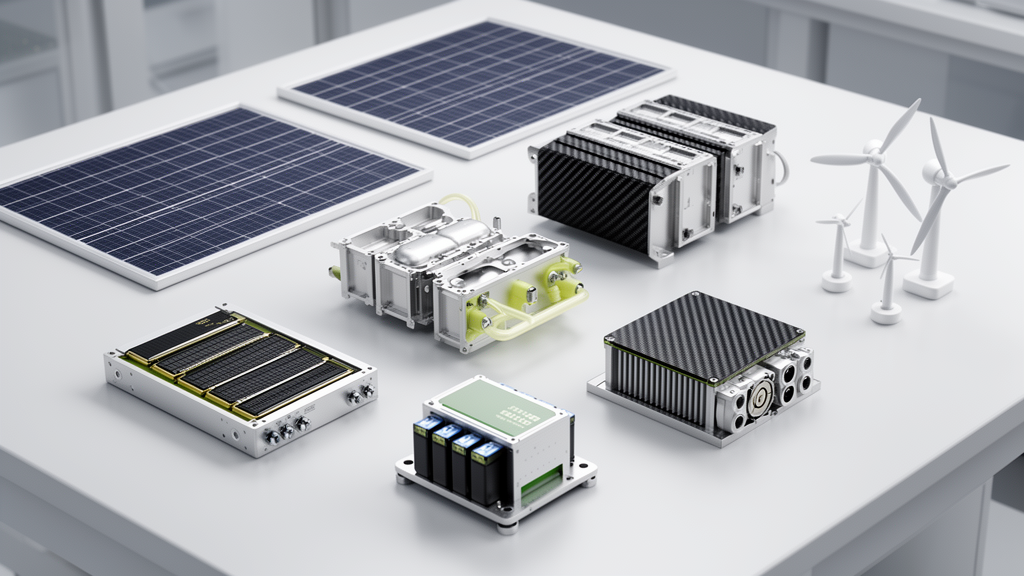
The World Economic Forum and Frontiers have co-published a new report identifying ten emerging technologies that could significantly reduce emissions, ease reliance on concentrated supply chains, and provide reliable power to more people by 2030. Titled the Top 10 Emerging Technologies for Planetary Health: Energy Edition, the report builds on an inaugural edition released last year. It spotlights specific technologies with the greatest potential to reduce pressure on the planet while making power supply more reliable.
Global electricity demand is forecast to increase by almost a fifth between 2025 and 2030, according to the International Energy Agency’s Electricity 2026 report. At the same time, fuel prices remain volatile, and key minerals are concentrated in a few countries. This concentration makes energy security a question of who controls the supply chain. Several technologies highlighted in the report use materials that can be sourced in many countries, offering a potential path to greater resilience.
One category of technology involves heat batteries, which store energy in sand and brick. Another involves iron-air batteries, which release electricity as iron rusts and store it by reversing the reaction. These abundant materials batteries trade the light weight of lithium for cold tolerance, fire safety, and multi-day storage capabilities.
Thermal energy storage, often referred to as heat batteries, is another key area of focus. This technology stores renewable power as heat in brick, sand, or molten salt. The stored heat can then be used to run industrial furnaces, which currently use about a fifth of the world’s energy.
In the realm of cement production, the report highlights calcined-clay limestone cement, known as LC3. This technology replaces nearly half the clinker in cement with calcined clay and limestone. The process is less energy-intensive than traditional methods and cuts emissions by up to 40%.
Solar technology is also advancing through perovskite-silicon tandem solar cells. A perovskite layer stacked on a silicon cell generates up to 20% more energy from the same site. This increase in efficiency allows for more power generation without expanding the physical footprint of solar installations. Additionally, building-integrated photovoltaics turn roofs, facades, and windows made of silicon-laminated materials into solar generators, eliminating the need for new land acquisition.
Grid infrastructure is evolving with virtual power plants and digital twins. Software coordinates home batteries, electric vehicle chargers, and smart thermostats to supply power or ease demand. Digital twins, which are live virtual copies of the grid, predict its next move.
For long-distance power transmission, advanced subsea high voltage direct current interconnectors are gaining attention. These interconnectors connect national grids to move surplus clean power to where it is needed. Floating offshore wind turbines, moored in water deeper than 300 meters, unlock wind power from some of the world’s strongest winds. This expansion into deeper waters opens up new geographic areas for renewable energy generation.
Nuclear energy is represented by modular nuclear reactors, which are factory-built, small, and transportable. These reactors aim to deliver cleaner power at a competitive cost. In the battery sector, next-generation lithium batteries, including lithium-sulfur and solid-state variants, pack more energy into less weight with a lower fire risk. These advancements address safety concerns and energy density limitations associated with current lithium-ion technology.
The report arrives as Earth’s natural systems come under greater strain. The Planetary Health Check 2026 by the Potsdam Institute for Climate Impact Research found that seven of the nine planetary boundaries have been breached, all at their highest recorded levels. This underscores the urgent need for actionable, scalable, and science-backed solutions. Energy runs through almost all planetary boundaries, as how power is produced largely determines how much carbon enters the atmosphere and how quickly the oceans acidify.
Sebastian Buckup, Managing Director of the World Economic Forum, emphasized that energy is not an abstract concept. It matters for families keeping homes cool during heatwaves, communities recovering after storms, and businesses staying open. With prices changing quickly and growing interest in diversifying energy supply, the report looks beyond emissions to technologies that can give everyone reliable, affordable power. These technologies must be practical enough to scale effectively.
Frederick Fenter, Chief Executive Editor of Frontiers, noted that many energy solutions already exist in labs. The challenge is getting them into homes, factories, and power grids fast enough to matter. Open science speeds this up by letting engineers, business leaders, and governments build on shared research. The report puts trusted evidence in the hands of those deciding how to strengthen energy security while reducing harm to the climate.
The Top 10 Emerging Technologies for Planetary Health: Energy Edition report will be launched at COP31 in Antalya, Türkiye.
Beyond identifying specific innovations, the report establishes an evaluation framework that systematically assesses each emerging technology across its consequences for planetary boundaries, equity, and energy security. The authors weigh the concrete trade-offs and operational benefits for the planet, human populations, and the infrastructure systems that deliver electricity. Because energy systems intersect with almost every planetary boundary, choices in power production directly dictate atmospheric carbon accumulations and the pace of ocean acidification. Furthermore, these generation and storage methods dictate how critical natural resources, including freshwater reserves, land surfaces, and mineral deposits, are utilized globally. By evaluating these intersecting pressures, the assessment emphasizes that energy infrastructure directly influences the ability of local populations to endure extreme heatwaves and withstand severe environmental disruptions.
Addressing supply chain concentration is another central pillar of the findings, particularly as volatile fuel prices highlight vulnerabilities surrounding critical minerals. The report shows that several viable alternatives utilize abundant raw materials that can be sourced across numerous regions rather than remaining concentrated in a handful of supplier states. For example, iron-air storage units operate on reversible chemical cycles, discharging electricity as metallic iron rusts and storing power when that oxidation reaction is reversed. Similarly, batteries formulated from sodium, zinc, or iron trade the light weight of lithium chemistry for enhanced fire safety, cold tolerance, and multi-day storage duration. In heavy manufacturing, thermal energy storage using sand, brick, or molten salt offers a decarbonization pathway for industrial furnaces, which currently consume approximately one-fifth of global energy.
The analysis explains how virtual power grids leverage software to coordinate distributed assets, aggregating home batteries, electric vehicle chargers, and smart thermostats to supply power or ease demand. On the generation side, building-integrated photovoltaics turn roofs, facades, and windows made of silicon-laminated materials into solar generators without requiring new land. In offshore environments, floating wind turbines anchored in water deeper than 300 meters unlock strong open-ocean winds, while subsea high voltage direct current interconnectors transfer surplus clean power between national grids.
The collaborative ethos behind the report underscores the necessity of rapid technology transfer through open scientific communication. Frederick Fenter noted that although many vital technical answers already exist inside laboratory environments, the primary hurdle remains accelerating their transition into active utility grids, manufacturing plants, and residential properties. Open science facilitates this progression by allowing engineers, corporate executives, and public agencies to construct solutions upon shared experimental findings. Providing verified evidence to institutional leaders is viewed as essential for reconciling energy resilience with environmental preservation. This imperative aligns with Sebastian Buckup’s observation that modern energy systems carry immediate societal consequences, determining whether families maintain cooling in extreme heat, whether towns rebuild following severe storms, and whether youth grow up breathing unpolluted air amid shifting energy markets.
The complete findings are formally presented to the international community at COP31 in Antalya, Türkiye, during an official launch convening on Friday, 13 November 2026. Held from 15:30 to 16:30 TRT (UTC+3) in Special Event Room 5 of the Blue Zone at the Antalya EXPO Center, the briefing invites accredited journalists for an in-person session without requiring advance registration. Following expert presentations, a live question-and-answer period allows attendees to engage directly with climate and energy leaders. The featured speakers include Ben Caldecott, Director of the Oxford Sustainable Finance Group; Evelyn Wang, Vice President for Energy and Climate at the Massachusetts Institute of Technology; Frederick Fenter, Chief Executive Editor of Frontiers; Johan Rockström, Director of the Potsdam Institute for Climate Impact Research; Rumaitha Al Busaidi, Vice President of the Environment Society of Oman; and Sebastian Buckup, Managing Director of the World Economic Forum.
Subject of Research: Energy security could be built from sand, clay, and rust – World Economic Forum and Frontiers unveil 10 emerging technologies for planetary health
Article Title: Energy security could be built from sand, clay, and rust – World Economic Forum and Frontiers unveil 10 emerging technologies for planetary health
Article References: Energy security could be built from sand, clay, and rust – World Economic Forum and Frontiers unveil 10 emerging technologies for planetary health. Original publication (Bibliographic details unavailable.)
Image Credits: AI Generated
DOI: Not provided
Keywords: Energy, security, built, sand, clay, rust, World, Economic, Forum, Frontiers, unveil, emerging, technologies, planetary, health
News Source: Denise Maddox. (November 14, 2026). WEF and Frontiers Identify Ten Energy Technologies for 2030. Scienmag.