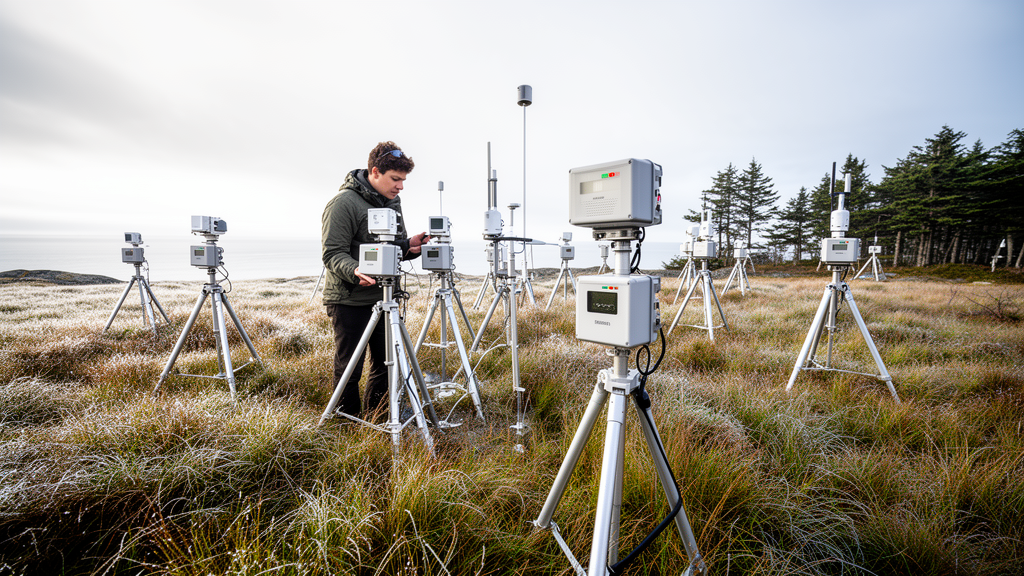
A systematic review investigating the synthesis of decentralized computation and non-stationary data adaptation has revealed that federated continual learning remains largely unvalidated across operational environmental sensing systems. Researchers GSG Suruthi and Rabindra Kumar Singh from the School of Computer Science and Engineering at Vellore Institute of Technology evaluated the intersection of distributed intelligence and sequential model adaptation across 90 peer-reviewed investigations published between 2014 and 2026. While conventional federated learning frameworks have matured considerably in handling communication complexity, distributed optimization, robustness, and personalization across edge platforms, the integration of continual learning architectures capable of preventing catastrophic forgetting without centralizing raw observations remains in its infancy. Across the analyzed literature, foundational research in continual adaptation and distributed aggregation has overwhelmingly relied on synthetic image-classification benchmarks rather than operational environmental sensor deployments.
Environmental monitoring infrastructures are undergoing an architectural transition driven by rapid increases in the spatial and temporal density of observations. Sensing networks deployed across rivers, agricultural plots, forest ecosystems, and urban air basins increasingly incorporate diverse hardware consisting of fixed regulatory stations, unmanned aerial platforms, satellite imagery, and low-cost internet-of-things sensors. Historically, centralized monitoring relied on transporting raw environmental measurements to remote data centers for offline model training and predictive analysis. However, transmitting massive streams of raw observations creates substantial network communication overhead, demands high electrical power, and exposes sensitive institutional or geographic data to regulatory and privacy liabilities. In response, computation has moved toward local edge gateways, fog processors, and on-device embedded processors using lightweight TinyML configurations, reducing communication latency and raw data transfer but historically restricting collective learning across geographically separated infrastructure sites.
To overcome isolated local learning without violating data privacy, decentralized frameworks have increasingly adopted federated learning protocols. In a canonical federated setup, distributed client devices train shared algorithmic architectures locally across private observations and intermittently transfer gradient updates or model parameters to a central aggregation server, keeping sensitive primary measurements on local storage. While protocols such as FedAvg, FedProx, SCAFFOLD, and client-clustering variants mitigate local straggler latency and spatial statistical heterogeneity stemming from non-identically distributed data across distinct microclimates, they rely on a critical structural assumption: target data distributions across client nodes are presumed to remain relatively static over extended operational timelines. This core assumption directly conflicts with real-world atmospheric, hydrological, and ecological dynamics, where seasonal cycles, long-term climate shifts, sensor drift, and unanticipated extreme weather events continuously alter underlying statistical relationships.
Continual learning provides the complementary algorithmic mechanisms required to handle sequential, non-stationary data streams without suffering from catastrophic forgetting, a failure mode where adjusting network parameters to fit newly encountered conditions overwrites previously mastered representations. Algorithmic strategies in the continual learning domain include parameter regularization methods such as Elastic Weight Consolidation, which penalize alterations to network weights identified as critical by the Fisher information matrix, episodic replay systems that retain historic exemplars in localized buffers, and architecture-expansion paradigms that allocate dedicated sub-networks to distinct tasks. Nevertheless, the systematic review notes that foundational continual learning frameworks have almost universally been formulated under an implicitly centralized, single-learner perspective that ignores distributed edge bandwidth limits, intermittent device connectivity, and decentralized data custody constraints, thereby preventing straightforward direct translation into distributed field instruments.
At the intersection of these two paradigms, federated continual learning has emerged to mitigate both spatial non-stationarity across geographically separated nodes and temporal concept drift across progressive sensing intervals. Emerging architectures categorized in the synthesis range from exemplar replay schemes such as GLFC and No One Left Behind to generative diffusion-based replay models, surrogate-data knowledge distillation systems like CFeD and TARGET, and parameter-isolation designs exemplified by FedWeIT. However, the systematic synthesis revealed that contemporary federated continual learning formulations overwhelmingly depend on artificial, discretely bounded task sequences with known shift points. In operational sensor networks, by contrast, seasonal shifts, ecological succession, and pollutant dispersion manifest as continuous, staggered, and unannounced concept drift across heterogeneous nodes, a realistic operational setting that only isolated theoretical models such as FedDrift have attempted to accommodate.
The study protocol employed a systematic literature review methodology conforming to the PRISMA 2020 framework to examine the technical corpus and reduce selection bias. The search covered six bibliographic databases—IEEE Xplore, ACM Digital Library, Scopus, Web of Science, ScienceDirect, and MDPI platforms—retrieving an initial set of 135 filtered records matching specified Boolean configurations across federated optimization, continual learning, and environmental sensing concepts. Following formal two-stage eligibility screening against defined inclusion criteria, 90 peer-reviewed journal and conference publications were retained, while non-peer-reviewed preprints, patents, and studies lacking technical methodological detail were excluded. The researchers characterized each paper using a pre-defined 31-field extraction matrix and applied a 12-point quality assessment rubric evaluating objective clarity, technical rigor, empirical validation, reproducibility, environmental relevance, and contribution significance across each publication.
Bibliometric analysis of the finalized 90-paper corpus demonstrates that research interest has accelerated sharply since 2020, with 74 of the 90 publications (82.2 percent) appearing between 2020 and 2025. Publication activity climbed from six papers in 2017 to an initial high of 18 papers in 2021, stabilized between 11 and 13 annual publications during 2022 and 2023, and reached 17 papers in 2024. IEEE venues published the largest share of the corpus at 43.3 percent (39 papers), followed by specialized machine-learning outlets at 30.0 percent (27 papers), Elsevier at 12.2 percent, and MDPI at 5.6 percent. In terms of article taxonomy, algorithmic and empirical contributions made up 63.3 percent (57 papers), survey and systematic reviews accounted for 22.2 percent (20 papers), framework architectures comprised 11.1 percent (10 papers), and case studies or position papers constituted 3.3 percent (three papers).
Despite this substantial volume of academic output, the review uncovered an acute division between theoretical algorithmic development and applied environmental deployment. Only 34 of the 90 analyzed papers (37.8 percent) examined a concrete real-world application domain, while the remaining 56 publications (62.2 percent) evaluated architectures solely using generic computer vision or text benchmarks such as CIFAR, MNIST, or FEMNIST. Among the 34 domain-specific studies, agriculture accounted for nine papers, air quality monitoring for seven, remote sensing and earth observation for five, water quality for three, smart cities for three, forest fire detection for two, with single papers addressing disaster monitoring, power grid systems, and indoor telemetry. Furthermore, the synthesis determined that none of the surveyed environmental studies successfully implemented and evaluated an end-to-end, multi-year federated continual learning framework on physical sensor networks experiencing genuine continuous temporal adaptation.
Where decentralized techniques have been applied to environmental fields, spatial coordination has substantially outpaced temporal adaptation mechanisms. In atmospheric monitoring, edge-computing configurations and low-power microcontroller sensors have achieved local particulate forecasting and hardware-level quantization, yet operational systems consistently discard historical models when updating or fail to track continuous pollution-plume migrations. In aquatic monitoring, investigations demonstrate fairness-aware scheduling across multi-year river-monitoring networks or autonomous lake-sampling vehicles, but explicitly neglect temporal concept drift across changing seasonal regimes. Precision agriculture papers similarly focus on infrastructure cybersecurity or single-season crop classification, noting persistent vulnerabilities to seasonal drift. Remote sensing architectures feature sophisticated prototype-matching and compression algorithms for aerial imagery but remain structurally tied to static, offline benchmark datasets rather than continuous satellite streaming pipelines.
Beyond domain-specific validation deficits, the review identified seven recurring, cross-cutting structural research gaps that hinder the operationalization of federated continual learning. Gap 1 highlights the fragmented separation of federated optimization, continual learning, trustworthy artificial intelligence, and resource sustainability, which historically developed as independent research tracks with disconnected evaluation standards. Gap 2 underscores the scarcity of long-term real-world validation under fluctuating weather and hardware turnover, a limitation tagged in 48.9 percent of the corpus. Gap 3 identifies limited scalability under extended deployment, noting that only 6.7 percent of the papers simultaneously address continual drift, communication efficiency, and device energy constraints. Gap 4 emphasizes the absence of joint multi-objective optimization, as merely 5.6 percent of the corpus optimizes forgetting, communication, energy, and privacy concurrently, while Gap 5 notes the lack of standardized environmental benchmarking datasets and consistent evaluation metrics.
The remaining structural gaps involve the integration of trustworthy computing and operational sustainability under severe environmental hardware constraints. Gap 6 reveals a distinct lack of coordination between green sustainability and trustworthy intelligence; only two of the eight papers examining carbon-aware training also considered privacy or security, and none integrated explainability frameworks. While differential privacy, cryptographic aggregation, and Byzantine-robust voting rules mitigate adversarial model poisoning, their heavy computational and communication overheads severely strain solar- and battery-powered field nodes. Conversely, energy-minimization techniques like dynamic client sampling—which demonstrates up to 88 percent energy savings in simulated settings—rarely measure formal differential privacy bounds. Finally, Gap 7 captures limited cross-domain generalizability, with zero architectures tested across multiple environmental verticals such as air, water, and soil monitoring.
The authors identified methodological limitations in their review process, noting that high technical and contextual heterogeneity across the 90 included studies prevented formal quantitative meta-analysis, requiring qualitative narrative synthesis and descriptive bibliometrics instead. Furthermore, the search scope was restricted to English-language, peer-reviewed articles within six indexes, omitting unindexed literature and non-peer-reviewed preprints. To advance the field from isolated algorithmic proofs to deployable environmental systems, the authors outline an agenda calling for unified multi-objective frameworks that explicitly optimize adaptation accuracy, communication bandwidth, electrical power, and embodied carbon in parallel. Realizing sustainable environmental intelligence will ultimately require establishing standardized, multi-year open sensor benchmarks, incorporating robust explainability for institutional decision-makers, and executing long-duration field trials across geographically diverse sensing networks.
Subject of Research: Systematic review of federated continual learning architectures for environmental monitoring
Article Title: Sustainable Federated Continual Learning for environmental monitoring: a systematic review
Article References: Suruthi, G., & Singh, R. K. (2026). Sustainable Federated Continual Learning for environmental monitoring: a systematic review. Frontiers in Artificial Intelligence, 9, Article 1942761. https://doi.org/10.3389/frai.2026.1942761
Image Credits: AI Generated
DOI: 10.3389/frai.2026.1942761
Keywords: federated learning, continual learning, federated continual learning, environmental monitoring, catastrophic forgetting, concept drift, PRISMA framework, systematic review, edge computing, TinyML, distributed intelligence, air quality sensing, water quality monitoring, precision agriculture, remote sensing, differential privacy, multi-objective optimization, carbon-aware AI
News Source: Denise Maddox. (November 14, 2026). Systematic Review Finds Federated Continual Learning Lacks Real-World Environmental Deployment. Scienmag.