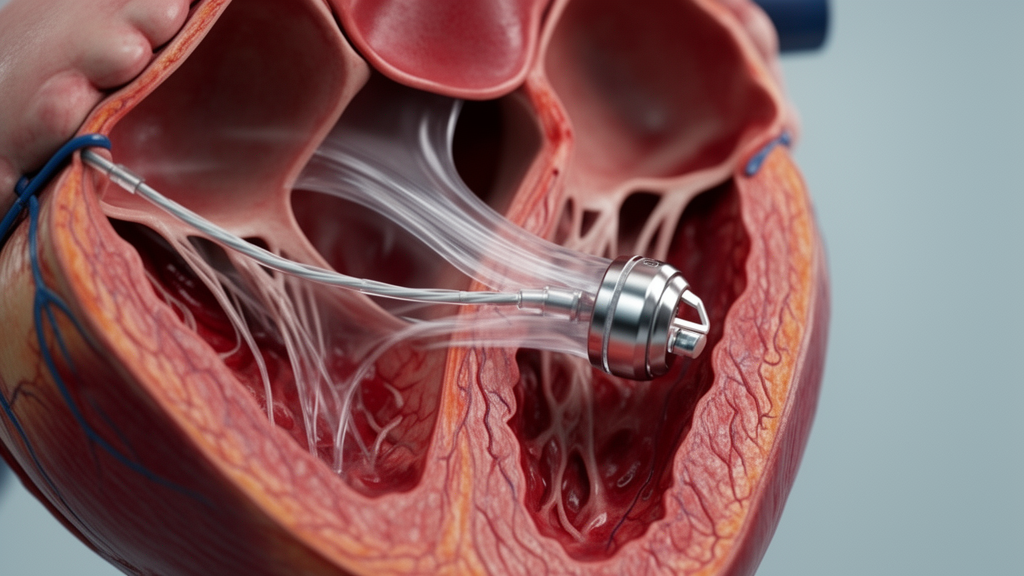
In patients with complete atrioventricular block, marked elevations in Doppler-estimated right ventricular systolic pressure are common and drop consistently following atrioventricular-synchronous pacing. While earlier isolated case reports noted substantial increases in Doppler-derived right ventricular systolic pressure estimates that resolved after pacing was initiated, the overall prevalence, reproducibility, and clinical consistency of this hemodynamic phenomenon had not been evaluated systematically in a patient cohort.
To investigate this pattern, researchers conducted a retrospective cohort evaluation of consecutive patients presenting in sinus rhythm with complete atrioventricular block and preserved left ventricular systolic function, defined as an ejection fraction of at least 50 percent. The study population was selected from a single-center series of 142 permanent pacemaker implantations performed between 2021 and 2026 at Dongkang Medical Center in Ulsan, Republic of Korea.
The baseline native block cohort comprised 30 consecutive patients who met all inclusion criteria. During untreated native heart block, the median Doppler-estimated right ventricular systolic pressure across the group reached 44.0 mmHg, with an interquartile range extending from 32.4 to 50.3 mmHg. Abnormal pressure elevations, characterized by Doppler-estimated values of 35 mmHg or greater, were documented in 21 of the 30 patients, confirming that elevated noninvasive right ventricular pressure estimates represent a frequent presentation during unpaced complete heart block.
The study prespecified its primary endpoint as the paired change in Doppler-estimated right ventricular systolic pressure between the native state and the first echocardiographic evaluation obtained within 72 hours of restoring atrioventricular-synchronous pacing. Among the 14 patients who had complete paired evaluations before and after implantation, Doppler-estimated right ventricular systolic pressure decreased in every individual. The group median fell from 46.6 mmHg before intervention to 25.0 mmHg after pacing, representing a median relative decline of 51.4 percent (P < 0.001). Concurrently, the proportion of individuals presenting with values of 35 mmHg or higher fell significantly from 11 patients to 3 patients (P = 0.008).
Echocardiographic and rhythm parameters demonstrated corresponding shifts alongside the decline in pressure estimates. Both the tricuspid regurgitant velocity gradient and the categorical estimates of right atrial pressure decreased following pacemaker activation. Assessment of tricuspid regurgitation severity showed that the regurgitation grade decreased in 7 patients and did not worsen in any patient. Electrocardiographic measurements indicated that paced QRS duration increased, while observed changes in heart rate demonstrated no statistically significant correlation with the magnitude of reduction in Doppler-estimated right ventricular systolic pressure.
Overall spectral signal quality tended to decline following device implantation. To address potential measurement bias caused by degraded Doppler envelopes, the investigators conducted a post hoc sensitivity analysis confined to the 7 patients whose envelope quality remained unchanged or improved after pacing. Within this subgroup, the reduction in Doppler-estimated pressure persisted, yielding a median relative decrease of 33.8 percent (P = 0.016).
Direct hemodynamic comparisons in a subset of four catheterized patients demonstrated that Doppler estimates diverged from invasively measured pressures in both positive and negative directions. Consequently, while elevated Doppler-estimated right ventricular systolic pressure occurs frequently during complete atrioventricular block and drops consistently upon restoring synchrony, the true clinical interpretation remains guarded. Because Doppler envelope clarity altered concurrently with pacing and invasive pressures did not reliably track the ultrasound estimates, the precise magnitude of the Doppler reduction and whether true pulmonary artery pressures fall remain uncertain.
Subject of Research: Doppler-estimated right ventricular systolic pressure changes after atrioventricular-synchronous pacing in complete heart block
Article Title: Elevated Doppler-estimated right ventricular systolic pressure in complete atrioventricular block and its response to atrioventricular-synchronous pacing
Article References: Son, B.-J., Jung, S., Kim, B.-J., Kim, H.-J., & Kim, H. (2026). Elevated Doppler-estimated right ventricular systolic pressure in complete atrioventricular block and its response to atrioventricular-synchronous pacing. Frontiers in Cardiovascular Medicine, 13, Article 1967085. https://doi.org/10.3389/fcvm.2026.1967085
Image Credits: AI Generated
DOI: 10.3389/fcvm.2026.1967085
Keywords: complete atrioventricular block, atrioventricular synchrony, right ventricular systolic pressure, Doppler echocardiography, cardiac pacing, tricuspid regurgitation, pulmonary artery pressure, bradycardia, right atrial pressure, tricuspid regurgitant gradient, envelope completeness, invasive catheterization, paced QRS duration, permanent pacemaker implantation, left ventricular ejection fraction, cardiac rhythmology
News Source: Ophelia Keating. (November 14, 2026). Doppler Right Ventricular Pressure Estimates Fall After Pacing in Heart Block. Scienmag.