Scaling down microbial fuel cells to microfluidic dimensions offers a promising strategy for generating green electricity from organic waste, but maximizing power output requires coordinated physical cell architecture and advanced surface engineering. In a newly published study in Discover Chemical Engineering, researchers Srinithya Ravinuthala, Patel Rutveek Narendrabhai, Saravanan Settu, and Saprativ P. Das developed and optimized a single inlet-outlet spiral microfluidic microbial fuel cell featuring flexible, sugar-templated aerogel anodes. Utilizing additive manufacturing alongside response surface methodology with a central composite design, the research team established a statistically significant empirical model correlating four distinct operational factors to volumetric power output. Under systematically constrained parameter conditions, the fabricated microfluidic architecture yielded an optimized power density of 19.38 ± 4.798 milliwatts per cubic millimeter, demonstrating that structural optimization can dramatically enhance electrochemical energy harvesting from electroactive bacterial biocatalysts.
Microbial fuel cells convert chemical energy from organic materials directly into electrical energy by deploying electroactive microorganisms as biocatalysts to oxidize organic substrates. Although conventional macro-scale fuel cells often produce lower power densities than alternative energy technologies, miniaturizing these systems to the micrometer regime provides substantial physical advantages. These benefits include markedly higher surface area-to-volume ratios, accelerated reaction rates, diminished electrode separation distances, reduced internal resistance, enhanced mass transfer, and faster startup times. Microfluidic microbial fuel cells represent compact, affordable devices suitable for powering remote sensors and portable diagnostic equipment. The first reported microfluidic microbial fuel cell, demonstrated by Quin and colleagues in 2009, employed a dual-chamber configuration with a 1.5-microliter anode and a 4-microliter cathode chamber to produce 15 watts per cubic meter. Subsequent designs, such as the Y-shaped configuration introduced by Li and co-workers in 2010, utilized membraneless laminar flow across a 300-microliter volume. However, Y-shaped channels suffer from transverse diffusion between anolyte and catholyte streams, impairing microbial growth and lowering overall cell performance.
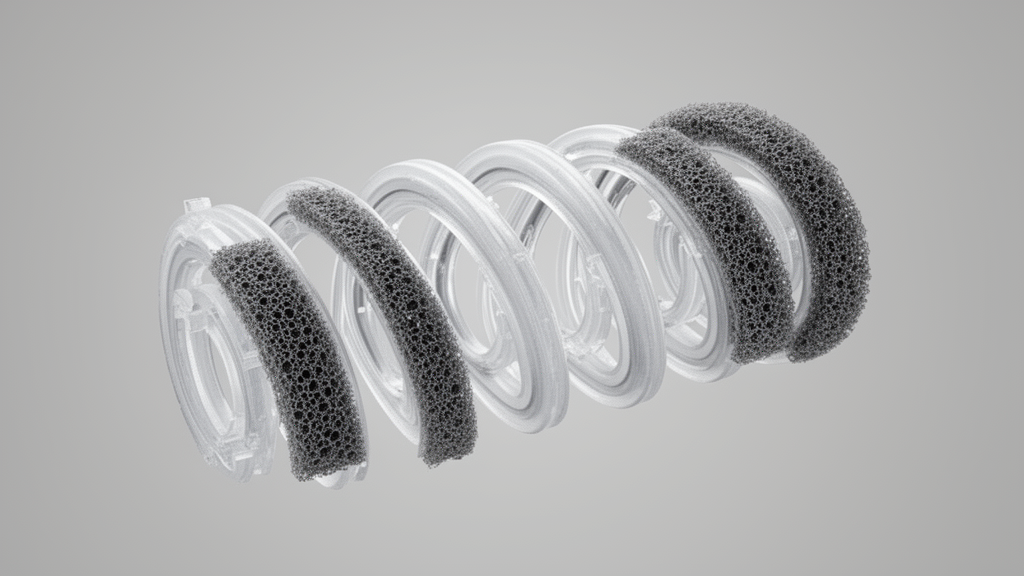
To overcome the cross-flow and diffusion liabilities inherent in classical microchannel configurations, the authors implemented an additive manufacturing approach to construct an intricate spiral-shaped channel architecture based on designs reported by Arun and colleagues. Additive manufacturing, commonly known as three-dimensional printing, permits the rapid fabrication of complex geometries with high design freedom, exceptional precision, and minimal manual intervention compared to conventional machining with materials like polymethylmethacrylate, polydimethylsiloxane, glass, or paper. The spiral configuration enhances substrate distribution over the electrode surface, expands available active area, reduces internal resistance, and streamlines fluidic operation by requiring only a single inlet and outlet. The experimental chamber components were designed using Solidworks software and fabricated with an Anisoprint Composer A3 printer utilizing 1.75-millimeter Anisoprint Smooth PA filament. The resulting spiral conduit possessed a uniform depth of 4 millimeters, an initial width of 4 millimeters, and a total inner path length of 100 millimeters. Inserting custom electrodes produced a focused 1-millimeter fluidic channel through which liquid substrate circulated across the catalytic surfaces.
The electrical performance of microfluidic fuel cells depends decisively on the anode material and the microscopic topography available for bacterial colonization and biofilm proliferation. In this work, the authors engineered flexible, porous three-dimensional aerogel anodes using commercial sugar granules as a sacrificial pore-forming template to amplify active surface area without relying on expensive synthesis methods. The flexible binding matrix was prepared using Sylgard 184 polydimethylsiloxane elastomer base blended with its curing agent in a 10:1 weight ratio. Commercially available graphene nanoparticles were integrated at a fixed concentration of 20 percent by weight across all anode formulations to ensure robust electrical conductivity. Concurrently, iron oxide nanoparticles were introduced as secondary functional fillers at concentrations of 5, 10, and 15 percent by weight to enhance anode electroactivity. After pouring the composite onto a flat surface, sugar was evenly distributed across the resin, cured at 110 degrees Celsius for 2 hours, and sonicated in deionized water to dissolve the sugar crystals, leaving porous aerogels that were dried overnight at room temperature.
For the counter electrode, the research team constructed a catalytic cathode by coating a stainless-steel wire mesh with an oxygen reduction catalyst blend comprising manganese oxide and activated carbon mixed in an equal 1:1 mass ratio. Using polydimethylsiloxane as a binder, the catalyst slurry was applied at a total loading of 0.5 milligrams per square centimeter, and the coated mesh was subsequently cured at 110 degrees Celsius for 1.5 hours. To cultivate a viable electroactive microbial consortium, bacterial inocula were obtained from a local sewage treatment plant. A 5-gram sample of sewage sludge was diluted in distilled water and subjected to thermal pretreatment at 80 degrees Celsius for 2 hours. This heating phase was essential for eliminating competing methanogenic bacteria, which divert metabolic pathways toward methane production and consume reducing equivalents that would otherwise generate electricity. Following heat pretreatment, 2 grams per liter of glucose was added as a carbon source, and bacterial growth was tracked via optical density at 600 nanometers until reaching an absorbance of 0.6.
Systematic physical and structural characterizations validated the morphological and wetting properties of the fabricated electrodes. Microscopic analysis using a Zeiss Stereo Microscope Discovery V8 confirmed that the void architecture of the aerogel anodes closely replicated the geometry of the sacrificial sugar granules, resulting in a non-uniform spatial pore distribution across the polymer matrix. Quantitative image processing via ImageJ revealed an average single pore volume of 100.8 cubic millimeters and an overall anode porosity of 18.78 percent. Sessile water contact angle measurements performed with a digital camera and manual protractor verified the hydrophilic nature of the electrodes. Anodes containing 5, 10, and 15 weight percent iron oxide exhibited water contact angles of 71 ± 2 degrees, 72 ± 2 degrees, and 78 ± 2 degrees, respectively, while the cathode displayed a contact angle of 76 ± 2 degrees. Because all contact angles remained well below 90 degrees, the electrode surfaces were confirmed to be hydrophilic, which strongly encourages microbial adhesion and biofilm attachment, while contact angle increases at higher iron oxide loadings reflected nanoparticle aggregation.
Crystalline structure and phase purity of the electrode composites were examined via X-ray diffractometry using a Malvern Panalytical diffractometer over a two-theta range from 5 to 90 degrees with copper K-alpha radiation. Diffraction profiles exhibited a broad peak around 13 degrees two-theta corresponding to the amorphous polydimethylsiloxane polymer network. Sharp diffraction peaks recorded at 26.5 and 55 degrees matched the established crystallographic planes of conductive graphene nanoparticles. Distinct peaks emerging at 36.5, 44, 57.5, 63, and 78 degrees aligned with magnetite iron oxide according to JCPDS Card Number 19-0629, with diffraction intensities increasing proportionally alongside iron oxide nanoparticle concentrations. For the cathode, diffraction peaks at 28, 37, and 50 degrees confirmed the presence of manganese oxide per JCPDS Card Number 14-0644, while a broad reflection centered near 24 degrees confirmed the amorphous structure of activated carbon. These diffraction measurements verified that the functional catalytic nanoparticles and carbon phases were successfully integrated into the cured polymeric matrices without undergoing degrading structural transformations during thermal curing.
To evaluate system performance and optimize operational parameters, the authors implemented Response Surface Methodology coupled with a Central Composite Design using Design Expert 13 software. Four key independent factors were investigated: iron oxide filler concentration in the anode, glucose substrate concentration, biofilm cultivation duration, and external circuit resistance. The experimental protocol evaluated 30 distinct test runs, comprising 16 factorial points, 8 axial points, and 6 central point replications. Voltage measurements were recorded with a multimeter across external resistive loads at 30-minute intervals over an 8-hour hydraulic retention time, with volumetric power density calculated by dividing electrical power by total aerogel anode volume. Analysis of variance confirmed the statistical validity of the derived second-order polynomial model. The mathematical regression displayed an F-value of 21.38 with a corresponding p-value below 0.0001, demonstrating high statistical significance. Furthermore, a non-significant lack of fit with a p-value exceeding 0.05 indicated excellent conformity to experimental data, while an R-squared value of 0.9523 and close agreement between predicted and adjusted coefficients confirmed robust predictive reliability.
Three-dimensional response surface plots clarified the multifactor interactions governing power density generation. The interaction between iron oxide filler concentration and glucose substrate concentration demonstrated a strong synergistic effect, where simultaneous increases in both parameters produced higher power densities due to enhanced electrode conductivity and abundant biochemical fuel availability, contrasting with earlier findings where anolyte concentration was secondary to flow parameters. Evaluating filler concentration alongside biofilm formation duration revealed that filler loading had a steeper slope, establishing it as the dominant variable driving cell output, in agreement with literature showing that iron oxide nanoparticles stimulate microbial community diversity and promote electroactive bacteria such as Geobacter species. By contrast, external circuit resistance exerted a minimal interactive influence when paired with substrate concentration or biofilm cultivation time. Increasing glucose levels alongside biofilm development time yielded balanced, progressive improvements in power density, while variations in external electrical load showed negligible statistical significance across the investigated operating regimes.
Multi-objective numerical optimization was performed using parameter constraints selected to address real-world operational challenges: minimizing iron oxide filler loading to curb electrode fabrication costs, maximizing substrate concentration to support high chemical oxygen demand wastewater, and minimizing biofilm cultivation duration to shorten startup latency. The optimal design point identified a filler concentration of 9.180 percent, a glucose substrate concentration of 15 percent equivalent to 1067 milligrams per liter of chemical oxygen demand, and a 24-hour biofilm formation period. Under these constraints, the validated model projected a maximum power density of 19.38 ± 4.798 milliwatts per cubic millimeter. In subsequent polarization experiments excluding static external resistance, the system achieved an open-circuit voltage of approximately 600 millivolts and reached a maximum power density of 149 milliwatts per cubic millimeter at 0.5 milliamperes per cubic millimeter. The polarization curves clearly depicted activation, ohmic, and mass-transfer overpotentials, including temporary current overshoot caused by electron extraction temporarily surpassing microbial metabolic supply rates, followed by rapid recovery. These results highlight the effectiveness of combining 3D-printed spiral geometries with sacrificial sugar templating to produce high-performance, cost-effective microfluidic fuel cells.
Subject of Research: Optimization of 3D-printed spiral microfluidic microbial fuel cells using flexible aerogel electrodes
Article Title: Performance optimization of 3D-printed spiral microfluidic microbial fuel cell with flexible aerogel electrodes
Article References: Ravinuthala, S., Narendrabhai, P. R., Settu, S., & Das, S. P. (2025). Performance optimization of 3D-printed spiral microfluidic microbial fuel cell with flexible aerogel electrodes. Discover Chemical Engineering, 5(1), Article 28. https://doi.org/10.1007/s43938-025-00102-y
Image Credits: AI Generated
DOI: 10.1007/s43938-025-00102-y
Keywords: microbial fuel cells, microfluidics, additive manufacturing, polydimethylsiloxane, aerogel electrodes, iron oxide nanoparticles, graphene nanoparticles, response surface methodology, central composite design, power density optimization, sacrificial sugar template, biofilm formation, manganese oxide cathode, polarization curve, chemical oxygen demand, hydrophilicity, water contact angle, X-ray diffractometry
News Source: Denise Maddox. (November 14, 2026). Engineers Optimize 3D-Printed Spiral Microfluidic Fuel Cell Using Flexible Aerogel Electrodes. Scienmag.