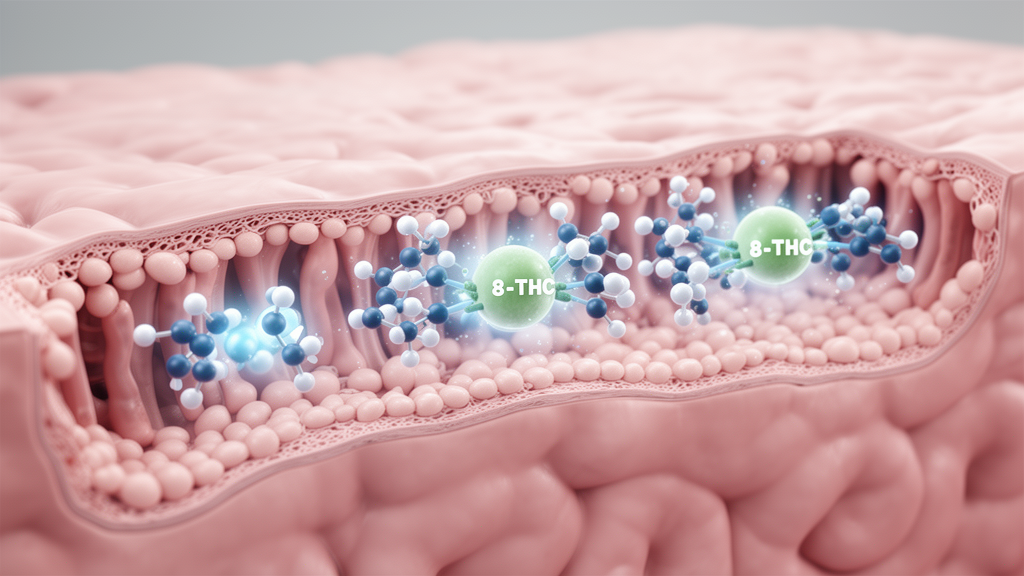
Researchers from the University of South Carolina have reported that delta-8-tetrahydrocannabinol, a cannabinoid with lower psychoactive potency than the well-known delta-9-THC, significantly reduces the severity of colitis in mouse models. The study, published in Frontiers in Pharmacology, demonstrates that this compound mitigates chronic inflammation of the colon by modulating innate immune responses and altering the expression of specific microRNAs. By investigating the therapeutic potential of this structural analog, the team provides new insights into how cannabinoids might be used to treat inflammatory bowel disease without the pronounced neurological side effects associated with traditional cannabis compounds.
The investigation focused on two distinct murine models of colitis to ensure the findings were robust across different disease mechanisms. Dextran sulfate sodium was used to induce colitis in C57BL/6J mice, a model that mimics the continuous inflammation characteristic of ulcerative colitis. In parallel, 2,4,6-trinitrobenzenesulfonic acid was administered to BALB/c mice to replicate the patchy inflammation seen in Crohn’s disease. In both scenarios, the researchers administered delta-8-THC via intraperitoneal injection at a dose of 20 mg/kg, a concentration previously identified as optimal in dose-response studies.
The primary results indicated that delta-8-THC treatment substantially attenuated disease severity. Colonoscopy analysis revealed that treated mice exhibited markedly reduced pathology, with less edema and fewer mucosal lesions compared to the untreated colitis groups. Histological evaluation using Alcian Blue and periodic acid-Schiff staining showed that the treatment restored tissue architecture toward control levels, reversing the extensive crypt distortion and tissue damage observed in the disease states. Furthermore, the treatment significantly improved colon length, a well-established marker for assessing the progression and severity of colitis in animal models.
At the cellular level, the study identified a significant shift in the innate immune response within the colon. Flow cytometry analysis demonstrated that delta-8-THC reduced the infiltration of myeloid cells, specifically decreasing the populations of Ly6g+ Ly6c+ cells, which are characteristic of highly activated mature neutrophils. The treatment also suppressed the recruitment of inflammatory monocytes by reducing the expression of CCR2, a key receptor involved in the migration of these cells into the intestinal tissue. These findings suggest that the compound directly interferes with the recruitment and retention of pro-inflammatory innate immune cells.
A central finding of the research was the modulation of macrophage polarization. Macrophages are critical regulators of intestinal inflammation, and their phenotype can shift between a pro-inflammatory M1 state and an anti-inflammatory M2 state. The study found that delta-8-THC treatment decreased the proportion of M1 macrophages, identified by the marker CD86, while simultaneously increasing the population of M2 macrophages, marked by CD206. This shift was observed in both the DSS and TNBS models, indicating a consistent immunomodulatory effect that promotes a tissue-repair environment over a destructive inflammatory one.
To understand the molecular basis of these immune changes, the researchers performed exploratory microRNA sequencing on colonic samples. This analysis screened nearly 2,000 microRNAs and identified several candidates that were altered by the treatment. Among these, mmu-let-7a-5p emerged as a key candidate due to its high abundance and significant upregulation in the treated groups. The sequencing data showed that let-7a-5p abundance was approximately 2.65-fold higher in mice with colitis that received delta-8-THC compared to those that received only the vehicle control. This differential expression was subsequently validated using quantitative PCR, confirming that the treatment leads to increased levels of this specific regulatory RNA.
The functional role of let-7a-5p was further investigated in RAW 264.7 macrophage cells. By using mimic and inhibitor experiments, the researchers demonstrated that manipulating the levels of let-7a-5p directly modulated the transcript levels of Cd86. Inhibition of the microRNA resulted in a significant increase in CD86 expression, while the use of a mimic caused a decrease. These results support a potential post-transcriptional mechanism where let-7a-5p suppresses the expression of pro-inflammatory markers, thereby contributing to the anti-inflammatory effects observed in the mice.
Computational analyses using Ingenuity Pathway Analysis and RNA22 predicted that let-7a-5p interacts with several key inflammatory mediators, including CD86 and TLR4. The predicted binding sites and folding energies suggested a thermodynamically stable interaction, although the study notes that these are in silico predictions that do not yet establish direct physical binding. The researchers emphasize that while the data strongly support a role for let-7a-5p in regulating macrophage-associated inflammatory responses, the direct interaction with the candidate transcripts remains a putative target requiring further biochemical validation.
The study acknowledges several limitations that define the scope of its conclusions. The receptor dependence of the delta-8-THC response was not directly examined using selective antagonists or receptor-deficient mice, meaning it is not yet clear if the effects are mediated by CB1, CB2, or both receptors. Additionally, the group sizes were relatively small, ranging from three to four mice per group, which may limit the statistical power to detect modest biological effects. The miRNA experiments were also conducted in a transformed macrophage cell line, which may not fully recapitulate the complex signaling of primary myeloid cells found in living tissue.
Despite these limitations, the findings provide a comprehensive view of how a less psychoactive cannabinoid can influence the complex interplay between immune cells and molecular regulators in the gut. The reduction in myeloid cell infiltration and the shift toward an anti-inflammatory macrophage phenotype suggest that delta-8-THC could be a promising candidate for therapeutic development. By identifying let-7a-5p as a potential mediator, the study opens new avenues for research into the post-transcriptional control of intestinal inflammation.
As the search for alternative treatments for inflammatory bowel disease continues, compounds that can target the underlying inflammatory processes without the adverse effects of current biologics remain a priority. This study highlights the importance of investigating structural analogs of known cannabinoids to find more suitable therapeutic profiles.
Future research will likely focus on validating the direct interaction between let-7a-5p and its predicted targets in primary immune cells. Understanding the specific signaling pathways involved will be crucial for determining if this mechanism can be harnessed for clinical applications. The study serves as a foundational step in characterizing the anti-inflammatory properties of delta-8-THC and its potential role in the treatment of chronic inflammatory conditions.
In the dextran sulfate sodium model, female C57BL/6J mice received three percent chemical solution in drinking water for seven days followed by three days of regular water, alongside twenty milligrams per kilogram of delta-8-THC intraperitoneally every other day. Identical water intake across cohorts confirmed that improvements were not driven by differences in fluid consumption. In the parallel Crohn’s model, female BALB/c mice were fasted for twelve hours before intrarectal delivery of two point five milligrams of 2,4,6-trinitrobenzenesulfonic acid in fifty percent ethanol, followed by daily cannabinoid treatment through day five. While untreated colitis produced progressive wasting, animals administered delta-8-THC showed significant body weight recovery. To prepare colonic tissues for flow cytometry, excised organs were flushed, minced, and digested with collagenase, dispase, and deoxyribonuclease, with mononuclear cells isolated through density gradient centrifugation.
Further analysis demonstrated that delta-8-THC targeted specific cellular subsets and regulatory phenotypes. Rather than altering total monocyte recruitment uniformly, the cannabinoid promoted polarization within tissue-resident CX3CR1-positive macrophages toward an anti-inflammatory profile in both colitis models. When evaluating absolute cell numbers rather than proportional frequencies, the drop in CD86-positive cells in the hapten model reflected a relative redistribution within the CD45-positive compartment, whereas CD206-positive restorative macrophage expansion remained statistically significant in both absolute counts and percentages. Furthermore, treatment elicited a significant increase in both the percentage and absolute counts of monocytic myeloid-derived suppressor cells expressing high Ly6C and low Ly6G. These cells possess recognized immunosuppressive properties, indicating that delta-8-THC engaged multiple innate regulatory pathways.
The molecular evaluation also revealed broader post-transcriptional networks influenced by the cannabinoid. Beyond let-7a-5p, pooled microRNA sequencing identified thirty-seven upregulated and twenty-six downregulated candidates following delta-8-THC administration in chemical colitis. Candidates included miR-423-5p, which increased more than three-fold and computationally targeted the 3-prime untranslated region of MyD88. Conversely, miR-17-5p and miR-210-3p, linked to STAT3 and FOXP3 regulation, were downregulated. Computational modeling using RNA22 showed favorable thermodynamic stability with folding energies below negative ten kilocalories per mole, though the predicted let-7a-5p site on Cd86 localized to the coding region rather than the untranslated region. In vitro testing also revealed that let-7a-5p modulation significantly altered STAT3 expression in lipopolysaccharide-stimulated RAW 264.7 macrophages.
Several experimental limitations qualify these mechanistic interpretations. All in vivo procedures used exclusively female mice, leaving sex-specific responses unexamined. Cohorts were restricted to three or four animals without prospective power calculations, and evaluators performing flow cytometry, colonoscopies, and histological scoring were not blinded to group assignments. Additionally, microRNA sequencing relied on pooled RNA from three animals per group, meaning the reported false discovery rates reflect exploratory screening rather than verified inter-animal variance. Furthermore, macrophage characterization was limited to CD86 and CD206 without assessing mediators like transforming growth factor-beta or interleukin-10, and direct physical binding between let-7a-5p and its candidate targets was not established through biochemical reporter assays.
Subject of Research: Delta-8-tetrahydrocannabinol attenuates colitis and is associated with changes in myeloid cell phenotypes and let-7a-5p expression
Article Title: Delta-8-tetrahydrocannabinol attenuates colitis and is associated with changes in myeloid cell phenotypes and let-7a-5p expression
Article References: Garcia-Sanchez, J. I., Carter, T. H., Halder, U., Nagarkatti, M., & Nagarkatti, P. (2026). Delta-8-tetrahydrocannabinol attenuates colitis and is associated with changes in myeloid cell phenotypes and let-7a-5p expression. Frontiers in Pharmacology, 17, Article 1973874. https://doi.org/10.3389/fphar.2026.1973874
Image Credits: AI Generated
DOI: 10.3389/fphar.2026.1973874
Keywords: Delta-8-tetrahydrocannabinol, attenuates, colitis, associated, changes, myeloid, cell, phenotypes, let-7a-5p, expression
News Source: Ophelia Keating. (November 13, 2026). Delta-8-THC Reduces Colitis Severity in Mice. Scienmag.